Asakusa Sensoji: Hours, Kaminarimon & Omikuji
Tokyo Mate
⛩️ Sensoji Temple — hours, access, Kaminarimon, omikuji, omamori, and more.
A complete guide to Tokyo's oldest temple, welcoming 30 million visitors a year.
Updated with 2026 information.
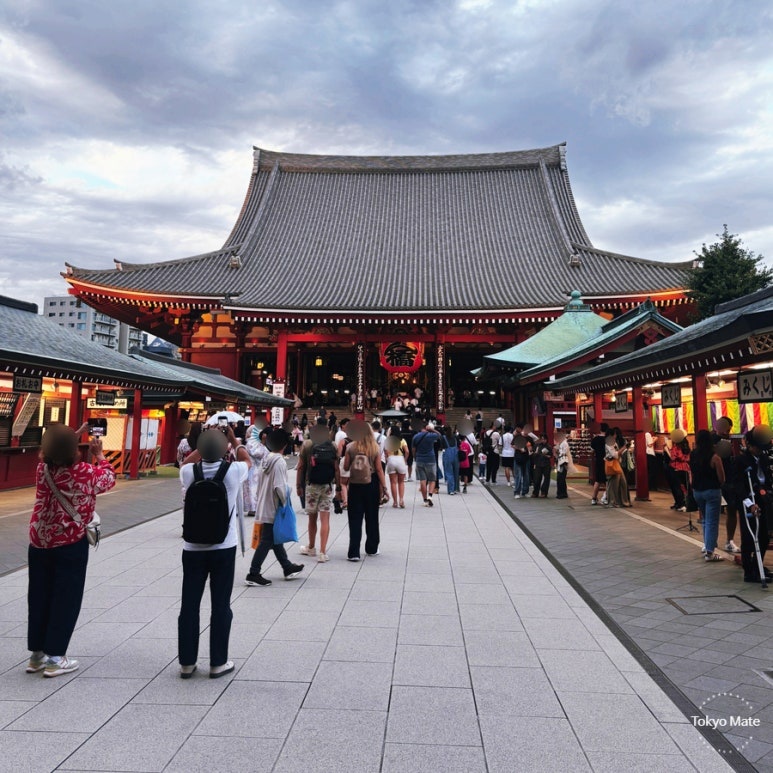
🏯 Sensoji Basic Information: 2026 Hours, Admission & Access
| Official Name | Kinryuzan Sensoji (金龍山 浅草寺) |
| Founded | March 18, 628 (Tokyo's oldest temple) |
| Sect | Shokannon-shu (聖観音宗) Head Temple |
| Grounds | Open 24 hours, free admission |
| Main Hall Hours |
|
| Admission | Free |
| Address | 2-3-1 Asakusa, Taito-ku, Tokyo 📍 View on Google Maps |
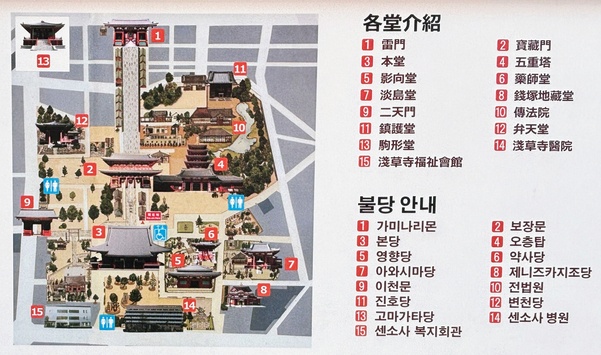
🚇 How to Get There
- Tokyo Metro Ginza Line — Asakusa Station, Exit 1 (5 min walk)
- Toei Asakusa Line — Asakusa Station, Exit A4 (5 min walk)
- Tobu Skytree Line — Asakusa Station, Front Exit (7 min walk)
- Tsukuba Express — Asakusa Station, Exit A1 (10 min walk)
✈️ Direct from Narita & Haneda Airports
- Narita Airport: The Keisei Narita Sky Access Line connects directly to the Asakusa Line — no transfers needed.
- Haneda Airport: The Keikyu Airport Line connects directly to the Asakusa Line — no transfers needed.
⛩️ Kaminarimon to Nakamise: Photo Spots & Tips
Sensoji's Origin Story: A Statue Pulled from the River in 628
Early morning on March 18, 628, fisherman brothers Hinokuma Hamanari and Takenari pulled a small statue from the Sumida River in their nets. Haji no Nakatomo, a local leader in the Asakusa area, recognized it as a statue of Sho-Kannon (Holy Kannon) and converted his home into a temple to enshrine it for life. This was the birth of Sensoji.
In 645, the monk Shokai built the Kannon-do hall and, following a vision in a dream, sealed the statue from public view permanently. For nearly 1,400 years since, not even successive head priests have been allowed to see it — it remains an absolute hidden Buddha (hibutsu, 秘仏).
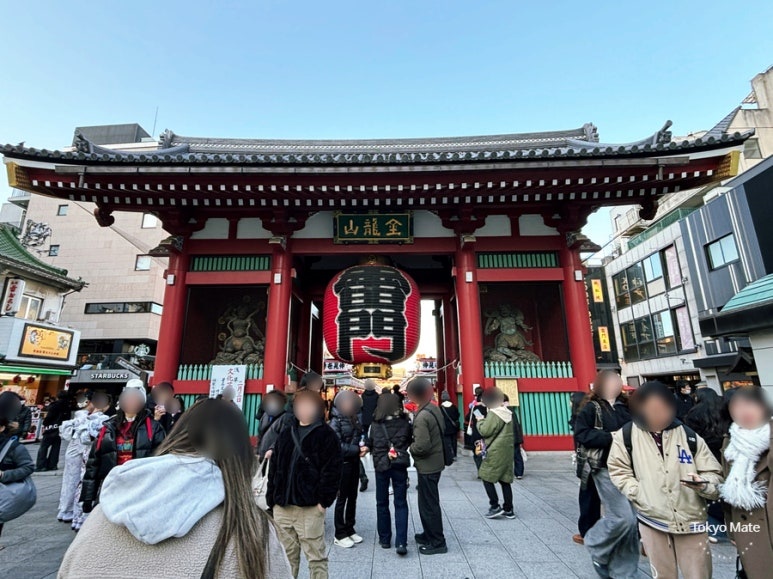
Kaminarimon (雷門): The Real Name Is Furaijinmon (風雷神門)
(Map point 1️⃣)
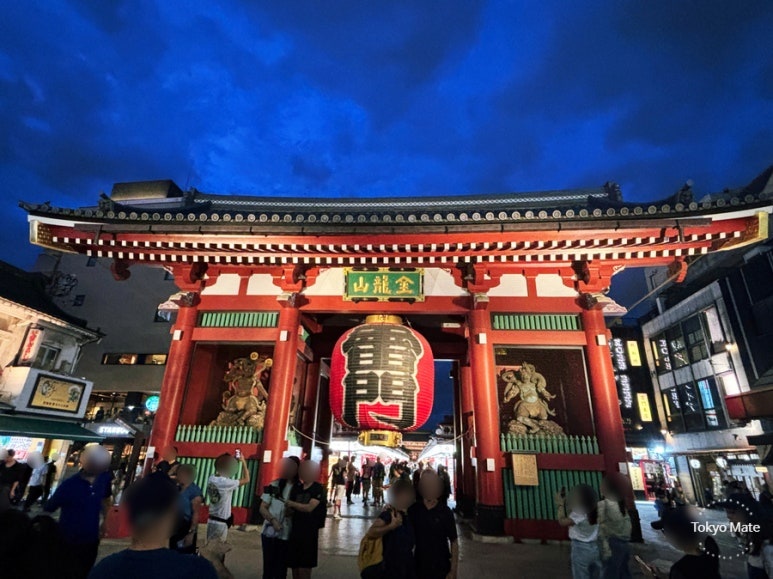
The symbol of Asakusa and one of Tokyo's most photographed spots. Originally built in 942 by Taira no Kinmasa, the gate was destroyed in a fire in 1865. It was rebuilt 95 years later in 1960, funded by Matsushita Konosuke, founder of Matsushita Electric (now Panasonic).
📸 Easy-to-miss details on the front
- The front of the lantern reads "雷門" (Kaminarimon), while the back reads "風雷神門" (Furaijinmon) — the characters are different. Be sure to turn around after walking through.
- Beyond the dragon carving on the bottom of the lantern, look for the golden ornaments on the tops of the side pillars.
- The gate is flanked by Fujin (Wind God, right) and Raijin (Thunder God, left) — guardian deities protecting the temple from natural disasters.
📸 Back side photo spot — a hidden gem most people miss
After passing through Kaminarimon, the back side features dragon sculptures of Tenryu and Kinryu arranged symmetrically. Since most people rush straight to Nakamise without looking back, this spot is much easier to photograph.
📸 Best times for photos
- Before 07:00 — no tour groups yet, empty shots of the lantern front are possible
- After 22:00 — illuminated Kaminarimon with minimal crowds, great for solo shots
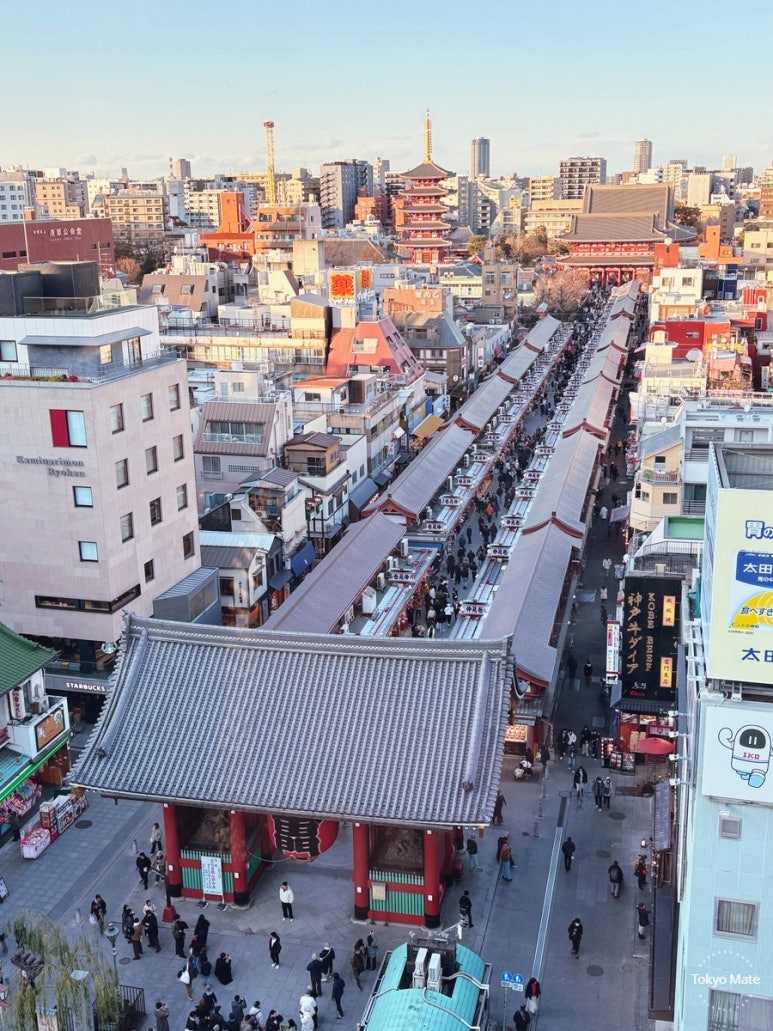
Nakamise-dori (仲見世通り) — The Complete Souvenir Shopping Guide
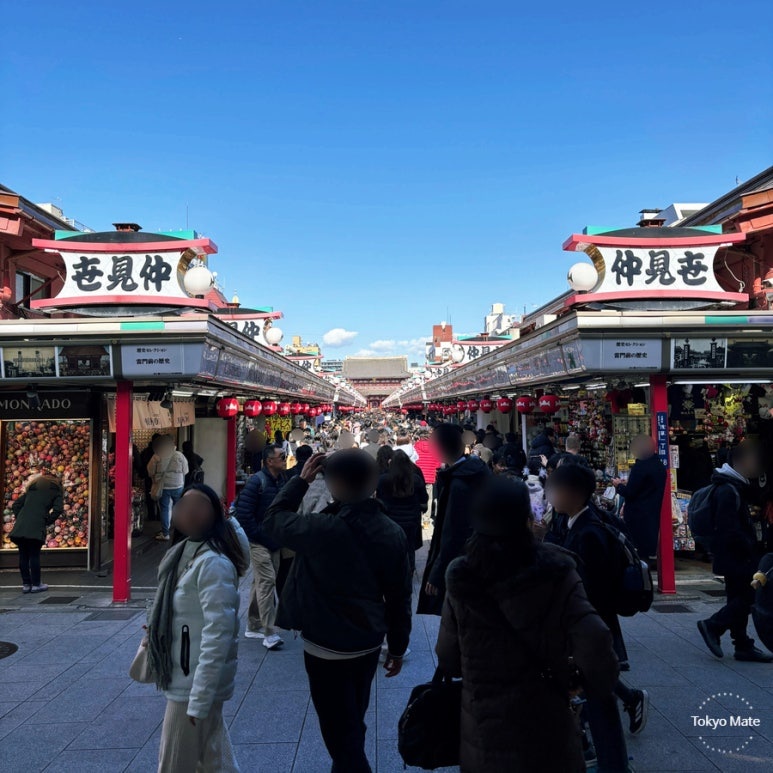
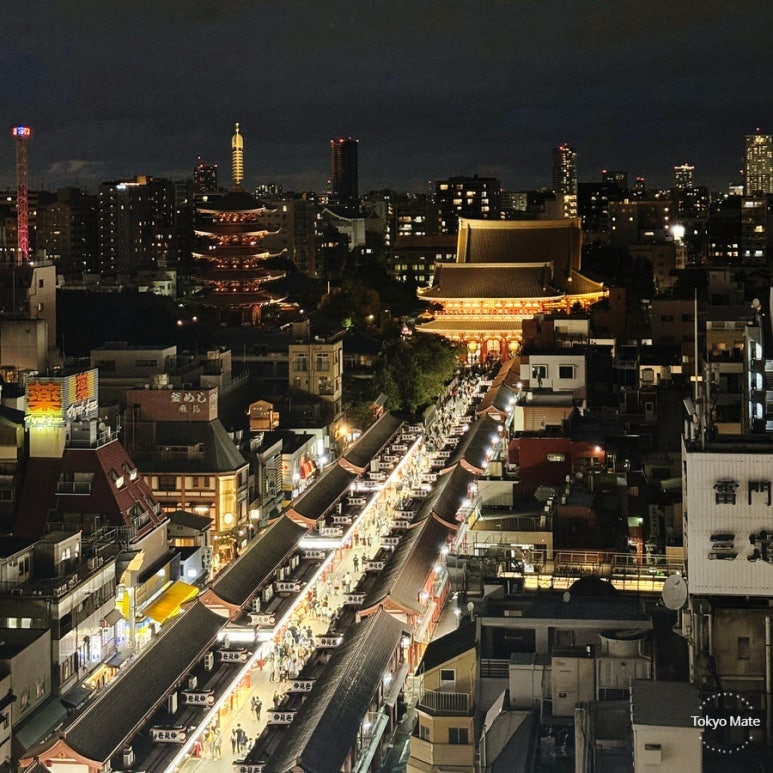
Stretching about 250 meters from Kaminarimon to Hozomon, this historic shopping street has 89 stalls dating back to the Edo period.
📌 For detailed street food and snack information, see the dedicated guide below.
👉 Asakusa Street Food Guide: Silk Pudding, Menchi Katsu, Melon Pan & More
🎁 Nakamise Souvenir Picks
| Item | Features | Notes |
| Kaminari-okoshi (雷おこし) | Asakusa's signature traditional snack, similar to puffed rice crackers | Fragile — keep on top of your luggage |
| Ningyo-yaki (人形焼) | Kaminarimon and pigeon-shaped rice cakes, best eaten fresh | Many shops are cash-only |
| Traditional fans & umbrellas | Wide range of patterns and prices | Better as decor than daily use |
| Origami & traditional memo pads | Lightweight — ideal for gifts | Quality varies, check paper thickness |
| Traditional wallets & pouches | Some shops are long-established artisans making items on-site | Distinguish handmade from mass-produced tourist goods |
📌 Beyond the main Nakamise strip, side alleys like Higashi-sando and Nishi-sando hide long-established artisan shops. Worth exploring if you have time.
🕙 Most shops open at 10:00 — arrive before 9:30 and most shutters will still be down.
Hozomon (宝蔵門) — Hidden Highlights of the Second Gate
(Map point 2️⃣)
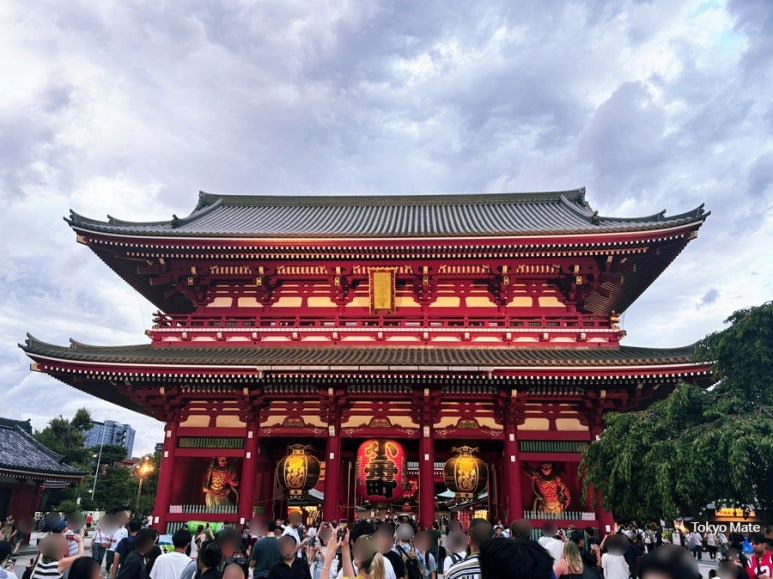
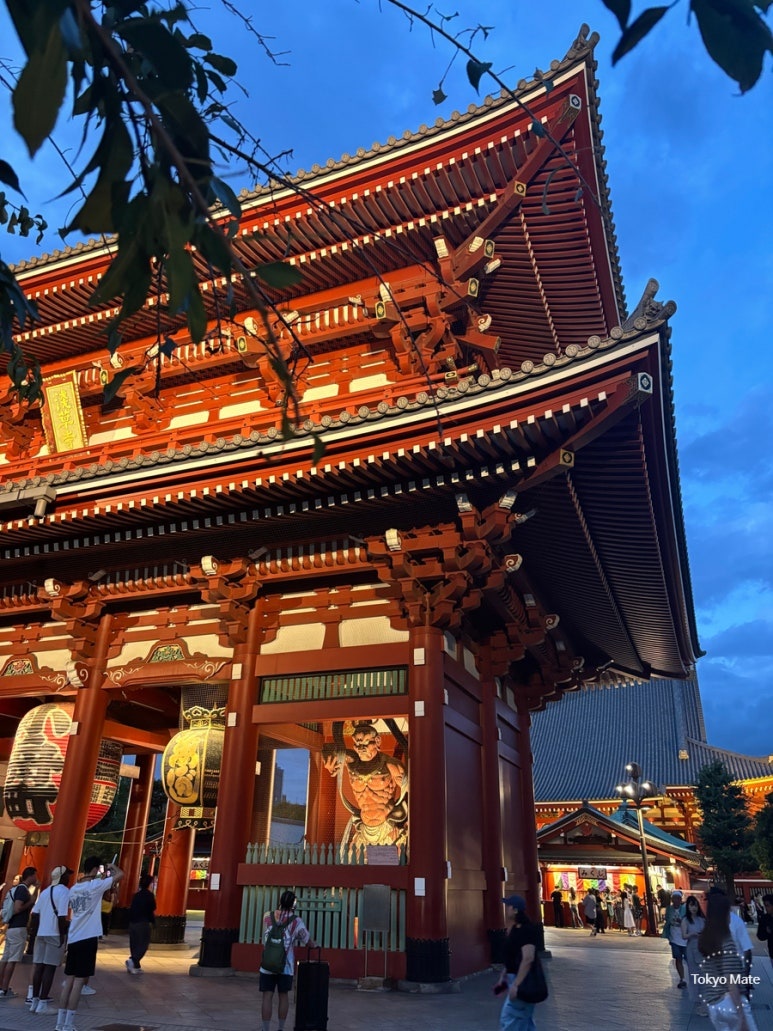
The second gate at the end of Nakamise. Originally built in 942 by Taira no Kinmasa, the current structure was rebuilt in 1964 with a donation from Otani Yonetaro.
- Giant straw sandals (大わらじ) on the back: Hanging on the back side are massive straw sandals measuring 4.5 meters long and weighing 500 kg. The message: "A giant who wears sandals this big is guarding this place — evil spirits, stay away." Surprisingly many visitors miss them, so be sure to look back.
- The Nio guardian statues flanking the gate have different expressions and poses from the wind and thunder gods at Kaminarimon.
Nitenmon (二天門) — An Easy-to-Miss Important Cultural Property
(Map point 9️⃣)
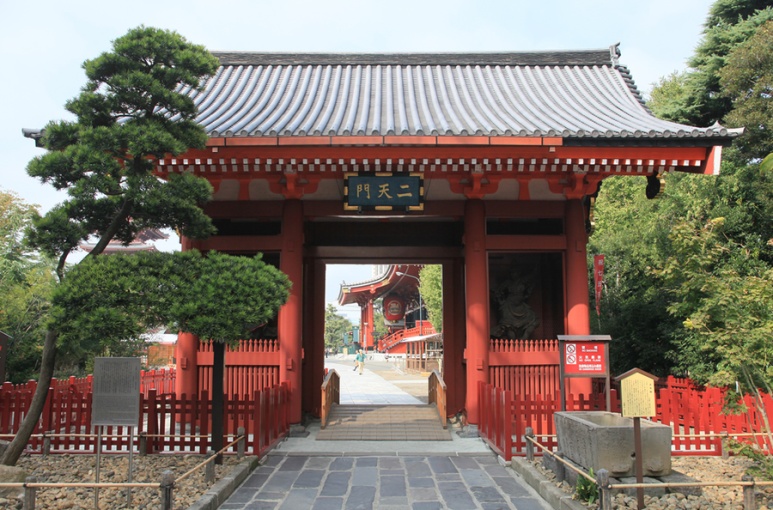
Head east from Hozomon to find this vermilion two-story gate, an Important Cultural Property of Japan built in 1649. After centuries of restoration, it was fully returned to its original appearance in 2010. Two Heavenly Kings (Zochoten and Jikokuten) guard the entrance, protecting Buddhist law.
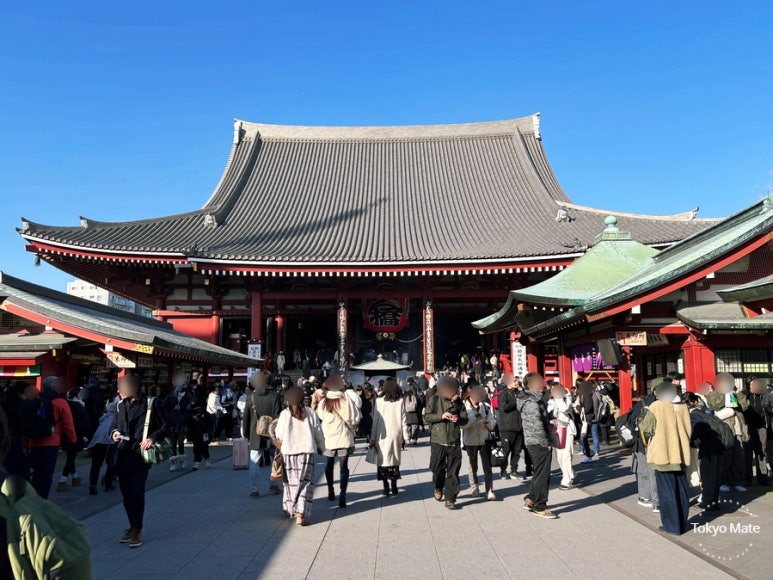
🙏 Sensoji Main Hall: Incense, Omikuji & Omamori Guide
(Map point 3️⃣)
Jokoro (常香炉) — How to Properly Bathe in Incense Smoke
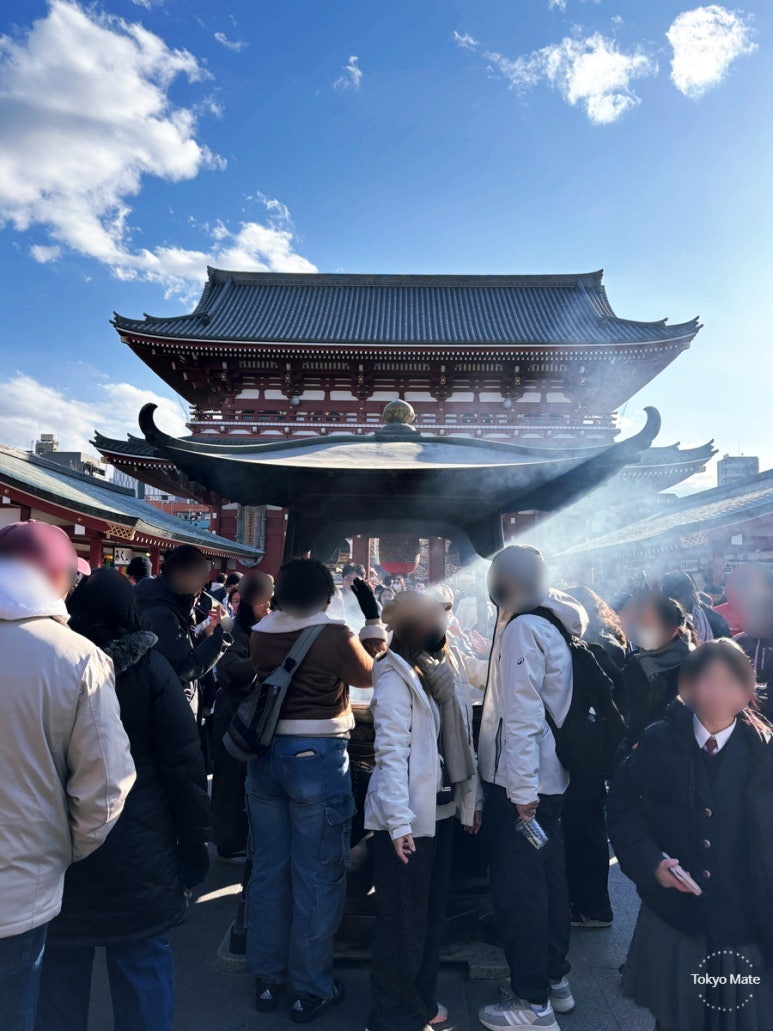
Here's the proper way to receive the incense smoke from the large bronze censer in front of the main hall:
- Buy incense sticks from the vendor near the censer (¥100–200)
- Light the incense and place it in the censer
- Cup both hands and waft the smoke toward your body
- Focus the smoke on any area that's ailing or that you want to keep healthy
📌 The tradition says that moving toward the smoke (not away from it) brings health — so not dodging the smoke is actually proper etiquette.
How to Pray at the Main Hall
The main hall is also known as Kannon-do (観音堂), enshrining the Sho-Kannon Bodhisattva. Since the monk Shokai's decision in 645, even successive head priests cannot see the sacred image — it remains an absolute hidden Buddha (hibutsu).
- Bathe in incense smoke from the jokoro to purify your body
- Place a coin in the offering box — ¥5 (go-en ご縁 = "connection/bond") is traditional
- Press your palms together and silently recite "Namu Kanzeon Bosatsu" (南無観世音菩薩)
⚠️ Clapping hands is a Shinto shrine custom. Since Sensoji is a Buddhist temple, simply pressing your palms together without clapping is the correct form.
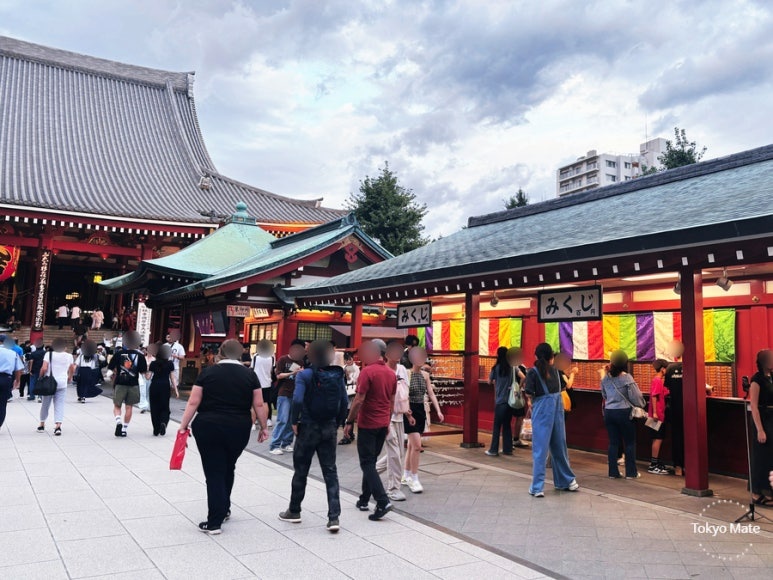
Omikuji (おみくじ) — Why You're Likely to Draw "Bad Luck" & What to Do
Sensoji's omikuji (fortune slips) are famous across Japan for having a notably high rate of "kyo" (bad luck).
How to draw:
- Cost: ¥100
- Shake the hexagonal container, note the number on the stick, then open the matching drawer to retrieve your fortune slip
- Translations available in Japanese, English, Chinese, and Korean
Results (best to worst):
Daikichi (Great Luck) → Kichi (Luck) → Chukichi (Medium Luck) → Shokichi (Small Luck) → Suekichi (Ending Luck) → Kyo (Bad Luck) → Daikyo (Great Bad Luck)
What to do if you get bad luck:
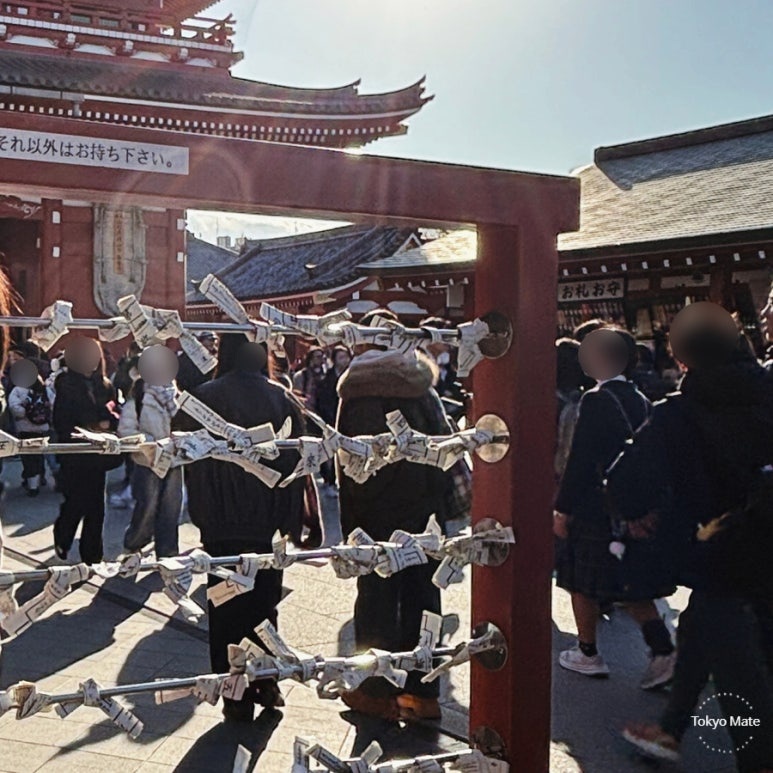
Tie the slip to one of the metal racks (musubi-dokoro) around the grounds. The belief is that leaving the bad fortune behind means its negative effects are dissolved. If you get a good result, the traditional practice is to keep it in your wallet rather than tying it up.
Omamori (お守り) — Charm Guide
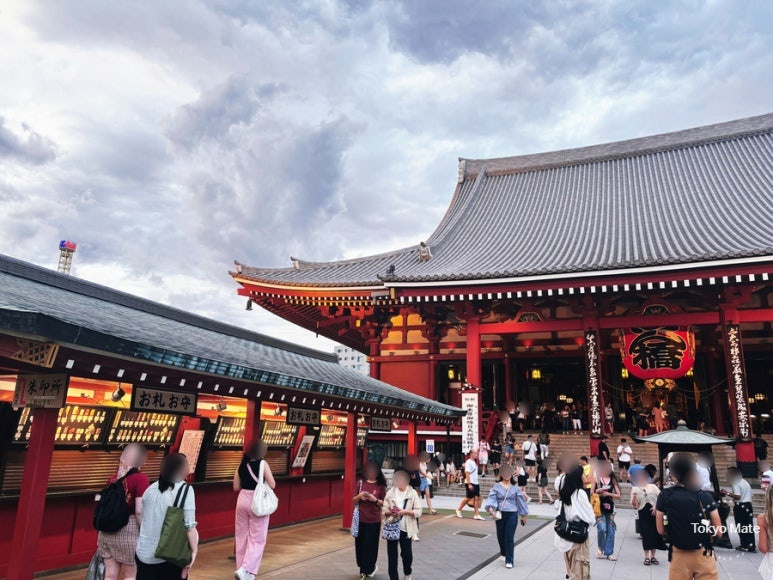
Sensoji omamori can be purchased at the on-site shops and through the official online store.
- Academic Success「学業守」(¥500) — the most popular gift for students with upcoming exams
- Good Relationships「良縁守」(¥1,000) — for love and connection luck; #1 pick among travelers in their 20s–30s
- Traffic Safety「交通安全守」(¥1,000) — often bought during travel to hang in the car; a popular gift for parents
- Principal Buddha「本尊守」(¥500) — blessed by the Sho-Kannon Bodhisattva; a versatile all-purpose wish fulfillment charm
📌 Over 30 varieties are available including wealth, safe childbirth, and disaster prevention. Check the full selection at the on-site shops.
📅 2026 Sensoji Annual Events Calendar
| Event | Date | Details |
| Hatsumode (初詣) | Jan 1–7 |
|
| Setsubun (節分) | Around Feb 3 |
|
| Honzon Jigen-e (本尊示現会) | Mar 18 |
|
| Hanamatsuri (花まつり) | Apr 8 |
|
| Shimanrokusen-nichi & Hozuki Market | Jul 9–10 |
|
| Osame no Kannon & Hagoita Market | Dec 17–19 |
|
🌸 Sensoji Through the Seasons & Night Views
🌸 Spring — Cherry Blossoms & Sensoji
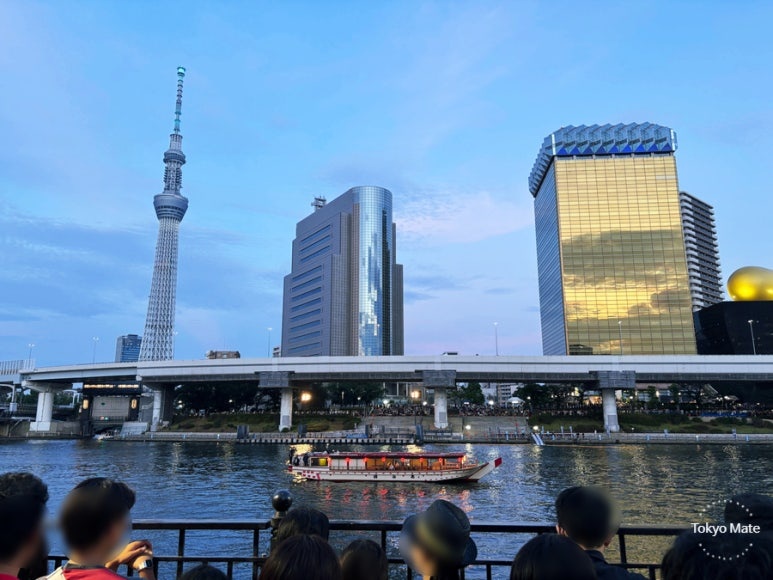
There are a few cherry trees within the Sensoji grounds, but the real cherry blossom highlight is Sumida Park, just a 5-minute walk away. For Skytree-and-cherry-blossom photo spots, river cruises, and nighttime illumination info, see the dedicated guide below.
👉 2026 Asakusa Sumida Park Cherry Blossom Guide — Skytree Photo Spots, Cruises & Night Views
☀️ Summer — Festival Season
| Festival | When | Highlights |
| Asakusa Samba Carnival | Last Saturday of August | Centered around Brazilian immigrants; Tokyo's largest samba parade |
| Sensoji Hozuki Market | Jul 9–10 | Merit of 46,000 days; Chinese lantern plant market |
| Sumida River Fireworks | Last Saturday of July | About 20,000 fireworks over Sumida Park area |
| Sumida River Lantern Floating | Mid-August Saturday | Thousands of lanterns illuminating the river — iconic Tokyo summer night view |
👉 Asakusa August Festivals: Sumida River Lantern Floating
⚠️ During the Hozuki Market and fireworks dates, the grounds and surrounding area get extremely crowded. For a peaceful visit, come before 7:00 AM.
🍂 Autumn — Fall Foliage & Ginkgo Trees
From late October to mid-November, ginkgo and maple trees color the Sensoji grounds and the area near Nakamise. With fewer crowds than cherry blossom season, it's much easier to photograph.
- Golden ginkgo highlight: The ginkgo tree near Hozomon — the combination of yellow leaves and the vermilion five-story pagoda (Goju-no-To)
- Peak foliage: Mid to late November in central Tokyo
🌙 Night Views — Complete Illumination Guide
After sunset, Sensoji's lighting transforms the entire atmosphere.
| Spot | Features | Best Time |
| Kaminarimon (front) | Red lantern and lighting create a dramatic night scene | Sunset – 22:00 |
| Nakamise-dori / Hozomon | After shops close, a tranquil late-night atmosphere | After 22:00 |
| Main Hall (front) | Incense smoke and night lighting create an ethereal combination | 22:00 – 23:00 |
📌 Late-night visits are possible since the grounds are open 24 hours, but the main hall closes at 17:00. If you're coming for night photography, focus on the grounds, Kaminarimon, and Nakamise area.
Sensoji isn't a place you visit just once. It reveals an entirely different face with each season and time of day. Come back to discover the real depth of Asakusa.
🧡 More Asakusa Travel Guides
👉 Tokyo Asakusa Complete Guide: Things to Do & Where to Eat
👉 Asakusa Street Food Guide: Silk Pudding, Menchi Katsu, Melon Pan & More