Hamarikyu Gardens: 300 Yen Entry, Teahouse & Access
Tokyo Mate
Right next to Tokyo's Shiodome, you can walk through a traditional garden in the heart of the city for just 300 yen. From a tide pond fed by Tokyo Bay seawater, to a matcha teahouse on an island in the middle of the pond, to flower fields that change with the seasons - here are the views you can only see at Hamarikyu Onshi Garden.
What is Hamarikyu Onshi Garden?
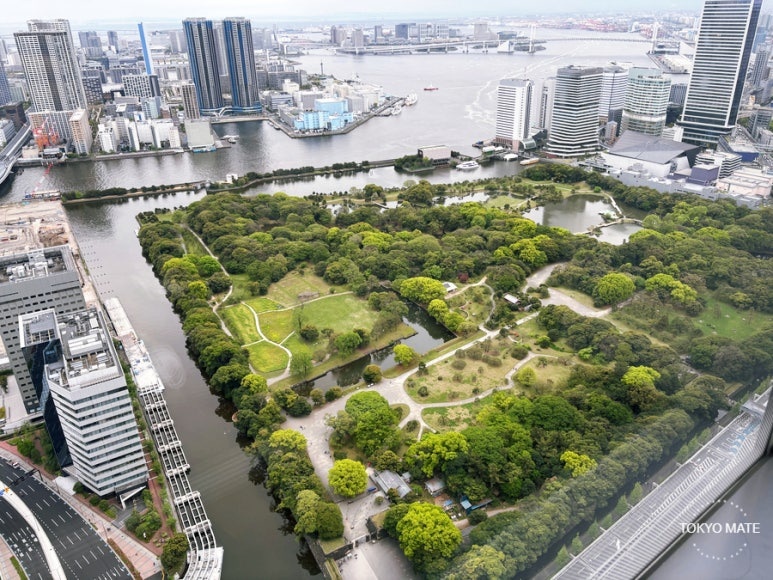
Hamarikyu Onshi Garden (浜離宮恩賜庭園) is a Japanese imperial garden that has been in existence since the Edo period and was opened to the public after the Meiji era. “Onshi” (恩賜) means “bestowed by the imperial family.” It is now designated as a Special Place of Scenic Beauty and is one of Tokyo’s representative traditional gardens.
“Hama” (浜) means seashore, and “Rikyu” (離宮) means detached palace.
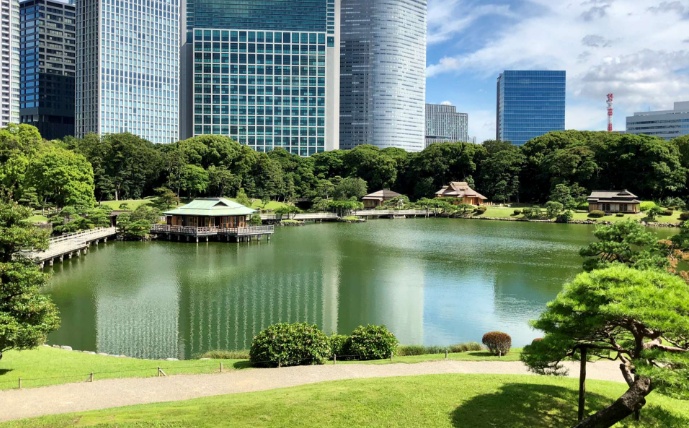
Its biggest feature is the tide pond (潮入の池). It draws actual seawater from Tokyo Bay, and the water level changes naturally with the tides. Hamarikyu is the only garden in central Tokyo that still maintains this structure.
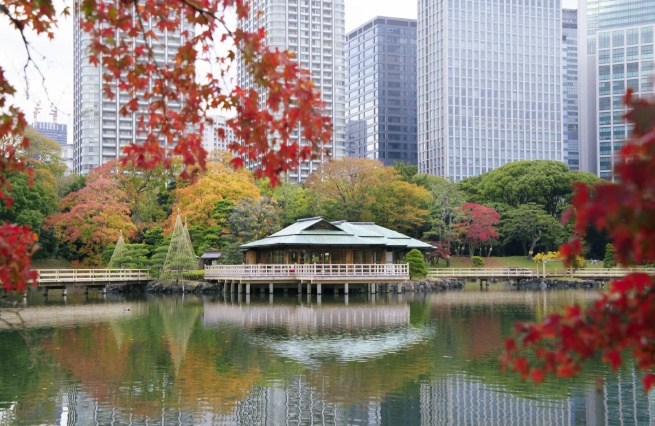
On an island in the middle of the pond stands Nakajima no Ochaya (中島の御茶屋). It’s a place where you can enjoy matcha and wagashi while looking out over the pond - a must-stop point if you visit Hamarikyu. The teahouse, originally built in 1707, was restored in 1983.
Hamarikyu Onshi Garden Admission & Hours
Operating Information
| Item | Details | |
|---|---|---|
| Name | Hamarikyu Onshi Garden (浜離宮恩賜庭園) | |
| Hours | 09:00–17:00 (Last entry 16:30) | |
| Closed | Year-end / New Year holidays (December 29 – January 1) | |
| Budget | From 300 yen | |
| Payment | Transit IC / Credit card / PayPay, Rakuten Pay, au Pay, etc. | |
| Reservation | Not required | |
| Location | 1-1 Hamarikyu-teien, Chuo-ku, Tokyo | |
Admission Fees
| Type | General | 65 and over |
|---|---|---|
| Same-day ticket | 300 yen | 150 yen |
| Hamarikyu + Kyu-Shiba-rikyu combo ticket | 400 yen | 200 yen |
| Annual pass (Hamarikyu only) | 1,200 yen | 600 yen |
| 9 Tokyo metropolitan gardens combined annual pass | 4,000 yen | 2,000 yen |
- Elementary school age and under: free (must be accompanied by a guardian)
- Junior high students living or studying in Tokyo: free
- Free admission days: Greenery Day (May 4), Tokyo Citizens' Day (October 1)
Useful Information
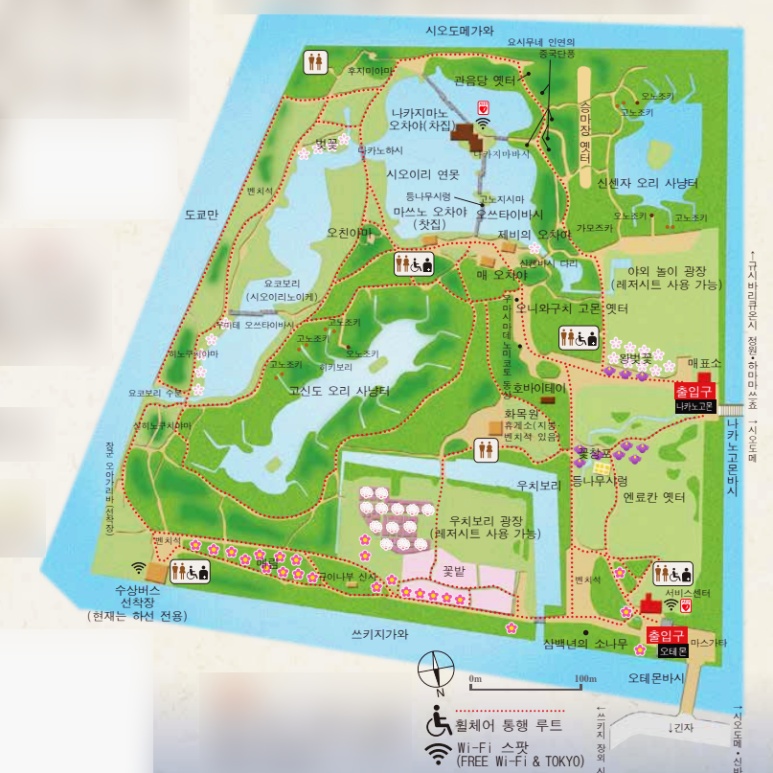
- Luggage storage: Coin lockers are available at Nakanogomon. At Otemon, items can be kept at the counter (ask when buying tickets).
- Shop: Hanamise (濱見世) inside the flower garden sells dango and daifuku. There is no restaurant inside the park.
- Picnic: Bringing your own bento is allowed (no alcohol). Picnic mats are only allowed at Uchibori Plaza and the outdoor table plaza.
- Photography: Personal photography is free. Commercial shoots, whether for-profit or non-profit, require advance application.
- Pets: No pets allowed at all, including in cages (service dogs excepted).
How to Get to Hamarikyu Onshi Garden
By Subway
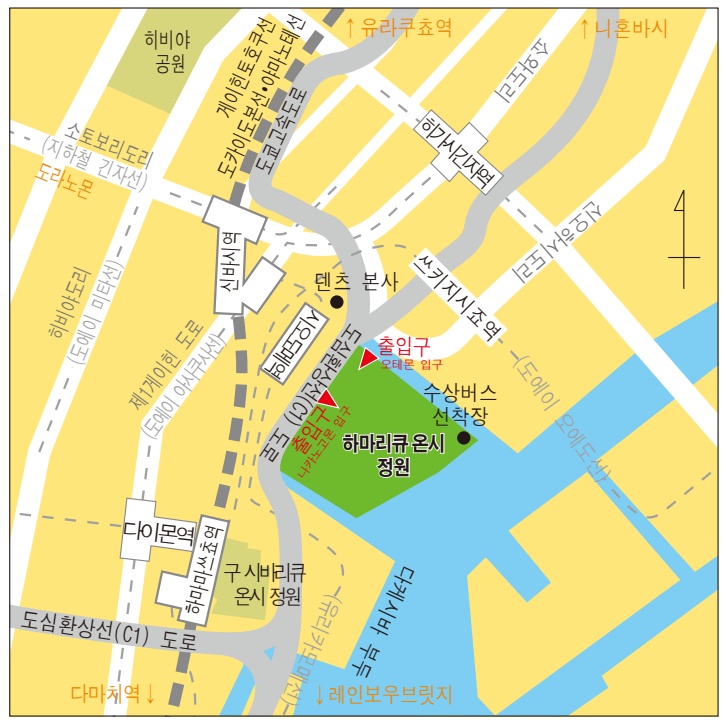
The shortest route is from Toei Oedo Line / Yurikamome Shiodome Station Exit 10 → Nakanogomon (中の御門口), about a 5-minute walk. The exit connects underground, so it’s also convenient on rainy days.
| Station / Exit | Line | Entrance & Time |
|---|---|---|
| Shiodome Station | Oedo Line / Yurikamome Line | Nakanogomon 5 min Otemon 7 min |
| Tsukijishijo Station | Oedo Line | Otemon 7 min |
| Shimbashi Station | JR Yamanote Line / Keihin-Tohoku Line Ginza Line / Asakusa Line | Otemon 12 min |
| Hamamatsucho Station | JR Yamanote Line / Keihin-Tohoku Line | Nakanogomon 15 min |
By Water Bus
- Tokyo Cruise route: Asakusa → Hamarikyu → Hinode Pier
There is a water bus pier inside Hamarikyu Onshi Garden.
There are two routes: one where you board at Asakusa, ride down the river, and disembark at the Hamarikyu pier, and another where you board at Hamarikyu and disembark at Hinode Pier.
⚠️ As of April 2026, service is suspended. Check the Tokyo Cruise website for resumption status.
👉 [Tokyo Cruise] Check water bus operations and book
Hamarikyu Onshi Garden Highlights
Three-Hundred-Year-Old Pine
This is the first sight that overwhelms visitors at the garden entrance. Said to have been planted about 300 years ago to commemorate a major garden renovation, the spirit of its low, wide-spreading branches seems to speak for the history of Hamarikyu itself.
Tide Pond (潮入の池)
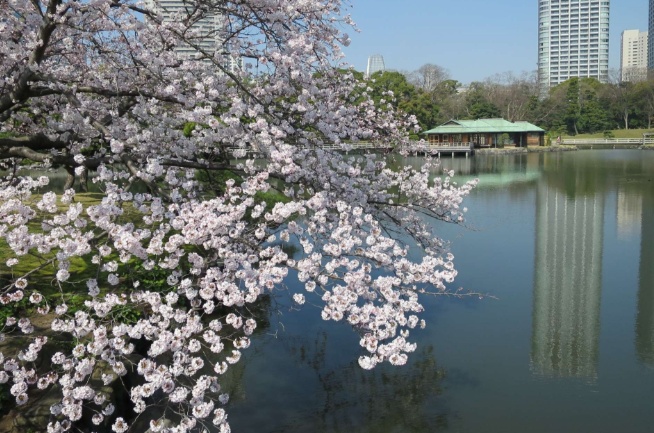
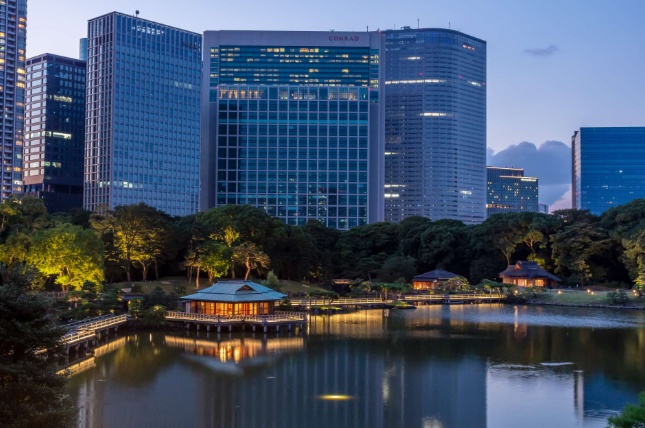
This is Hamarikyu’s symbol, drawing seawater directly from Tokyo Bay. The water level is regulated through sluice gates with the tides, and saltwater fish such as mullet, sea bass, gobies, and eels live here. The contrast between the Shiodome high-rises reflected on the water surface and the traditional garden is striking, and migratory birds and waterfowl visit each season.
Otsutaibashi (お伝い橋)
A roughly 120-meter cedar bridge laid over the tide pond, connecting Konojishima Island and Nakajima Island. Traces of when the entire bridge was once covered with wisteria vines remain in places, and walking the bridge across the pond is Hamarikyu’s best photo spot.
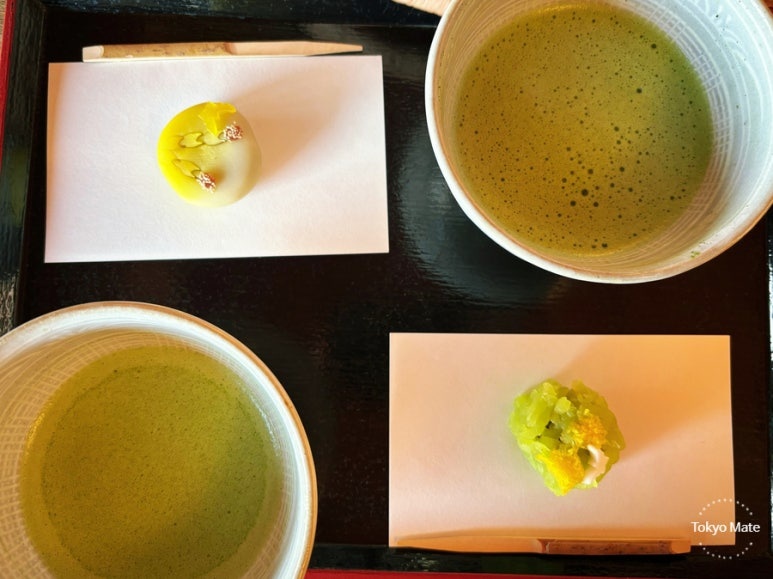
Nakajima no Ochaya (中島の御茶屋) - Hamarikyu Garden Cafe
A traditional teahouse on the island in the middle of the pond.
You can sit on tatami and enjoy a cup of strong matcha while taking in the pond view.
- Hours: 09:00–16:45 (L.O. 16:30)
- Recommended menu: A matcha set with nerikiri (traditional wagashi) or dorayaki is 1,000 yen each. Matcha alone is 500 yen.
- Payment: Credit card (VISA, Master, JCB) and transit IC accepted (no QR code payments)
Shin-Hinokuchiyama (新樋ノ口山)
A small hill near the sluice gate. From the top, the view opens out toward Rainbow Bridge and Tokyo Bay in the direction of Odaiba - a spot where you can capture the contrast between the traditional garden and the modern Tokyo skyline in a single shot.
Flower Field (花畑)
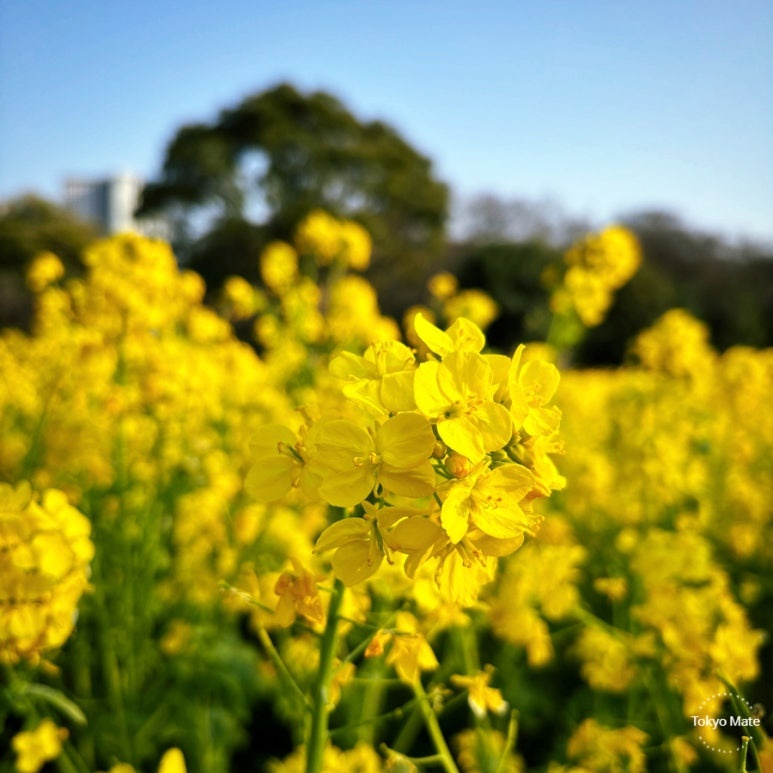
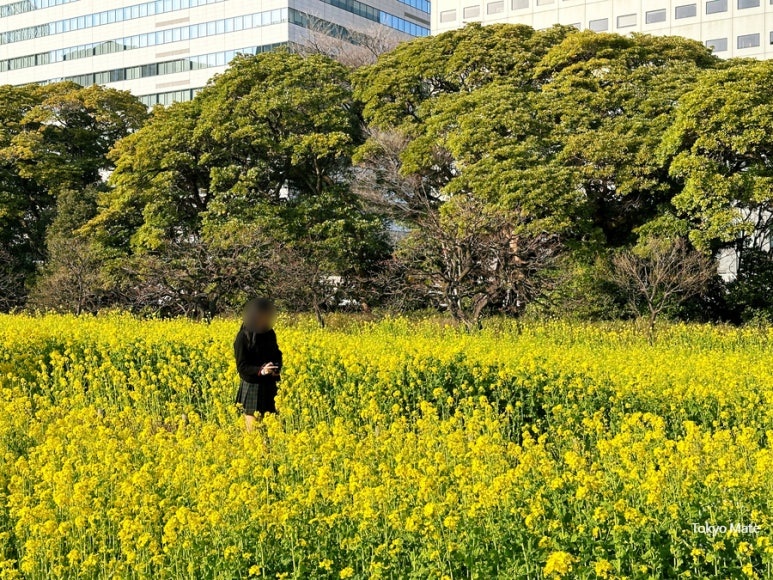
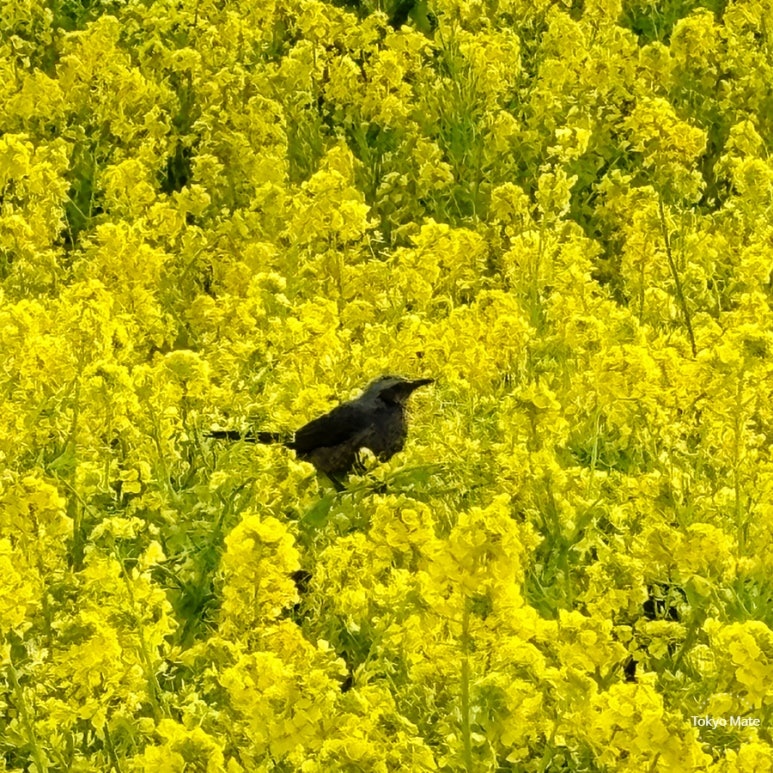
The space that best shows Hamarikyu’s four seasons. It begins with canola flowers in spring and, from summer through autumn, sulfur cosmos and cosmos fill the field. Particularly in April, after the Yoshino cherry blossoms, double-flowering cherries bloom - a great alternative for those who missed the cherry blossom season by a little.
| Hamarikyu Flower Calendar | Flowers | |
|---|---|---|
| January – February | Wintersweet (蠟梅), plum blossom, daffodil | |
| February – March | White magnolia | |
| March – April | Canola flower, Yoshino cherry, peach blossom | |
| April | Double-flowering cherry, wisteria, peony | |
| May | Azalea, Hirado azalea | |
| June – July | Iris, hydrangea, trumpet vine | |
| July – September | Crape myrtle | |
| September | Red spider lily (red lycoris) | |
| October – November | Autumn leaves, ginkgo | |
Free Guided Tours
| Tour | Schedule | Notes |
|---|---|---|
| Garden guide (Japanese) | Sat, Sun, holidays 11:00 / 14:00 | Free |
| Garden guide (English) | Sat, Sun, every other Monday 11:00 | Free |
| Ochaya guided tour (Japanese) | Every Thursday 11, 12, 13, 14:00 | First come, first served, 25 people (about 40 min) |
※ For the Ochaya tour, indoor socks are required. Suspended in summer (7/1–9/14).
Nearby Combination Courses
Around Shimbashi and Shiodome stations, the Caretta Shiodome shopping mall makes for a natural flow - have lunch and then move on to Hamarikyu.
After visiting the garden, take the Yurikamome monorail toward Odaiba and you can enjoy the Rainbow Bridge and Tokyo Bay views together.
👉 Tokyo Odaiba Things to Do: Complete One-Day Recommended Course (with Ariake & Toyosu)
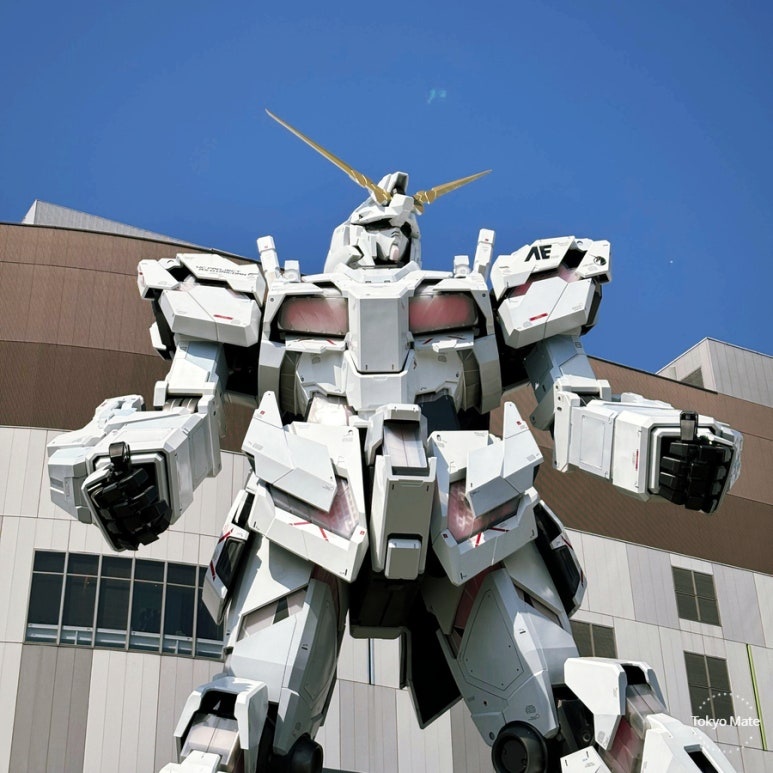
Hamarikyu Onshi Garden, where modern buildings and a traditional garden coexist, feels like a place that compresses Tokyo’s charm into one. If you want to catch your breath in the middle of a busy travel itinerary, why not take a stroll through Hamarikyu Garden this weekend?
We’re cheering on your wonderful Tokyo trip!
Related Tokyo Travel Guides
👉 Tokyo Odaiba Things to Do: Complete One-Day Recommended Course (with Ariake & Toyosu)
👉 Tokyo Tsukiji Market Restaurant Guide: Hours, Holidays, and What to Eat