Fushimi Inari Taisha: Hours, Access & Senbon Torii Hike
Tokyo Mate
Fushimi Inari Taisha in Kyoto is free to enter and open 24 hours. It's right in front of JR Inari Station. The loop that takes you through the Senbon Torii and around Mt. Inari is about 4km and takes about 2 hours.
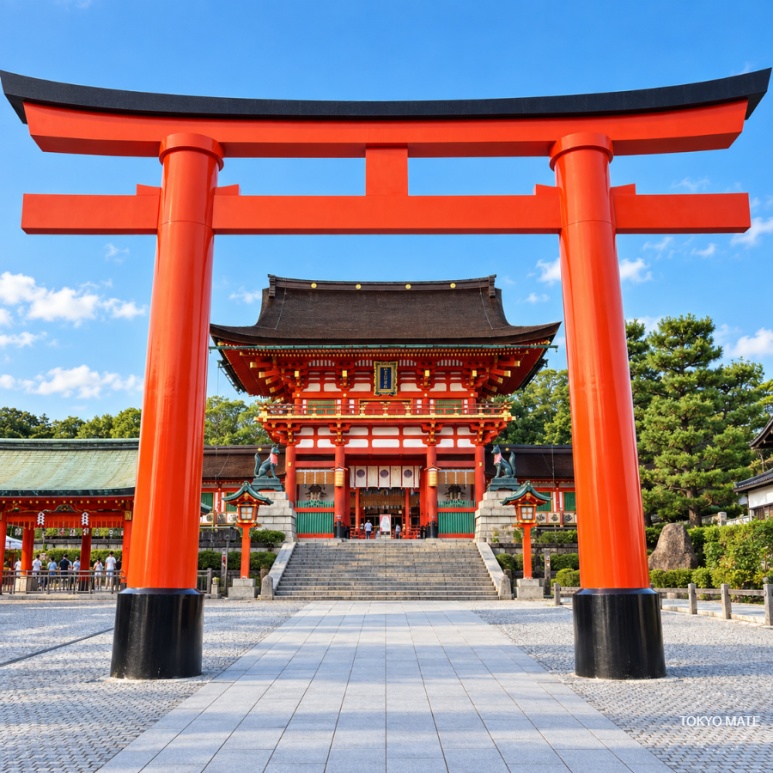
Fushimi Inari Taisha: What It Is, Admission and Hours
Fushimi Inari Taisha has no set closing time, so you can visit 24 hours a day. Admission is free, too. That's why I made it the last stop of my day in Kyoto.
Fushimi Inari Taisha has long been known as a place to pray for good harvests and grain, and later for prosperity in trade and business. It's the head shrine of the roughly 30,000 Inari shrines across Japan, and it's best known for the Senbon Torii, the rows of vermilion torii gates, and for 233m-high Mt. Inari.
You can enter the grounds at night too, but the counter where you get charms and omamori closes at 18:00. If you want one, stop there first.
| Item | Details | |
|---|---|---|
| Admission | Free | |
| Visiting hours | 24 hours · no closing time | |
| Closed | Open every day | |
| Charms and omamori counter | 8:00-18:00 | |
| Address | 68 Fukakusa Yabunouchicho, Fushimi-ku, Kyoto 📍 View on Google Maps | |
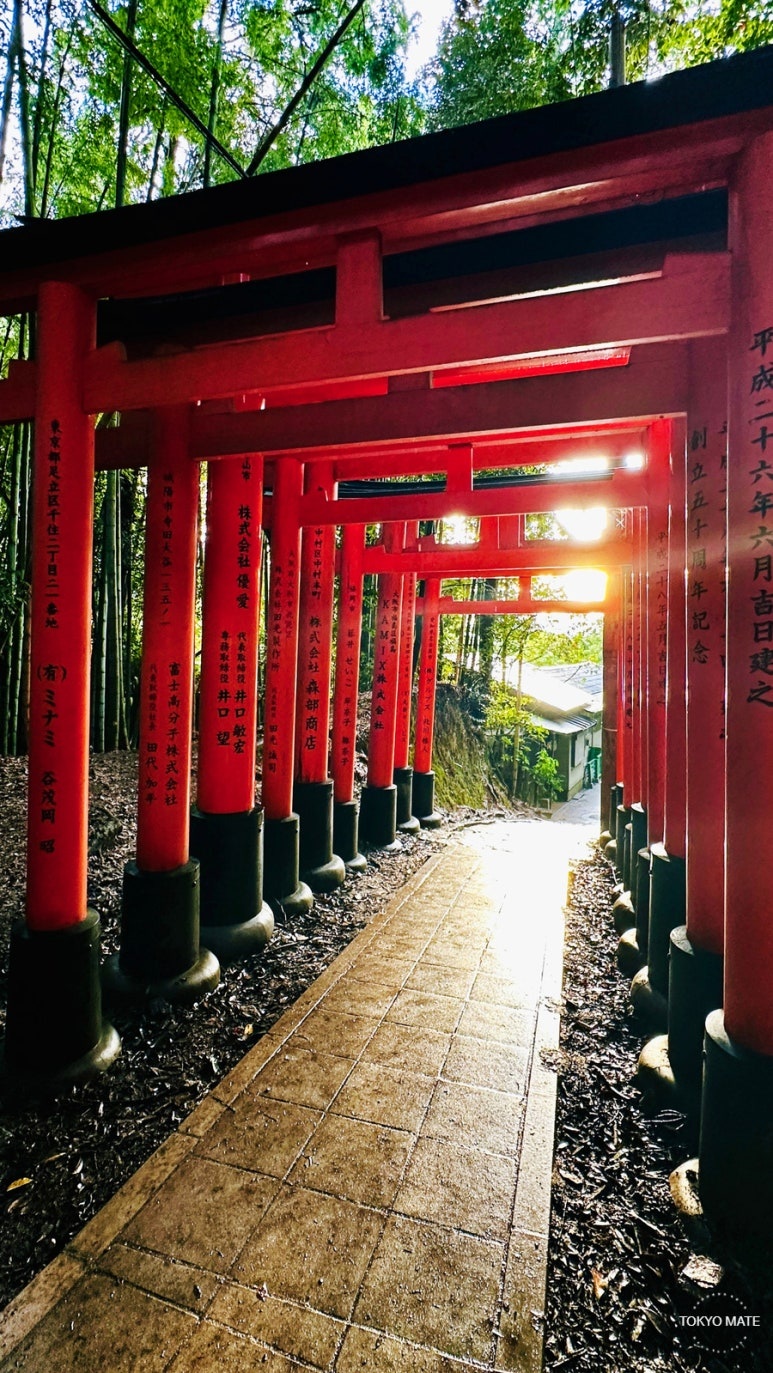
How to Get to Fushimi Inari Taisha
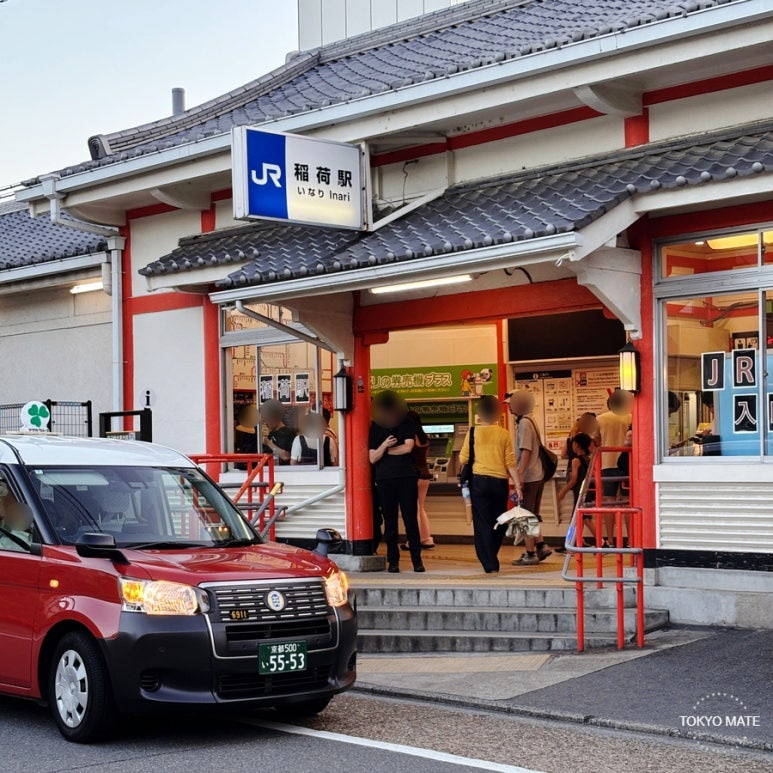
The closest station to Fushimi Inari Taisha is Inari Station on the JR Nara Line. It's two stops and about 5 minutes from Kyoto Station, and the shrine is right outside the station.
| Transport | Station / stop | Time to the shrine |
|---|---|---|
| JR Nara Line | Inari Station | Right outside |
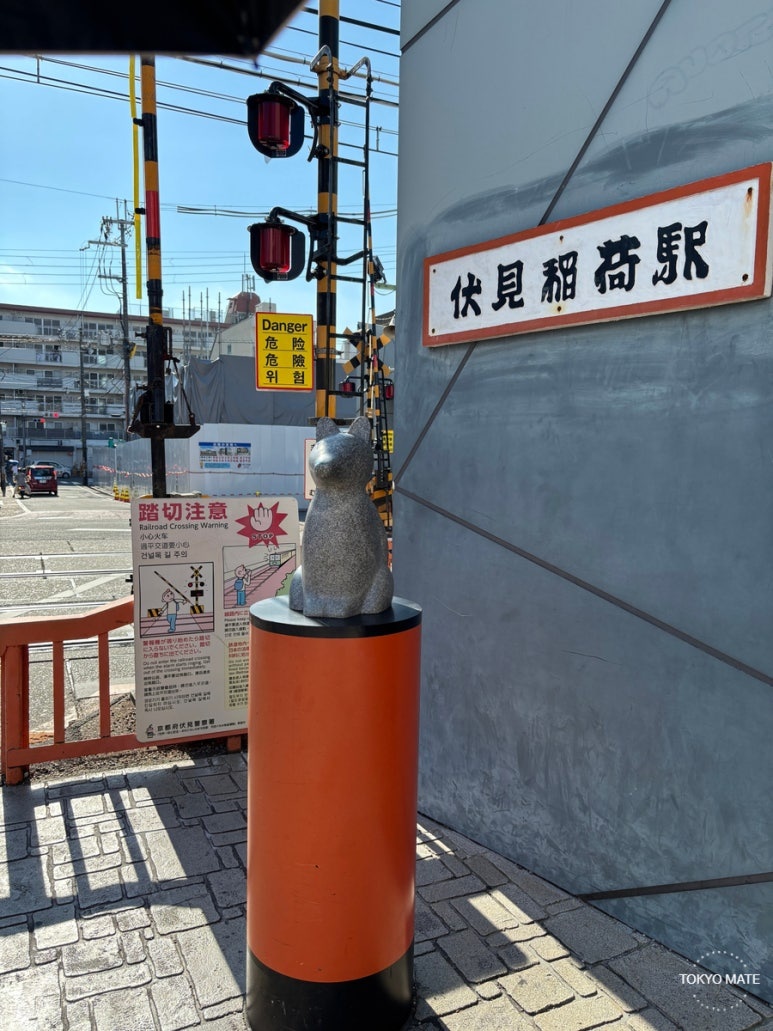
| Keihan Main Line | Fushimi-Inari Station | About 5 min walk east |
| Kyoto City Bus Minami 5 | Inari Taisha-mae | About 7 min walk east |
Keihan Main Line's Fushimi-Inari Station has a similar name but is a different station from JR Inari Station. It's 5 stops from Gion-Shijo Station, and from the station you walk about 5 minutes east to the shrine.
By bus, take the Minami 5 from Kyoto Station and get off at the Inari Taisha-mae stop. From there it's about a 7-minute walk east to the shrine.
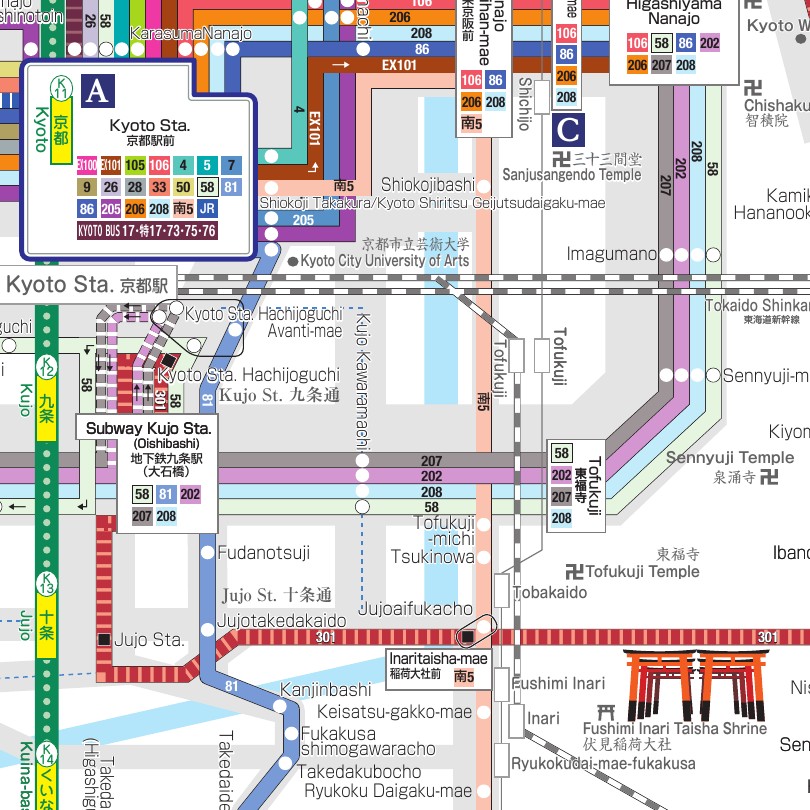
I got off at Keihan Fushimi-Inari Station, stopped at Chiikawa Mogumogu Honpo Fushimi first, and then walked to Fushimi Inari Taisha.
👉 Chiikawa Mogumogu Honpo Fushimi: Kyoto-Only Goods & Prices
Fushimi Inari Taisha Highlights and the Meaning of Senbon Torii
The name "Inari" is tied to rice. Old records say the name came from rice growing on Mt. Inari, though there are other theories about its origin. Either way, it has long been connected with good harvests and grain.
At Fushimi Inari Taisha, the path starts at the Romon gate and main hall near the entrance and continues through the Senbon Torii and the Okusha to the summit of Mt. Inari.
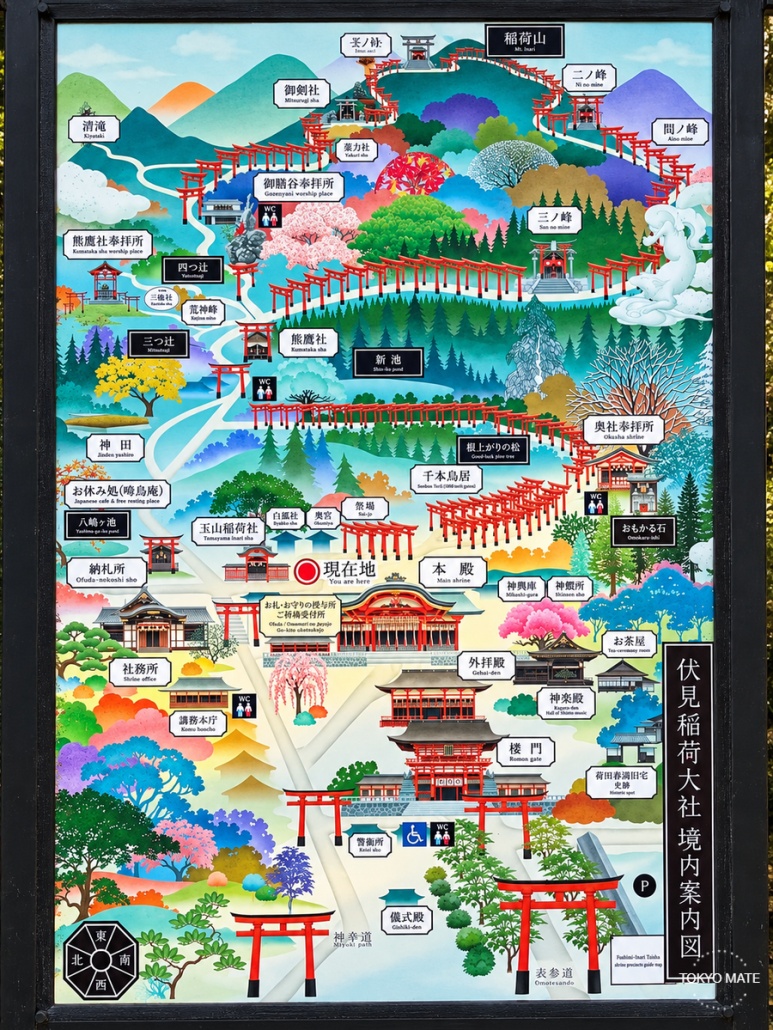
| Highlight | What it is | |
|---|---|---|
| Romon (楼門) | The large two-story gate just inside the shrine entrance | |
| Main hall (本殿) | The central building past the Romon · rebuilt in 1499 · Important Cultural Property | |
| Senbon Torii (千本鳥居) | The famous stretch of vermilion torii gates in long rows | |
| Okusha Hohaisho (奥社奉拝所) | Where you come out of the Senbon Torii · a place to pray facing Mt. Inari · home of the Omokaru-ishi wishing stones | |
| Mt. Inari summit | Ichinomine · 233m above sea level | |
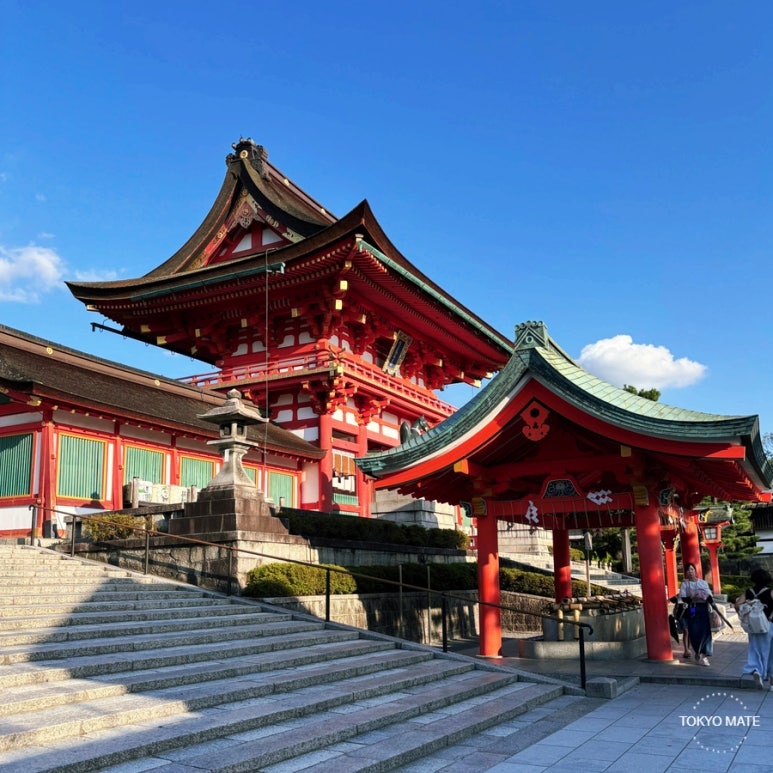
The Romon is a large two-story gate said to have been built in 1589. Records pointing to 1589 were also found during repairs in 1973.
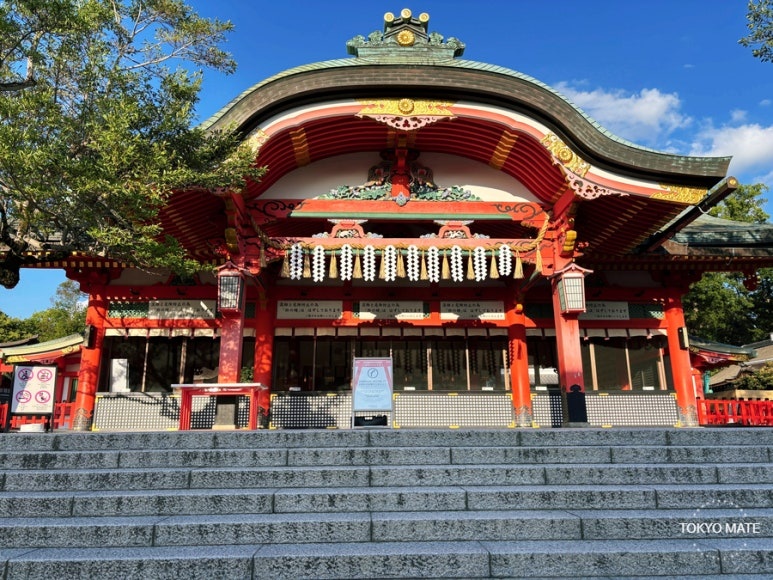
Past the Romon is the main hall, rebuilt in 1499. It's an Important Cultural Property and the shrine's central building.
✅ What Senbon Torii means
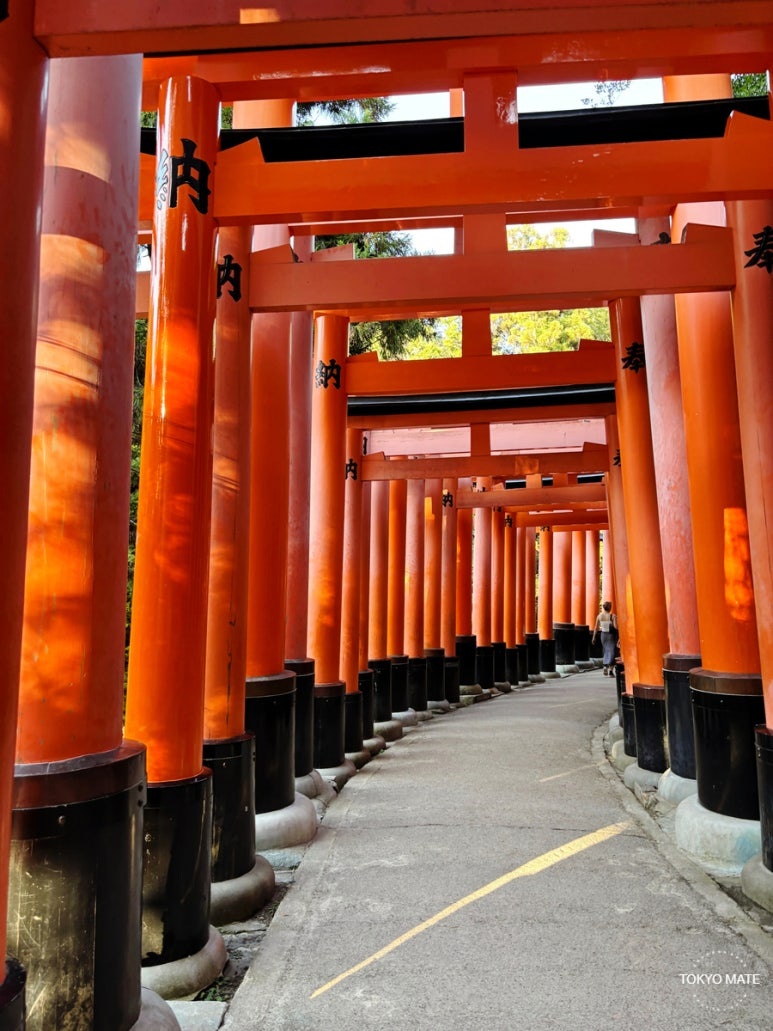
Senbon Torii (千本鳥居) literally means "a thousand torii." There aren't exactly 1,000 of them, though. Along the whole path up Mt. Inari there are now about 10,000 torii, large and small.
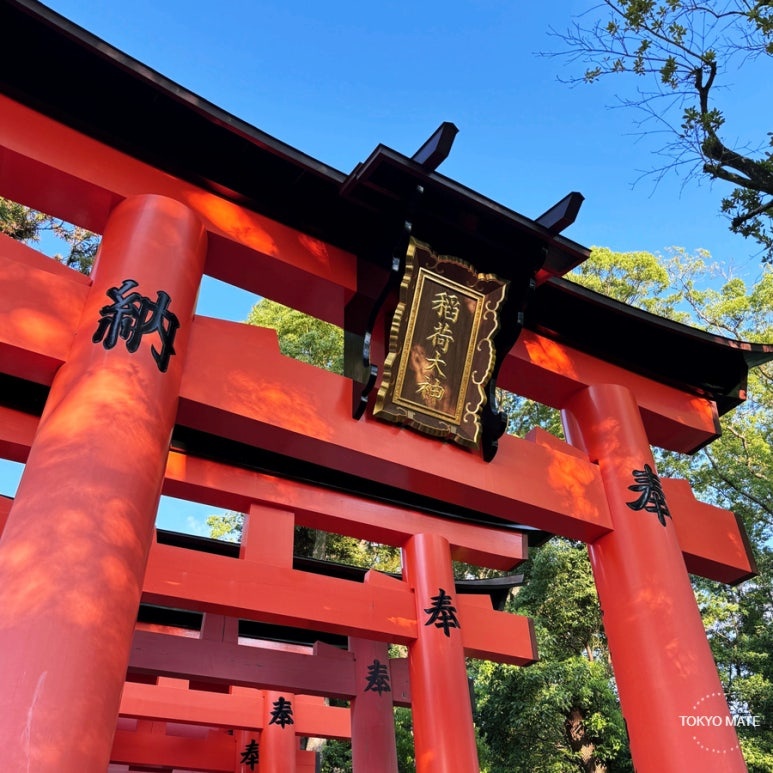
The custom of donating a torii, either to pray for a wish or to give thanks after it came true, spread from the Edo period. Added one by one, those torii made the Senbon Torii what you see today.
Most of the torii at Fushimi Inari Taisha are vermilion. The color was seen as a symbol of abundance, and the vermilion pigment was also used to protect the wood.
✅ The Okusha Hohaisho and the Omokaru-ishi
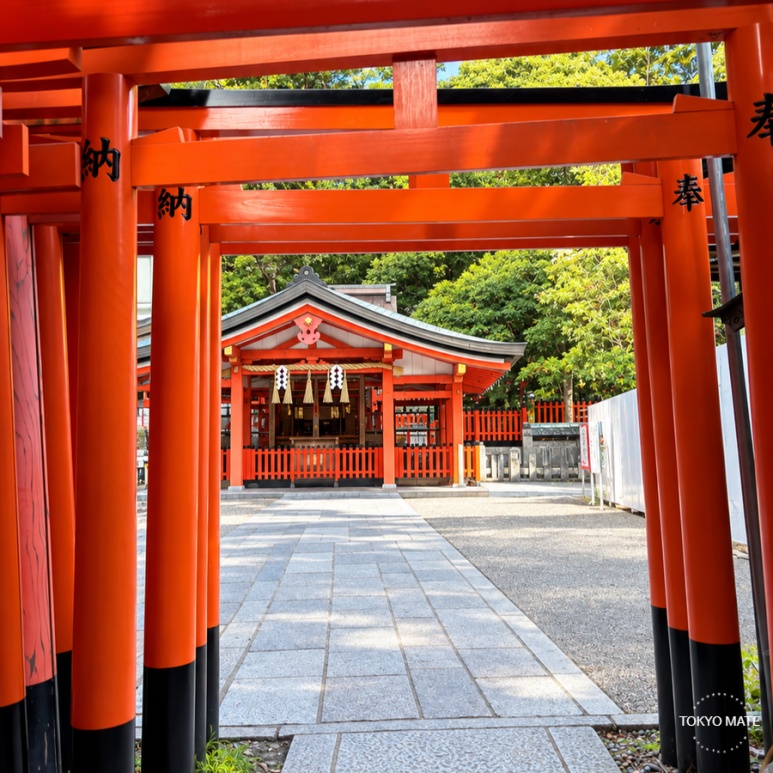
After the Senbon Torii you reach the Okusha Hohaisho, home of the Omokaru-ishi, stones used to read your wish. Think of your wish and lift the stone on top of the stone lantern. If it feels lighter than you expected, your wish is likely to come true. If it feels heavy, it's said to be hard to achieve.
✅ Why there are so many foxes
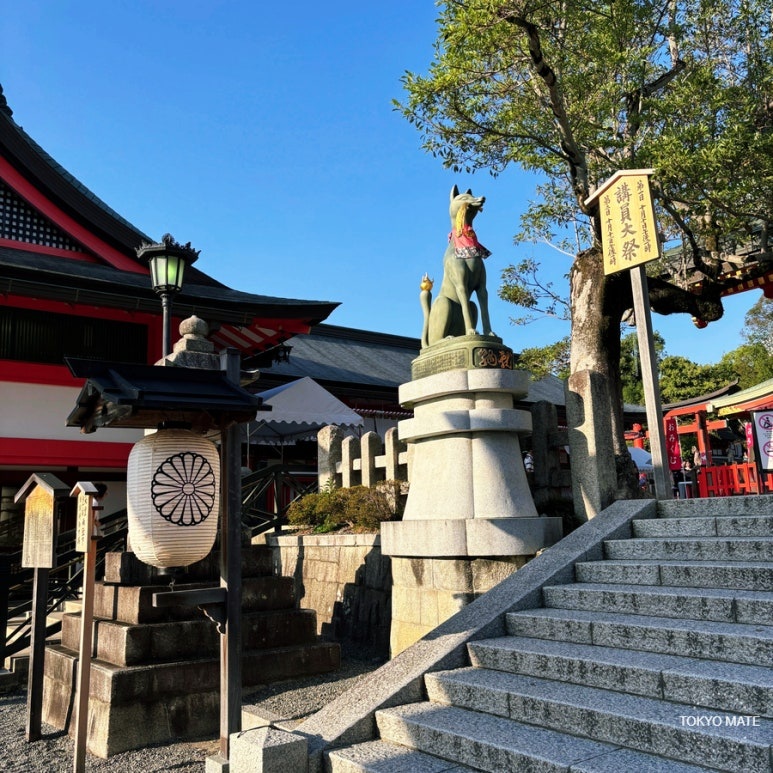
There are fox statues all over Fushimi Inari Taisha. The fox isn't the Inari deity itself. It's seen as a messenger that serves the deity and carries its will. It doesn't mean the foxes that actually live on the mountain, either. Traditionally it's said to be an invisible white fox.
So as you walk around, you'll see fox statues in all kinds of forms at the entrance, around the main hall and all along the mountain paths.
Mt. Inari Summit Course and How Long It Takes
The loop around Mt. Inari is called oyama-meguri (お山めぐり) in Japanese. It's about 4km in total and takes about 2 hours to walk.
You can just see the Senbon Torii and turn back, or, if you have time, continue past the Okusha up to Ichinomine, the summit of Mt. Inari.
If you're short on time, you can see the main hall, the Senbon Torii and the Okusha and then head back.
If you're going to the summit, the mountain path continues after the Okusha, and Ichinomine stands 233m above sea level. If you arrive late in the afternoon, check the sunset time before heading for the summit.
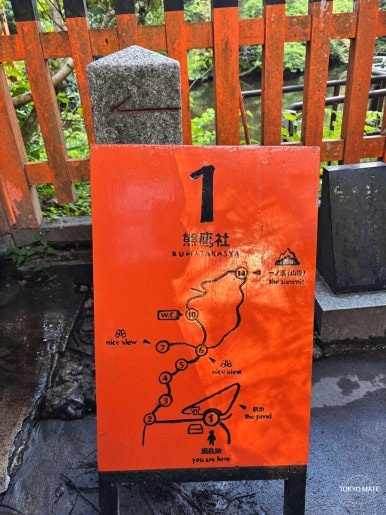
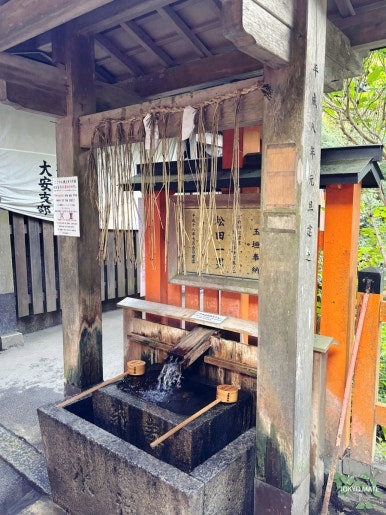
When I came down, the sun was starting to set, and I walked down watching the sunset.
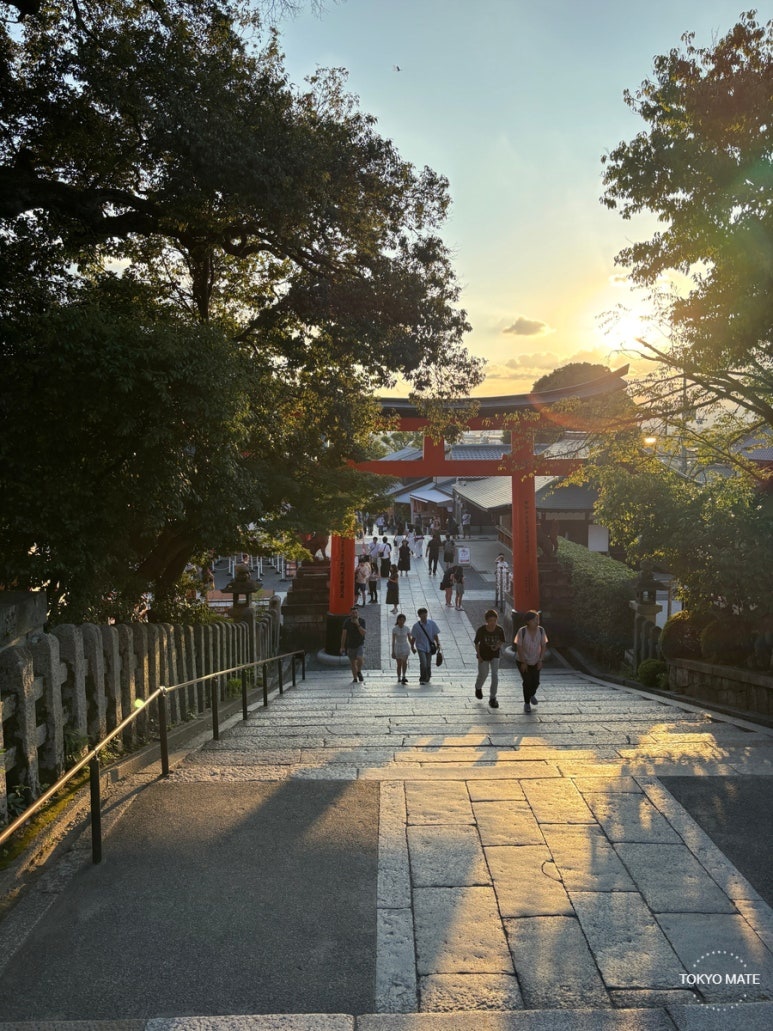
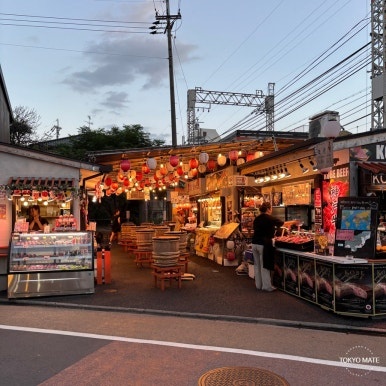
I wrapped up my day in Kyoto taking photos of the city at dusk.
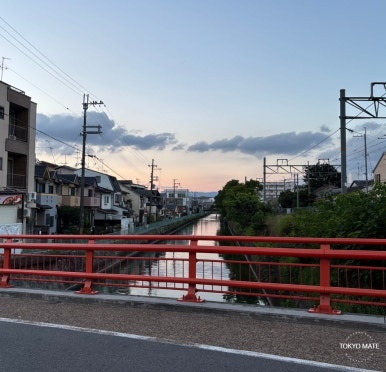
Fushimi Inari Taisha FAQ
Q. Is there a dress code at Fushimi Inari Taisha?
A. There's no set dress code for ordinary visitors. Using the grounds in clothing that doesn't suit a normal shrine visit, such as a wedding dress, is not allowed, though. If you plan to go to the summit of Mt. Inari, you'll be walking about 4km of mountain path, so wear comfortable shoes.
Q. Is there any etiquette I should follow?
A. On the grounds, don't take photos that block other people's way, dance or perform, or talk loudly. Eating outside designated areas, or eating while walking, is also not allowed.
Q. Can I go with a wheelchair or stroller?
A. Wheelchairs can get as far as the Okusha, and there's an elevator. Check the elevator's operating hours before you go.
The official information doesn't say exactly how far you can go with a stroller. Leaving a stroller anywhere other than a designated spot is not allowed.
Q. Do I need to go back to Kyoto Station to return to Osaka?
A. If you're heading back toward Namba or Yodoyabashi, you don't need to go back to Kyoto Station. You can take a train toward Osaka from Keihan Fushimi-Inari Station.
Platform 2 at Fushimi-Inari Station is for trains toward Yodoyabashi and Nakanoshima. If you're going to Namba, check that the train is bound for Yodoyabashi before you board. The fare to Yodoyabashi is 480 yen.
I covered the transfer routes and fares between Fushimi-Inari and Namba in detail in the post below.
👉 Namba to Kyoto: Fares, Times & Which Line to Take
Walking between the vermilion torii as the sun went down, Fushimi Inari had a different feel from the daytime, and that has stayed with me. Ending my day in Kyoto slowly here made it all the more memorable.
🧡 Tokyo Mate Kyoto Guides
👉 Tenryu-ji Admission, Hours & Access: Arashiyama, Kyoto
👉 Nishiki Market Kyoto: Hours, Food & Pokemon Center Route
👉 Heian Jingu Kyoto: Autumn Leaves, Shin-en Garden & Fees
👉 Kiyomizu-dera Kyoto: Admission, Hours, Access & Sannenzaka