Heian Jingu Kyoto: Autumn Leaves, Shin-en Garden & Fees
Tokyo Mate
Entry to the grounds of Heian Jingu in Kyoto is free, and the Shin-en Garden costs 600 yen for adults and 300 yen for children (junior high school age and under). The Shin-en is where you can see the autumn leaves, and Kyoto's 2026 foliage is expected to be later than average or a little late. Opening hours change with the season, and the nearest station is Higashiyama on the Tozai subway line.
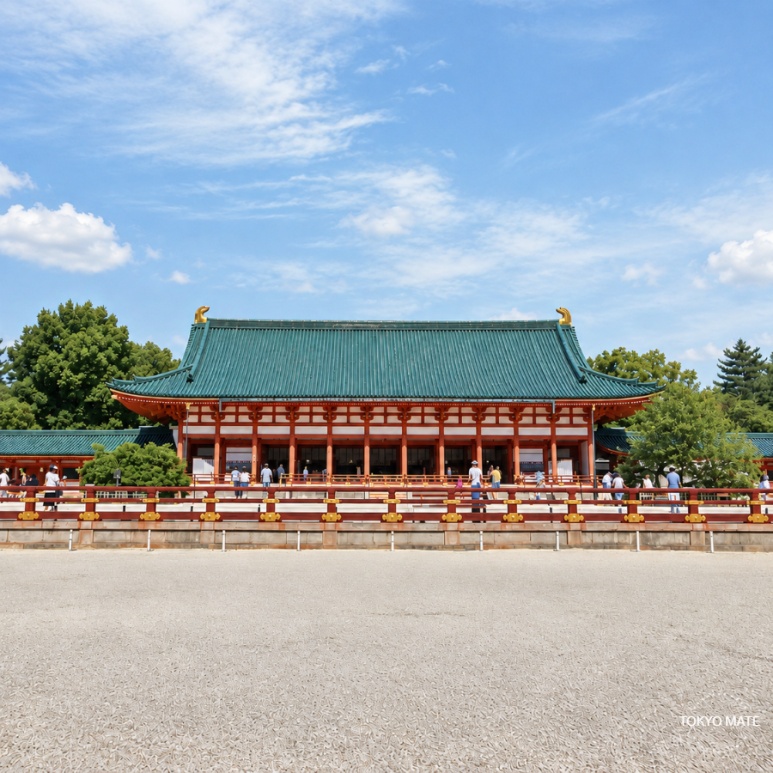
Heian Jingu, Kyoto
Heian Jingu (平安神宮), in Kyoto's Okazaki area, is a shrine founded in 1895 to mark the 1,100th anniversary of the capital's move to Heian-kyo.
The main buildings you see today aren't original Heian-period structures. They are modeled, at about five-eighths scale, on the Chodo-in, the central compound of the old capital Heian-kyo where state ceremonies and government business took place.
| Name | Heian Jingu (平安神宮) |
| Founded | 1895 |
| Main sights | Daigokuden, Otenmon Gate, the great torii, Shin-en Garden |
| Location | 97 Okazaki Nishitennocho, Sakyo-ku, Kyoto 📍 View on Google Maps |
| Official SNS | ➡️ Heian Jingu on Instagram |
Heian Jingu's main festivals and events
Heian Jingu holds rites and events through the year. The main ones are Setsubun in February, Nagoshi no Oharae in June, the Jidai Matsuri in October, and Shichi-go-san and the Kenkaten sweets exhibition in November.
| Date | Event | What it is |
|---|---|---|
| Feb 3 | Setsubun-sai (節分祭) | A traditional purification rite to ward off misfortune |
| Jun 30 | Nagoshi no Oharae (夏越大祓式) | A summer purification rite where you pass through a large grass ring, the chinowa |
| Oct 22 | Jidai Matsuri (時代祭) | The shrine's signature festival, begun in 1895 to mark its founding and the 1,100th anniversary of the move to Heian-kyo |
| Nov 15 | Shichi-go-san-sai (七五三祭) | A traditional Japanese celebration of children growing up |
| Nov 23-25 | Kenkaten (献菓展) | Traditional sweets offered from around Japan are displayed in the grounds, and some are sold |
| Dec 31 | Omisoka Oharae (大晦日大祓式) | A year-end purification rite to close the year and prepare for the new one |
⚠️ Opening hours can change on October 22 for the Jidai Matsuri, so check the shrine's official SNS for that day's notice.
How to Get to Heian Jingu
The nearest station to Heian Jingu is Higashiyama Station on the Kyoto Municipal Subway Tozai Line, about a 10-minute walk from Exit 1. From Keihan Sanjo Station and Jingu-Marutamachi Station it's about a 15-minute walk each.
| Transport | Station / stop | To Heian Jingu |
|---|---|---|
| Subway Tozai Line | Higashiyama Station, Exit 1 | About 10 min walk |
| Keihan Railway | Sanjo Station | About 15 min walk |
| Keihan Railway | Jingu-Marutamachi Station | About 15 min walk |
| Kyoto City Bus 5, 46 | Okazakikoen Bijutsukan/Heian-jingumae | About 5 min walk north |
| Kyoto City Bus 32, 46 | Okazakikoen Rohm Theater Kyoto/Miyakomessemae | About 5 min walk north |
| Kyoto City Bus 105, EX100 | Okazakikoen Bijutsukan/Heian-jingumae | About 5 min walk north |
※ Bus 105 and the EX100 sightseeing express run on Saturdays, Sundays and holidays.
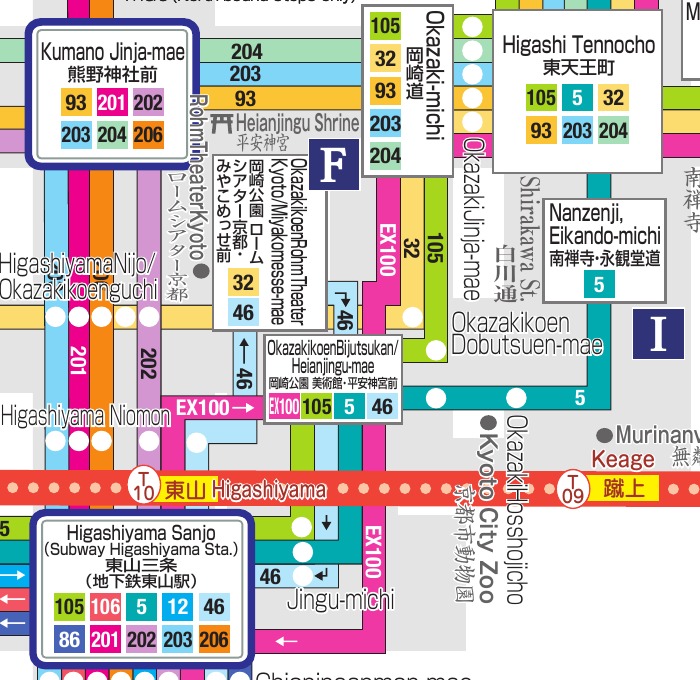
Heian Jingu Admission and Opening Hours
Entry to the grounds of Heian Jingu is free, but the Shin-en Garden charges admission: 600 yen for adults and 300 yen for children (junior high school age and under). Preschool children enter free.
If you only walk around the grounds, including the Daigokuden and Otenmon Gate, you pay nothing. Admission is only needed if you go into the Shin-en Garden.
| Area | Adults | Children (junior high and under) |
|---|---|---|
| Heian Jingu grounds | Free | Free |
| Shin-en Garden | 600 yen | 300 yen |
Heian Jingu opening hours
Heian Jingu opens at 6:00, and the Shin-en Garden from 8:30. The closing time of the grounds and the Shin-en's last entry change with the season.
| Period | Grounds close | Shin-en last entry |
|---|---|---|
| Mar 1 - Sep 30 | 18:00 | 17:30 |
| Oct 1 - Oct 31 | 17:30 | 17:00 |
| Nov 1 - end of Feb | 17:00 | 16:30 |
⚠️ On October 22, the Jidai Matsuri day, the Shin-en keeps different hours: entry only from 9:30 to 11:30, closing at 12:00.
Free Shin-en opening days
The Shin-en opens free of charge twice a year: in early June in spring, and on September 19 in autumn. The spring date changes every year.
In 2026 it opened free on June 5 (Fri) and September 19 (Sat).
Hours on free days can differ from usual. The free opening on September 19, 2026 ran from 8:30, with last entry at 16:30.
Heian Jingu Route and Sights
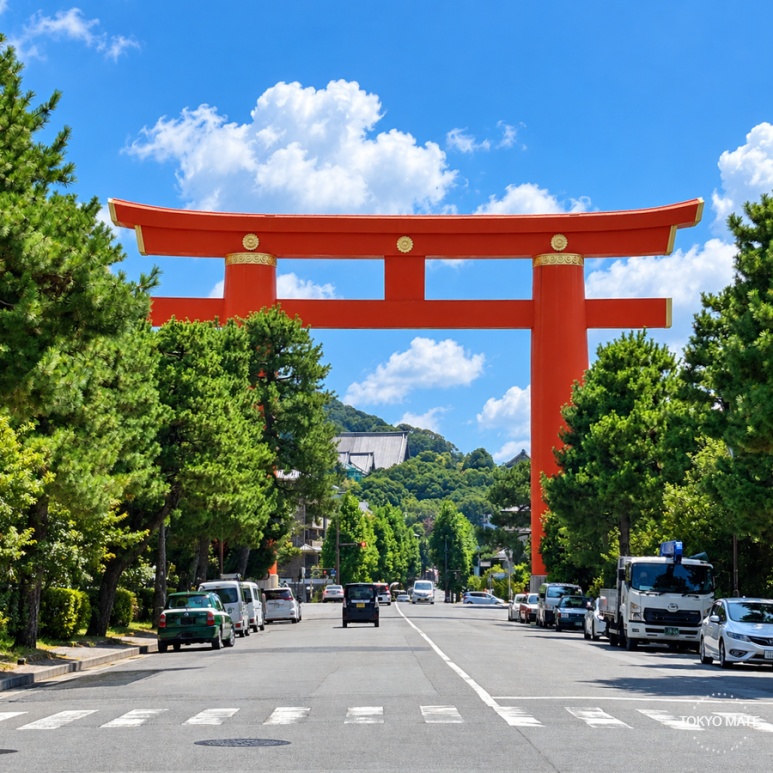
Heian Jingu is easiest to make sense of if you go in this order: the great torii → Otenmon Gate → Daigokuden → Shin-en Garden. Coming from the torii, you follow the Jingu-michi road to the Otenmon Gate, and through the gate the wide gravel courtyard and the Daigokuden open up straight ahead.
The great torii
A huge vermilion torii stands on the Jingu-michi road leading to Heian Jingu. It's one of the most noticeable structures in the Okazaki area and is a Registered Tangible Cultural Property of Japan.
Otenmon Gate
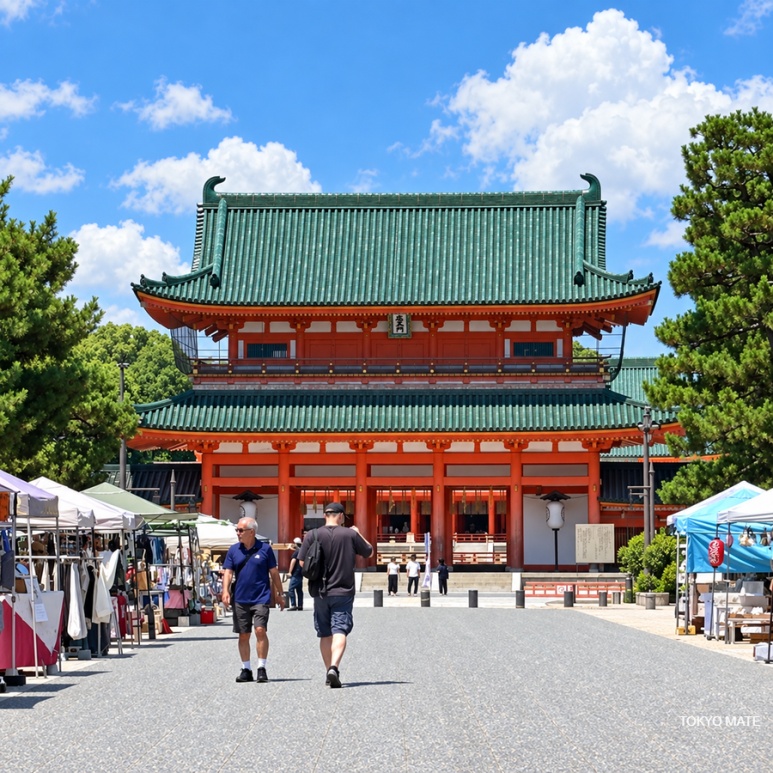
Head north from the great torii and you reach the Otenmon Gate, the main entrance to the Heian Jingu grounds. It was built in 1895 together with the Daigokuden. It is modeled on the south main gate of the compound where state ceremonies were held in old Heian-kyo, and is now an Important Cultural Property of Japan.
The Daigokuden and its two towers
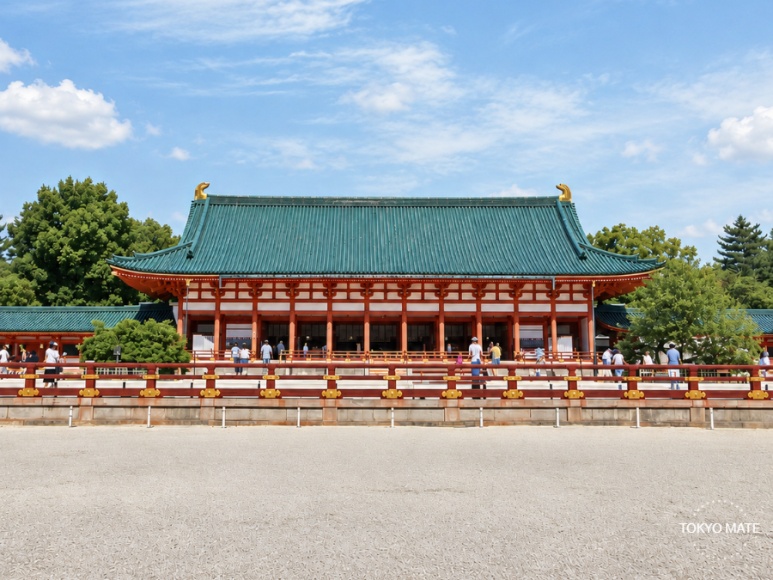
Through the Otenmon Gate is a wide courtyard of white gravel, with the Daigokuden straight ahead.
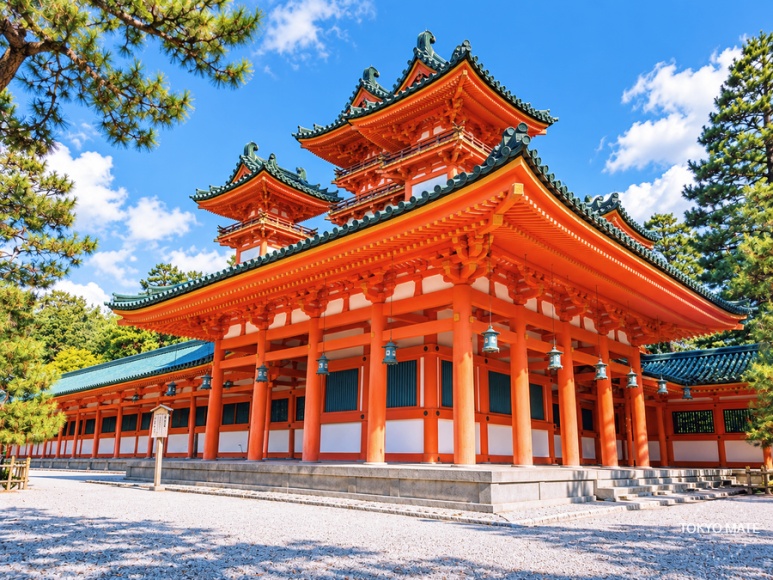
On either side of the Daigokuden stand two towers, the Soryu-ro and the Byakko-ro. They were built in 1895 along with the Daigokuden, when the shrine was founded, and are now Important Cultural Properties of Japan.
Heian Jingu Shin-en Garden
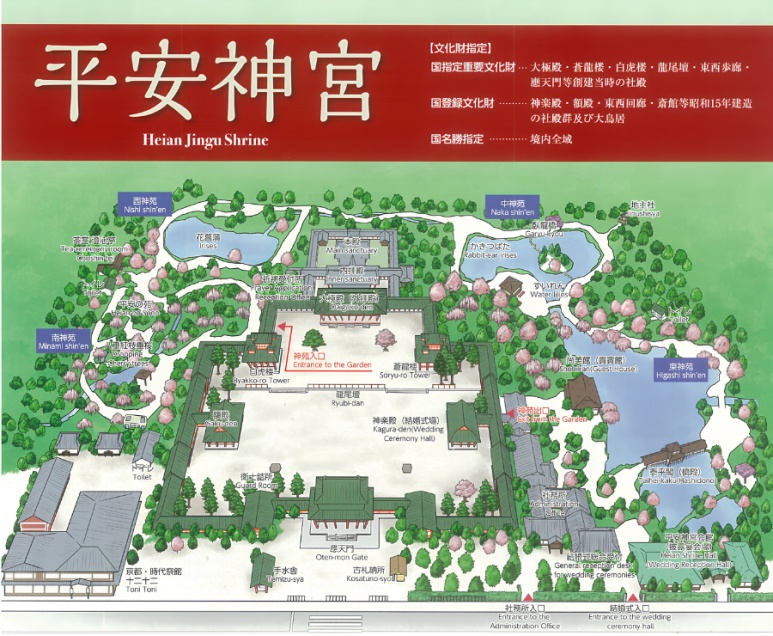
The Heian Jingu Shin-en (神苑) is a Japanese garden of about 33,000 m² that wraps around the back of the main buildings. It's a strolling garden, seen by walking the paths around its ponds, and is divided into four areas: Minami (South), Nishi (West), Naka (Middle) and Higashi (East) Shin-en.
It was laid out by Meiji-era garden designers including the 7th-generation Ogawa Jihei, and was designated a national Place of Scenic Beauty in 1975. Ogawa Jihei also worked on the gardens of Murin-an and Maruyama Park in Kyoto.
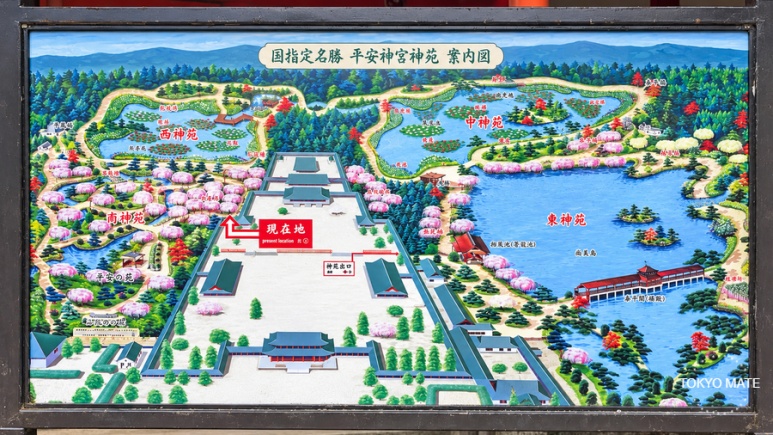
⚠️ Until mid-October 2026, construction work has moved the Shin-en entrance temporarily to the north side of the Byakko-ro. If you visit during this period, just follow the signs on site.
The Shin-en runs entrance → Minami Shin-en → Nishi Shin-en → Naka Shin-en → Higashi Shin-en → exit. The entrance and exit are separate, so following the path takes you through the four gardens in turn. A full loop of all four takes about 40 minutes.
| Area | Main sights |
|---|---|
| Minami Shin-en | Red weeping cherry trees, Heian-no-sono |
| Nishi Shin-en | Byakko-ike pond, Japanese irises, water lilies |
| Naka Shin-en | Soryu-ike pond, Garyu-kyo stepping stones, rabbit-ear irises |
| Higashi Shin-en | Seiho-ike pond, Taiheikaku, Shobikan |
Minami Shin-en
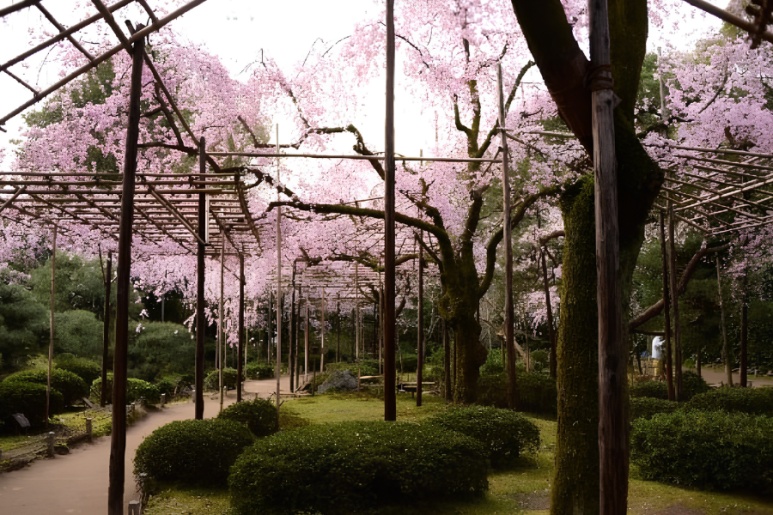
The Minami Shin-en is the first area you reach after the Shin-en entrance. In spring, red weeping cherry trees bloom here, almost covering the garden.
Heian-no-sono, inside the Minami Shin-en, is planted with some 200 kinds of plants that appear in Heian-period writings such as The Tale of Genji and The Pillow Book, each with the passage it comes from.
The narrow, winding paths and the small streams branching through it were also made to reflect the style of Heian-period gardens.
Nishi Shin-en
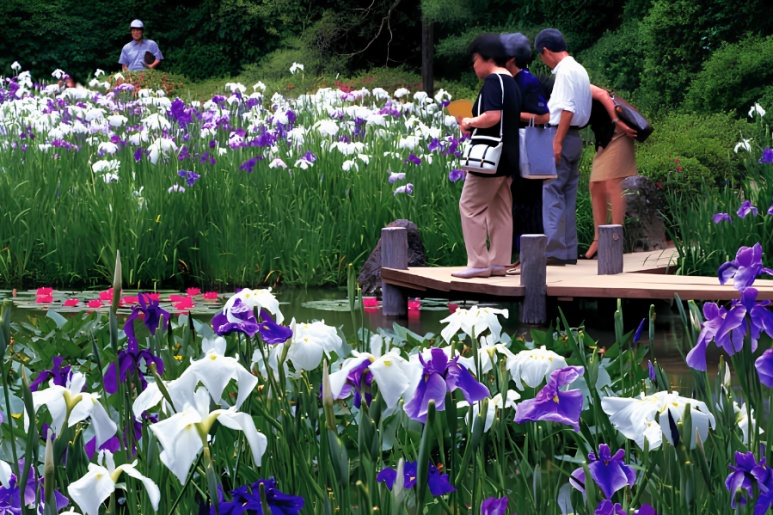
After the Minami Shin-en comes the Nishi Shin-en. At its center is the Byakko-ike pond, and in early summer Japanese irises bloom around it.
About 200 varieties and 2,000 plants of iris grow here, mostly traditional Japanese varieties. In early June a zigzag bridge is laid across the pond, and from early summer to early autumn you can also see water lilies and other water plants.
Naka Shin-en
From the Nishi Shin-en, a woodland path and a small stream lead to the Soryu-ike pond in the Naka Shin-en.
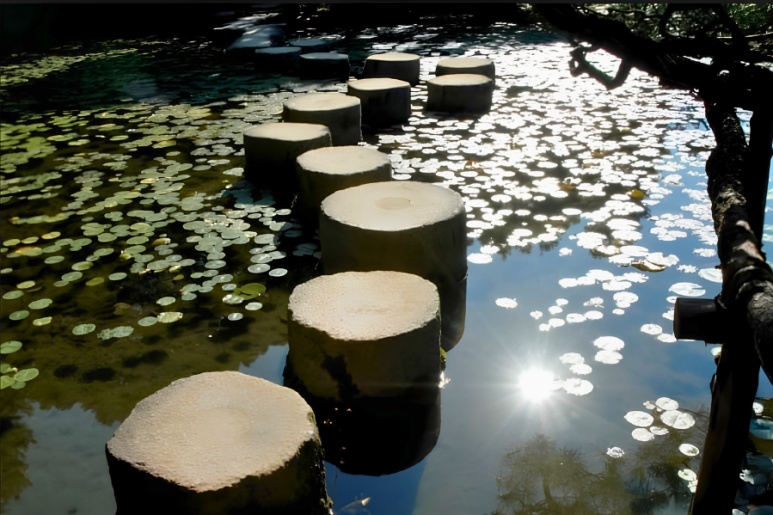
Stepping stones called the Garyu-kyo cross the pond. They are made from pillars of the Sanjo Ohashi and Gojo Ohashi bridges, built in Toyotomi Hideyoshi's time.
About 1,000 rabbit-ear irises are planted around the Soryu-ike pond, usually flowering from early to late May.
Higashi Shin-en
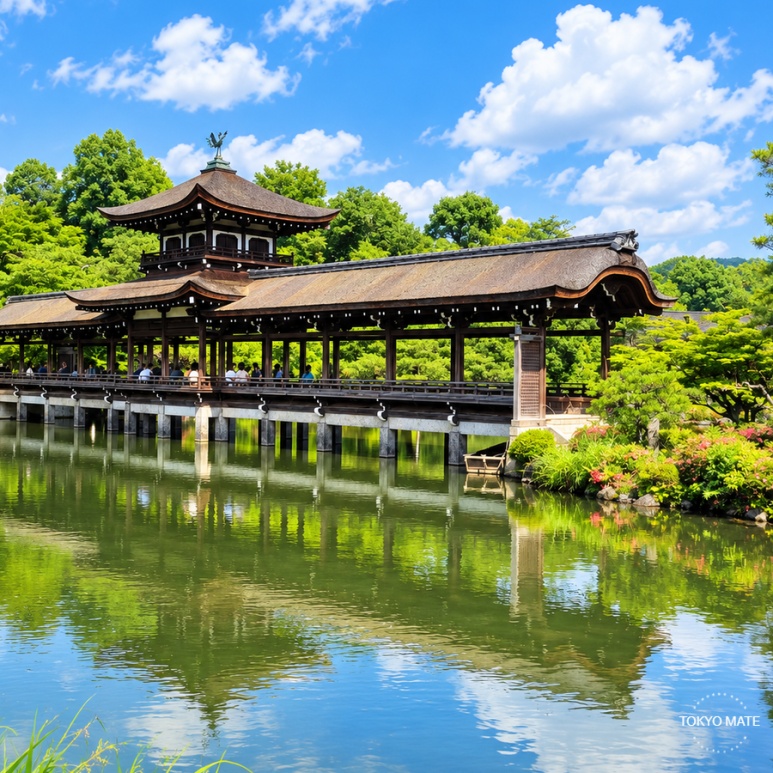
The last area of the Shin-en is the Higashi Shin-en. Around the wide Seiho-ike pond are the Shobikan on the shore and the Taiheikaku, which sits over the water.
From the Taiheikaku, a covered bridge across the pond, you can see the pond, the garden and the Higashiyama hills together.
The Shin-en changes with the seasons: red weeping cherries in spring, rabbit-ear irises and Japanese irises in early summer, autumn leaves in autumn, and snow scenes in winter.
Heian Jingu Autumn Leaves 2026
In autumn you can see the leaves change in the Heian Jingu Shin-en. Kyoto's 2026 foliage is expected to be later than average or a little late, with the main spots entering the full foliage season from late November.
Heian Jingu itself hasn't announced a 2026 peak date yet. Timing depends on temperature and weather, so if you're visiting from late November on, check the actual leaf conditions before you set off.
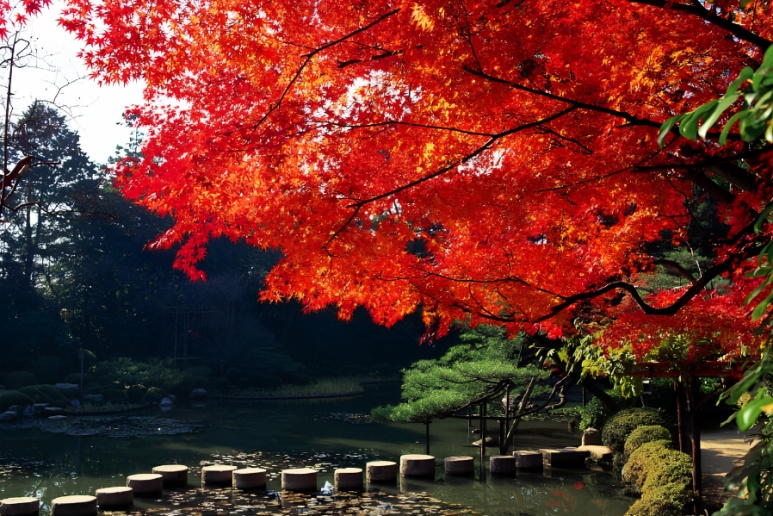
⚠️ In November, foliage season, the Shin-en is open 8:30-17:00, with last entry at 16:30.
Heian Jingu's vermilion buildings and wide grounds make an impression on their own, but walk on into the Shin-en and the atmosphere becomes much calmer. The scenery changes with every season, so it's a place I'd like to see in a different season next time I'm back in Kyoto.
Sources: Heian Jingu official website, Kyoto City Transportation Bureau, Weathernews
Information checked: 2026-09-26
🧡 Tokyo Mate Kyoto Guide
👉 Yamamoto Menzou Kyoto: Takeout Udon Menu, Prices & Booking