Nezu Shrine: Azalea Festival, Senbon Torii & Access
Tokyo Mate
Tokyo's Nezu Shrine is a 1,900-year-old landmark shrine famous for its tunnel of red torii gates. Here's everything in one place: how to get there, admission, the April Azalea Festival, the July–August Pinwheel Festival, and the Yanesen walking course.
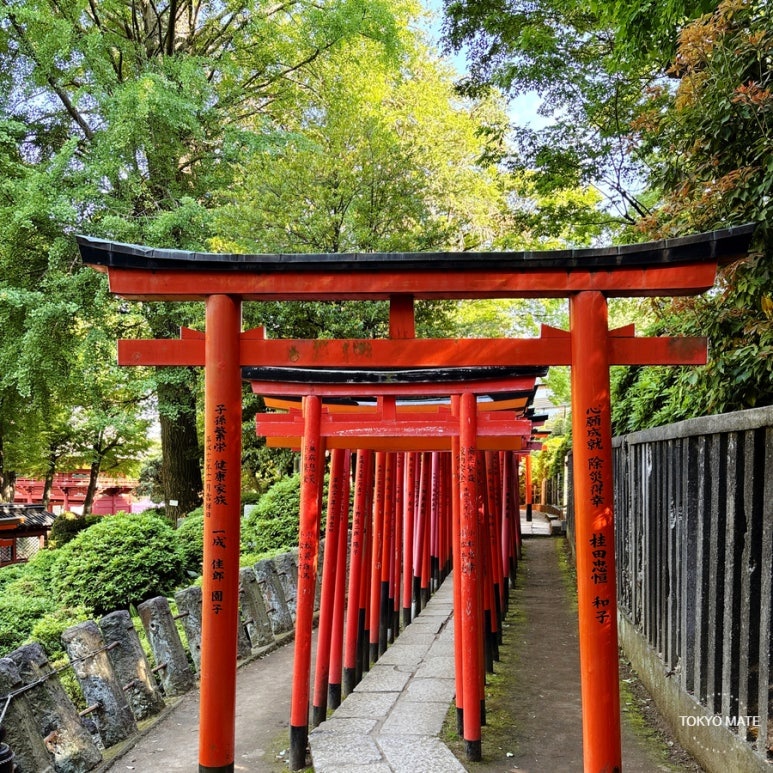
A place in Tokyo where you can feel a Kyoto-like atmosphere — that’s Nezu Shrine.
The scenery of red torii tunnels stretching alongside forested paths is so quiet that it’s hard to believe you’re in the middle of the city. From the April Azalea Festival to the July–August Pinwheel Festival, this is one of Tokyo’s representative shrines with a different charm in every season.
Here’s everything you need — how to get there, admission, opening hours, and the year-round festival calendar — all in one place.
About Nezu Shrine
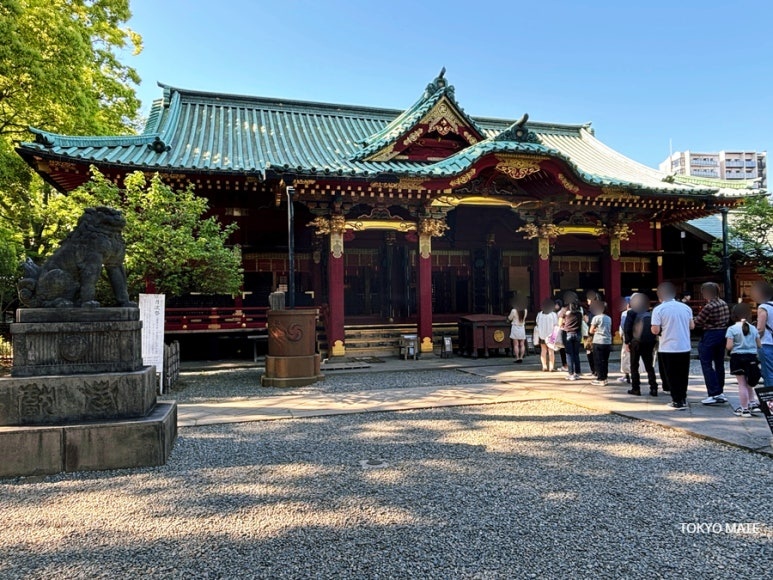
Nezu Shrine is a historic shrine located in Bunkyo Ward, Tokyo, said to have been founded about 1,900 years ago. The current buildings were rebuilt in 1706 (Edo period), and seven structures including the main hall are designated as Important Cultural Properties of Japan.
Why Nezu Shrine Is Special
- An Important Cultural Property shrine that preserves Edo-period architecture intact
- A red torii tunnel rarely seen in Tokyo
- An azalea spot in spring, and a pinwheel festival venue in summer
- A key landmark on the Yanesen walking course
- "The Indestructible Shrine" — a nickname earned after miraculously escaping damage during both the Great Kanto Earthquake and the Tokyo air raids
📌 Unlike Tokyo’s central tourist hubs, it isn’t overcrowded with visitors, making it a great place to feel the quiet side of Japan.
Admission, Opening Hours & How to Get There
| Item | Details | |
|---|---|---|
| Name | Nezu Shrine (根津神社) | |
| Opening Hours |
| |
| Closed | Open year-round | |
| Admission | Free | |
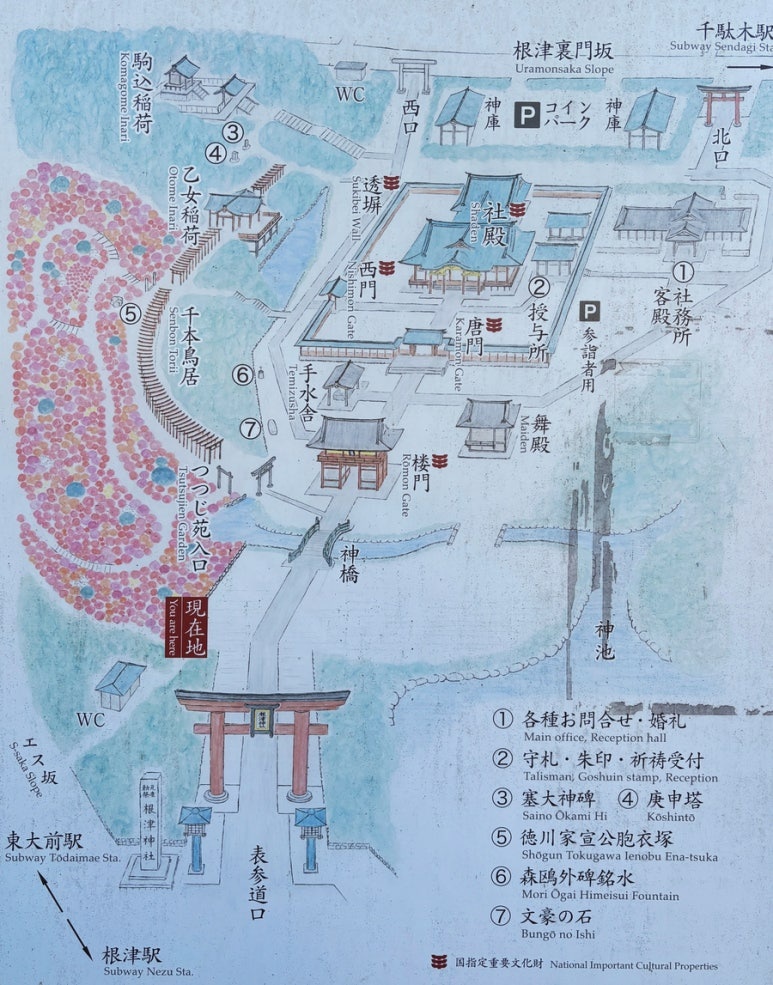
| Location | 1-28-9 Nezu, Bunkyo-ku, Tokyo 🚇 5-minute walk from Nezu Station (Chiyoda Line) 🚇 5-minute walk from Sendagi Station (Chiyoda Line) 🚇 5-minute walk from Todaimae Station (Namboku Line) 🚇 10-minute walk from Hakusan Station (Mita Line) | |
📌 Tokyo Mate's Route Tip
From Nippori Station (JR Yamanote Line / Keisei), you can connect Yanaka Ginza and Nezu Shrine into a single walking course. If you take the Skyliner from Narita Airport and get off at Nippori Station, everything links up in one smooth route — perfect for the first or last day of your trip.
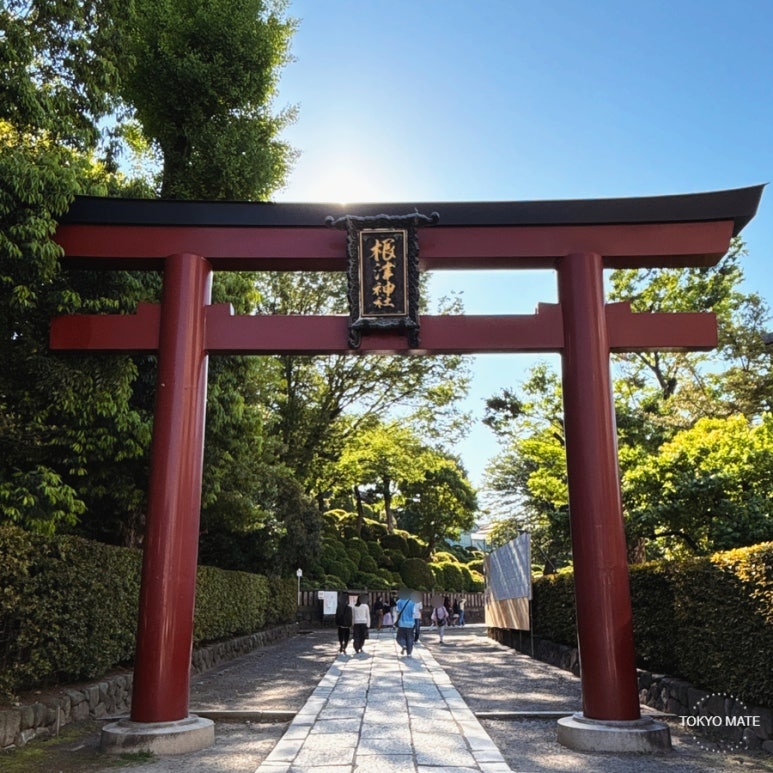
Top 3 Highlights at Nezu Shrine
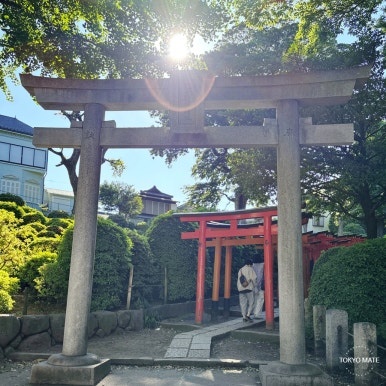
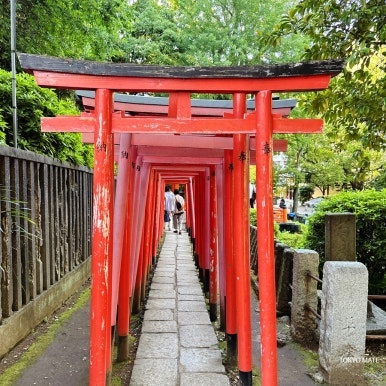
① The Kyoto Mood in Central Tokyo — Red Torii Tunnel (Senbon Torii)
The signature photo spot of Nezu Shrine: a red torii tunnel reminiscent of Kyoto’s Fushimi Inari.
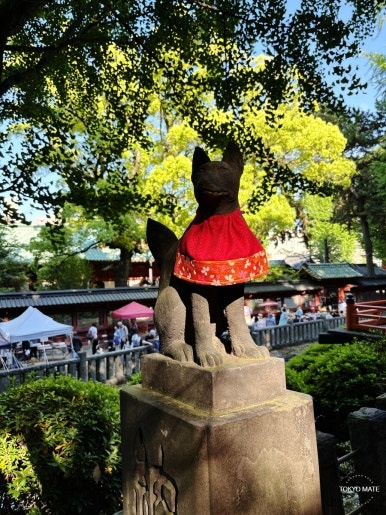
Walking along the endless red torii (pillar gates) leading toward Otome Inari Shrine, you fall into a dreamlike illusion of standing inside Kyoto’s Fushimi Inari Shrine. It’s the best photo spot for taking once-in-a-lifetime exotic shots that make it hard to believe you’re in the middle of the city.
② Architectural Beauty Across the Ages — The Main Hall (Important Cultural Property)
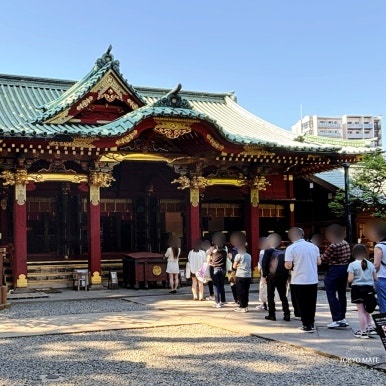
Nezu Shrine is called “The Indestructible Shrine” for miraculously escaping disaster during both the Tokyo air raids and the Great Kanto Earthquake.
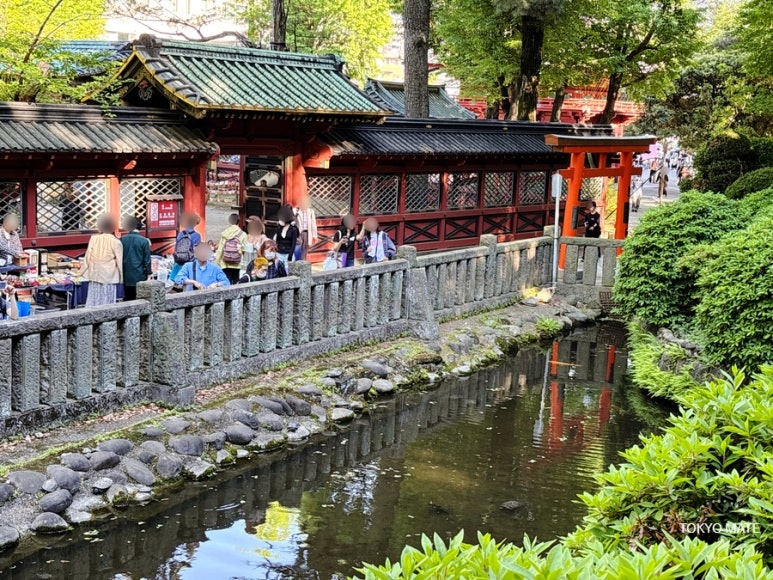
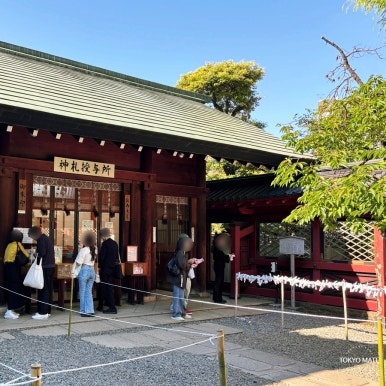
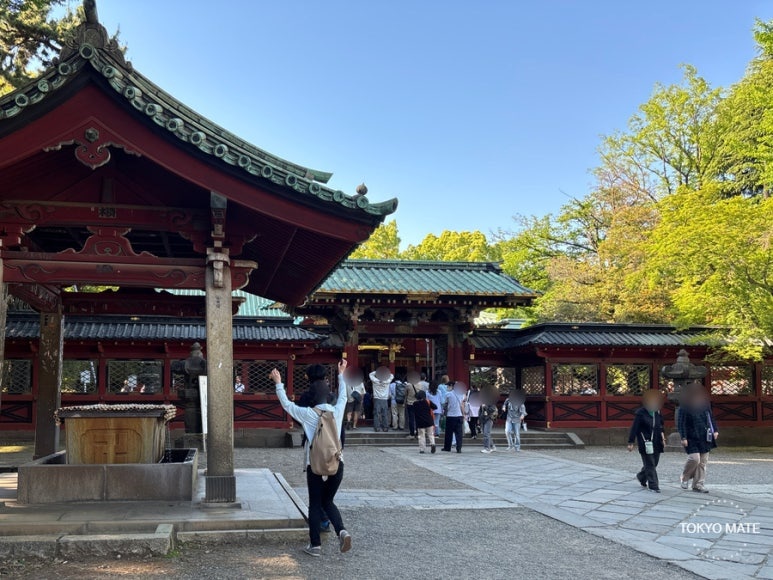
The architectural style of 1706 (Edo period) has been preserved exactly as it was. Intricate traditional carvings and deep, vivid lacquered colors command your attention. The main hall and the other six structures within the precincts are all designated as Important Cultural Properties of Japan — a space of outstanding historical value.
③ April’s Spectacular Floral Palace — Tsutsuji-en (Azalea Garden)
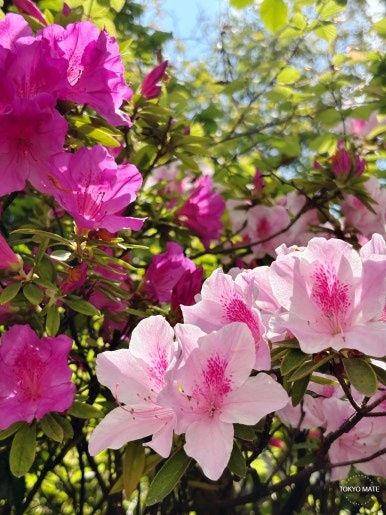
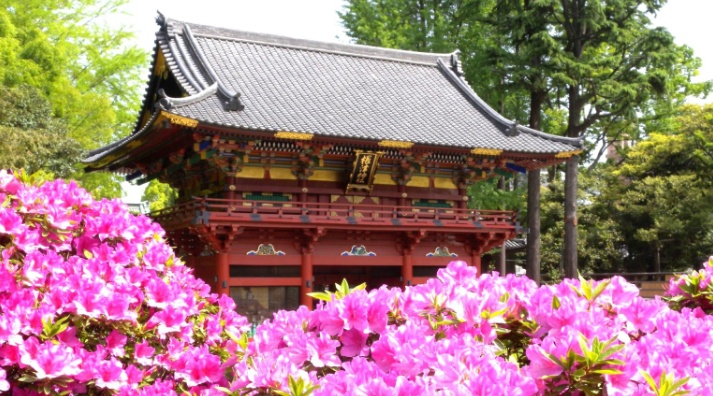
The garden hillside, normally green, turns crimson — this is the highlight of spring at Nezu Shrine.
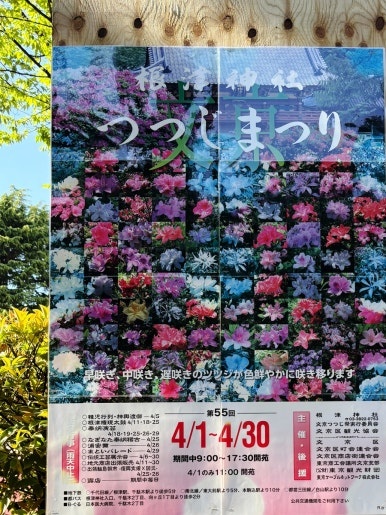
A vast garden planted with about 100 varieties and 3,000 azalea bushes, it opens every April, with mid-April being the peak. The Bunkyo Tsutsuji Matsuri (Azalea Festival), held at the same time, lets you enjoy the spectacular flower viewing alongside a wide variety of yatai (food stalls).
Nezu Shrine Year-Round Festival Calendar
Nezu Shrine is a shrine whose atmosphere changes dramatically from season to season.
Here are the four main seasonal events.
April | Bunkyo Tsutsuji Matsuri (Azalea Festival)
Bunkyo Ward’s signature flower festival, held throughout April every year. Around 100 varieties and 3,000 azalea bushes come into full bloom — one of Tokyo’s must-see spring spots.
- Period: April 1 – April 30 every year (peak bloom in mid-April)
- Tsutsuji-en opening hours: 09:00 – 17:30
- Admission: 500 – 1,000 yen (free-donation system)
July–August | Natsumode Kazaguruma Matsuri (Pinwheel Festival)
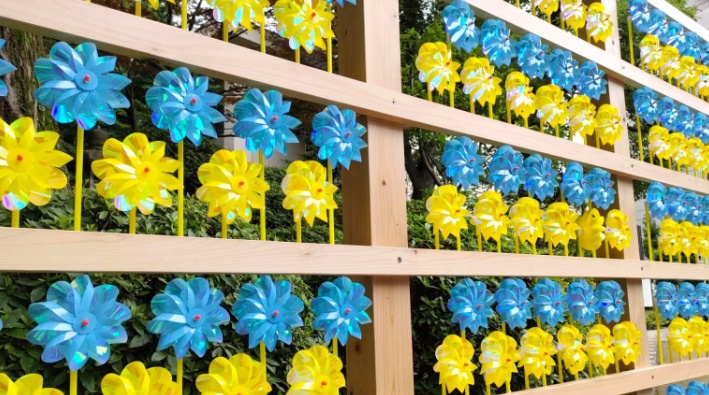
A seasonal festival held only in summer. About 700 wish-pinwheels are set up at the precinct’s Komagome Inari Shrine — Nezu Shrine’s summer pinwheel festival.
- Period: July 1 – August 31 every year
- Pinwheels installed: about 700
September | Reitaisai (Grand Festival)
A traditional festival passed down since 1714 (Edo period). Traditional performing arts are dedicated to the shrine — Gongen-daiko traditional drum performances, the Urayasu-mai shrine offering dance — and food stalls line the precincts.
- 2026.9.21 (Mon) — Ceremony
- 2026.9.26 (Sat) & 27 (Sun) — Dedication of traditional performing arts
- 2026.9.27 (Sun) — Shinkosai (mikoshi procession)
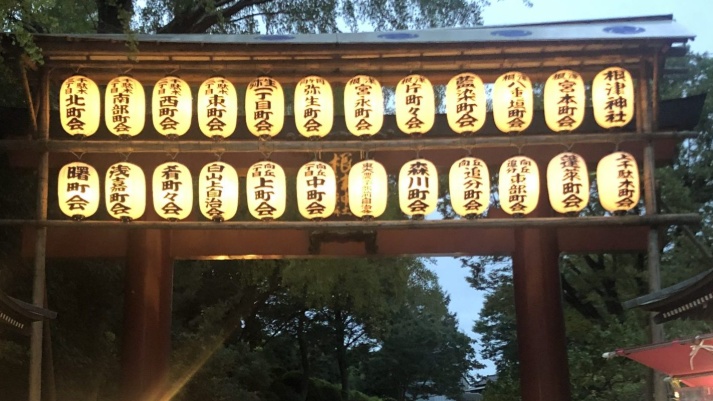
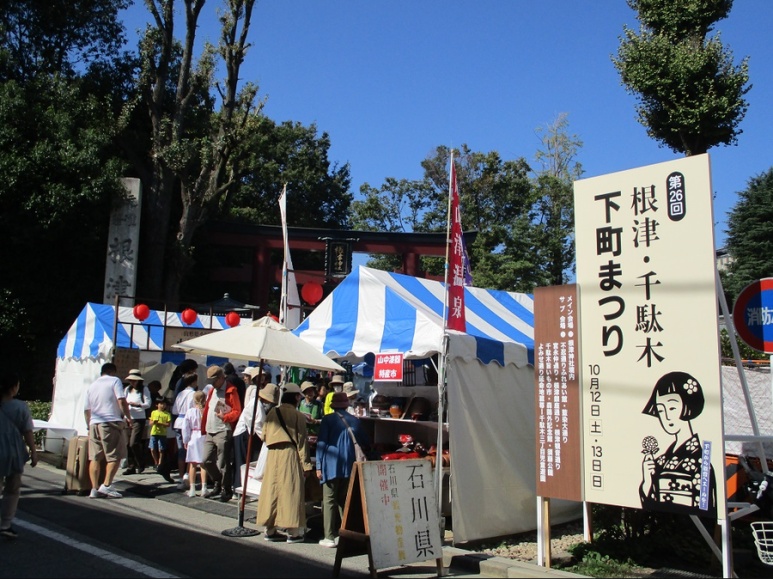
October | Nezu-Sendagi Shitamachi Matsuri
An autumn festival where the entire Yanesen area comes together. It’s a local event that’s great to enjoy in its natural neighborhood atmosphere.
- 2026 dates: 10.10 (Sat) & 10.11 (Sun)
- Bunkyo Cultural Property Week runs at the same time
Nezu Shrine is a shrine where Tokyo’s rare combination of “torii tunnel + nature + tradition” all remain alive.
Combine it with Yanaka Ginza, and you complete a course that lets you experience another side of Tokyo’s charm.
🧡 Tokyo Travel Guides Worth Reading Together
👉 Nippori Station Luggage Storage Guide — Coin Lockers, Prices & Skyliner Route
👉 Yanaka Ginza — How to Get There, Menchi Katsu & Yuyake Dandan Sunset
👉 Starbucks Yanaka Gotenzaka — Gallery Cafe
👉 Kyu-Furukawa Gardens Rose Festival — Western House, Japanese Garden & Access