Sennomago Nishiogikubo: Sichuan Food With No MSG
Tokyo Mate
Sichuan cooking with no chemical seasonings at all. A visit to Sennomago in Nishiogikubo.
Sennomago (仙ノ孫) sits in a residential street on the north side of Nishiogikubo Station. The official site calls it "the Sichuan restaurant of Nishiogi" and states plainly that, under the motto "food as medicine", it uses no chemical seasonings. On a weekday evening in August I ate my way from the starters through soup, mapo tofu and dry dandan noodles, so here is what came out and what the menu charges.
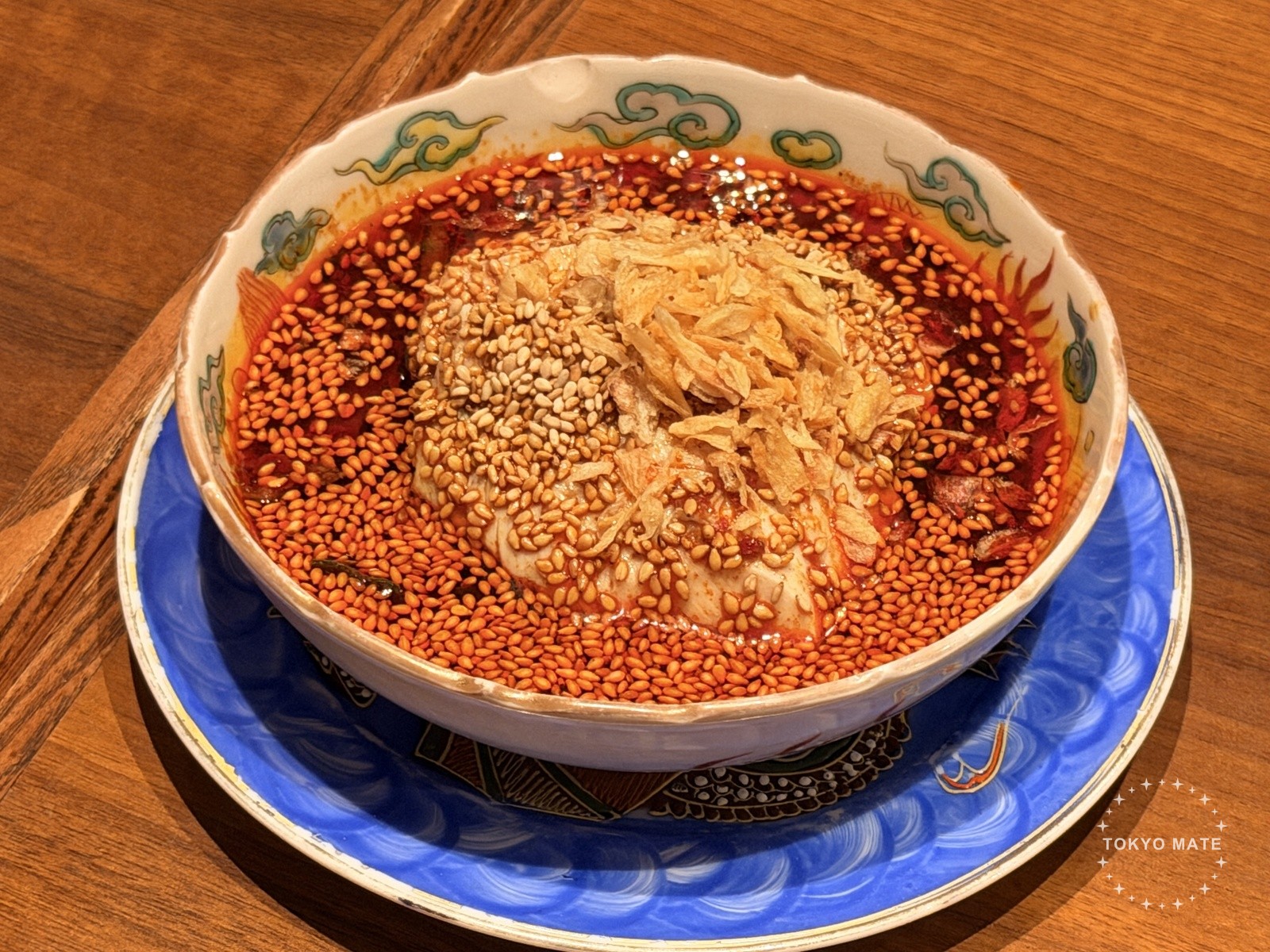
What Sennomago does differently: oils and herbal medicine instead of MSG
The "our commitment" page on the official site comes down to this.
- The base stock for dishes is a collagen-rich soup made in house
- Twenty kinds of Chinese herbal medicine are kept on hand and used as seasonings and hidden flavors
- Every condiment is made from scratch, one by one
- Ingredients are chosen for safety
The interesting part is how they treat oil. They see it as an ingredient in its own right, one that concentrates aroma and umami, and keep a whole set for different dishes: four chili oils, two scallion oils, chicken oil, Sichuan pepper oil and an oil infused with 15 herbal medicines. Vegetables come from Oita, 77 varieties across the seasons. The summer list includes white and green bitter melon, white and jade eggplant, and Manganji peppers.
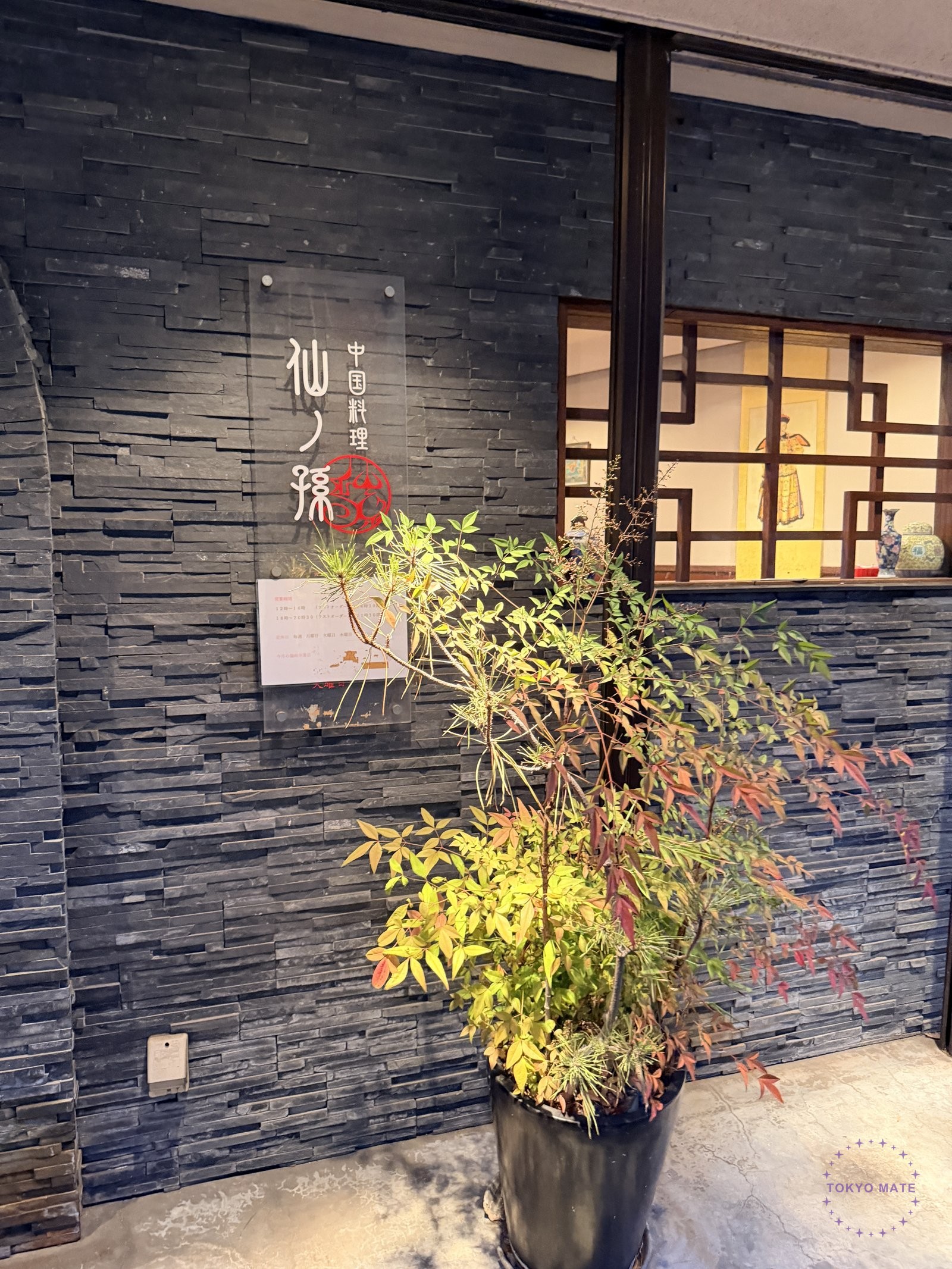
Start with Chinese tea: a lidded mug for one
Chinese tea comes in a single-serving lidded mug, and the menu notes it cannot be shared. The mug is painted with a blue dragon, and the lid flips over to become a saucer.
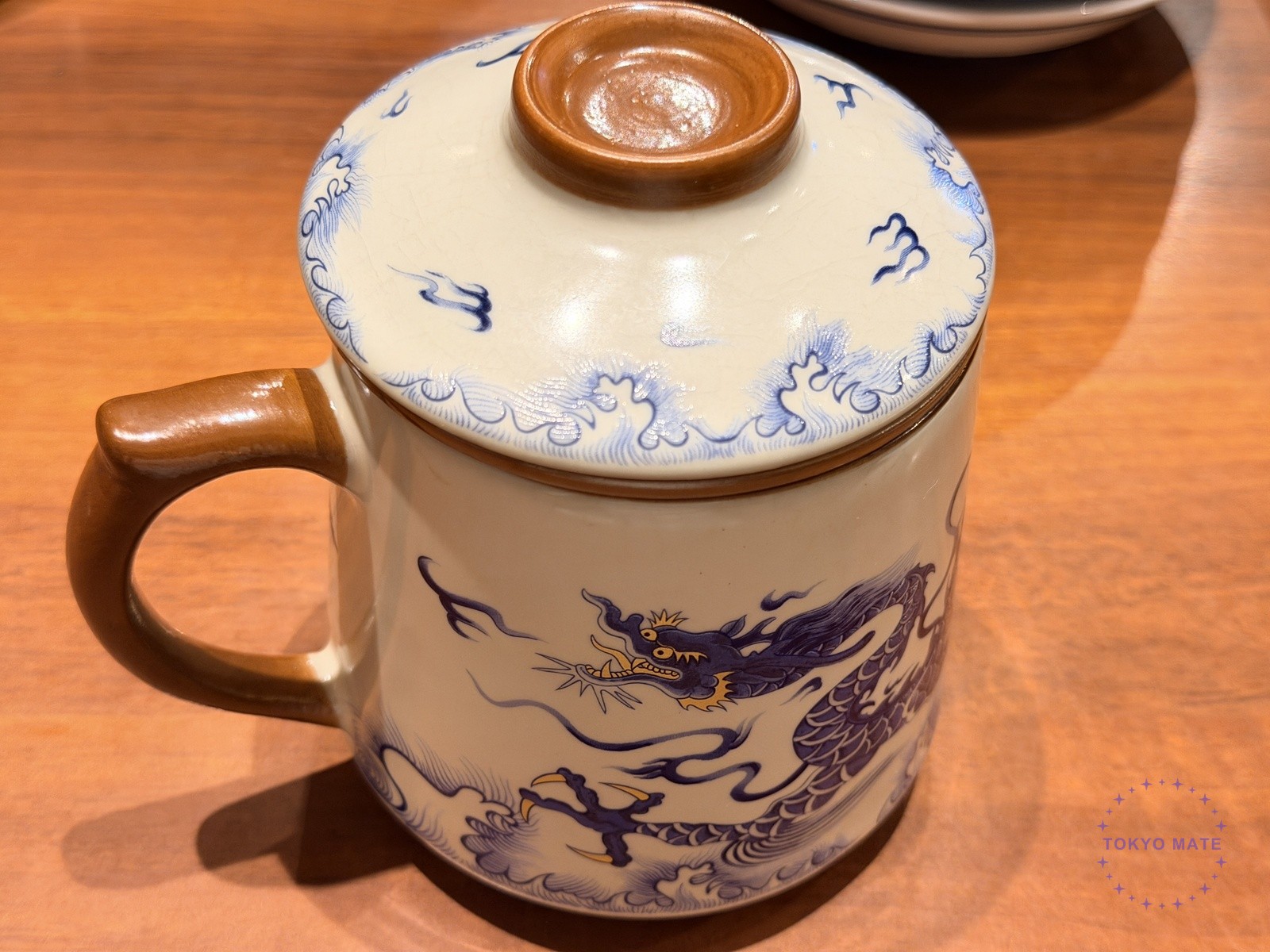
Inside were jujubes, goji berries, chrysanthemum petals and dried slices of something steeping with the tea leaves. Chinese teas on the menu are 650 yen per person; the premium teas with reishi or black goji are 850 yen.
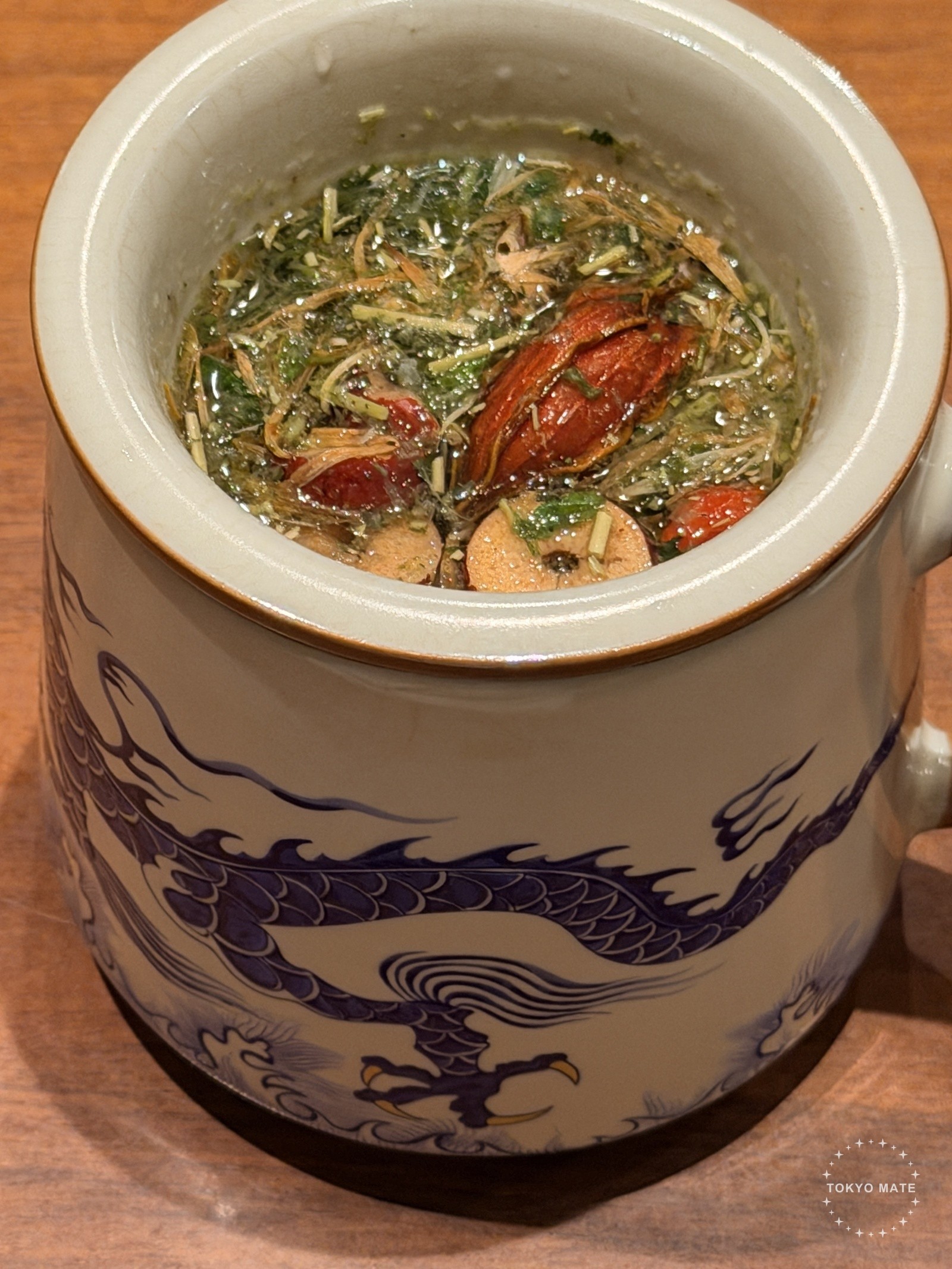
Starters: mouthwatering chicken and two small plates
The starter was the house specialty, mouthwatering chicken (yodare-dori, 1,250 yen). Poached chicken buried under white sesame, a heap of fried onion on top, and red chili oil filling the bowl to the rim. A cloud-pattern bowl set on a blue plate is typical of how this place plates things.
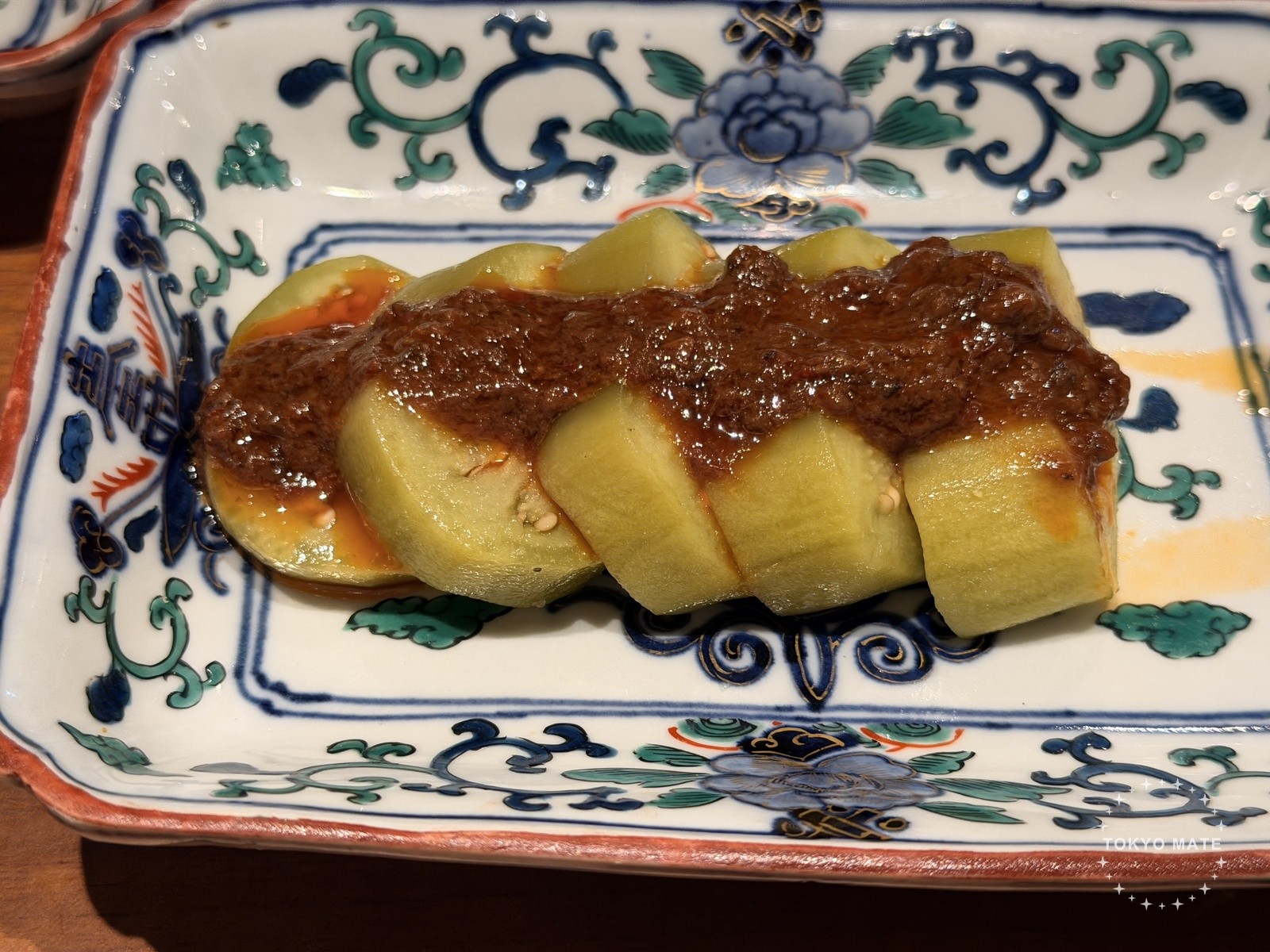
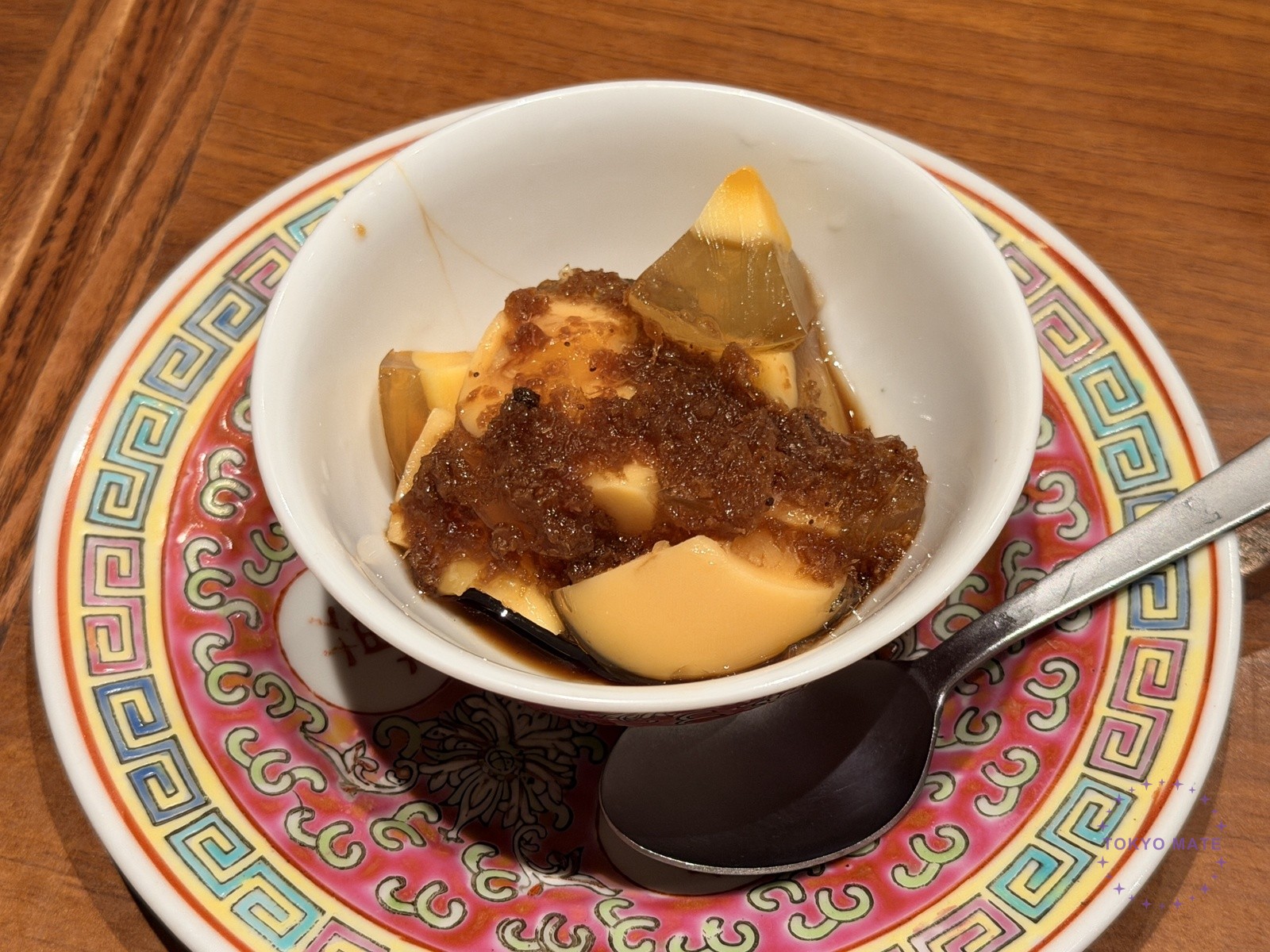
Two more small plates came alongside: thick-cut vegetable with a meat-miso sauce, and a soft tofu-like dish topped with brown sugar syrup.
Black pork loin and seasonal vegetables in Shanghai black vinegar
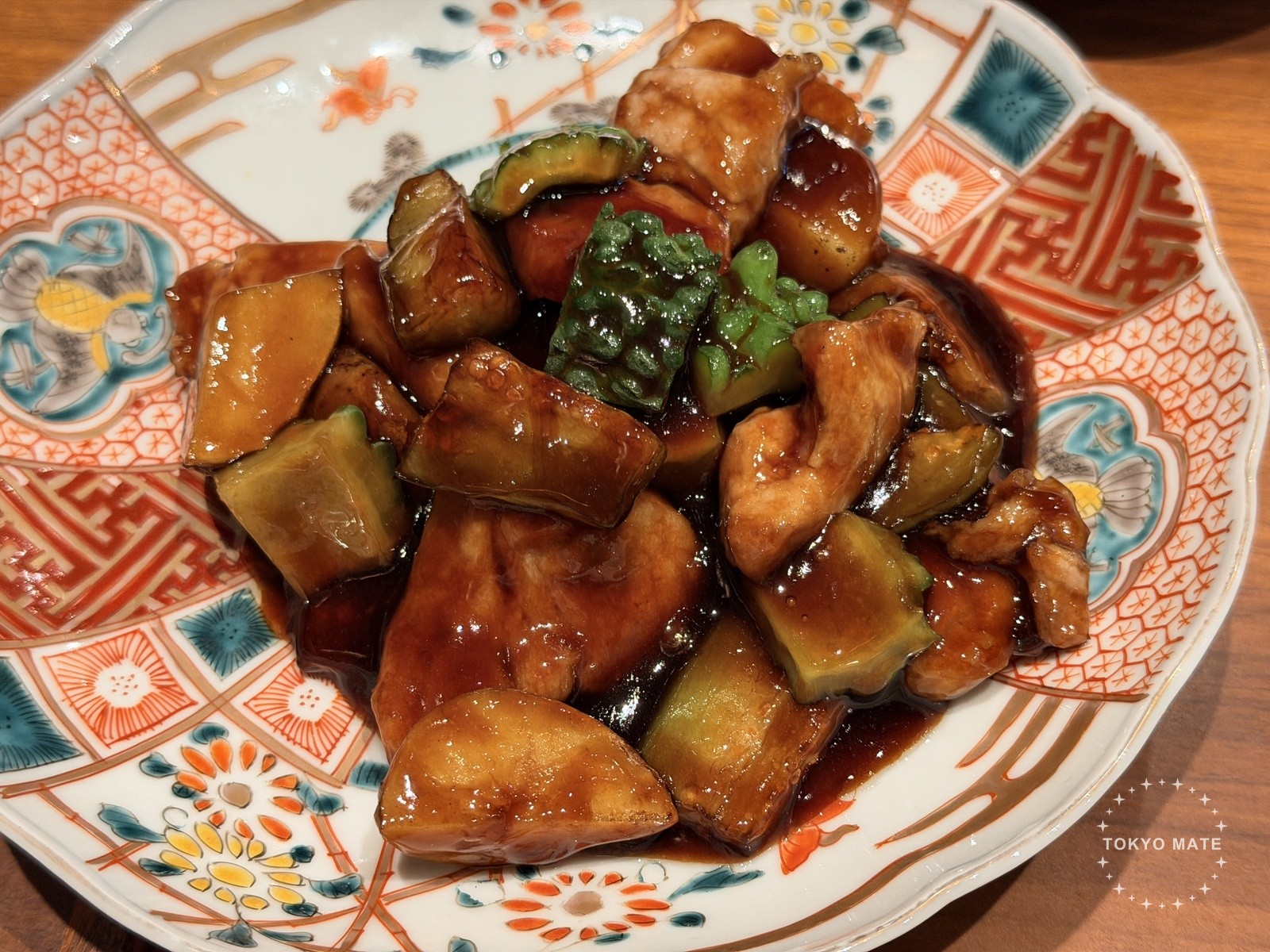
The meat course was black pork loin with seasonal vegetables in Shanghai black vinegar soy sauce (1,650 yen). The pork comes glossy in a dark black-vinegar glaze, with bitter melon and eggplant mixed in. Both appear on the official site's summer vegetable list, so the vegetables in this dish seem to change with the season.
Collagen soup with a whole mini shark fin
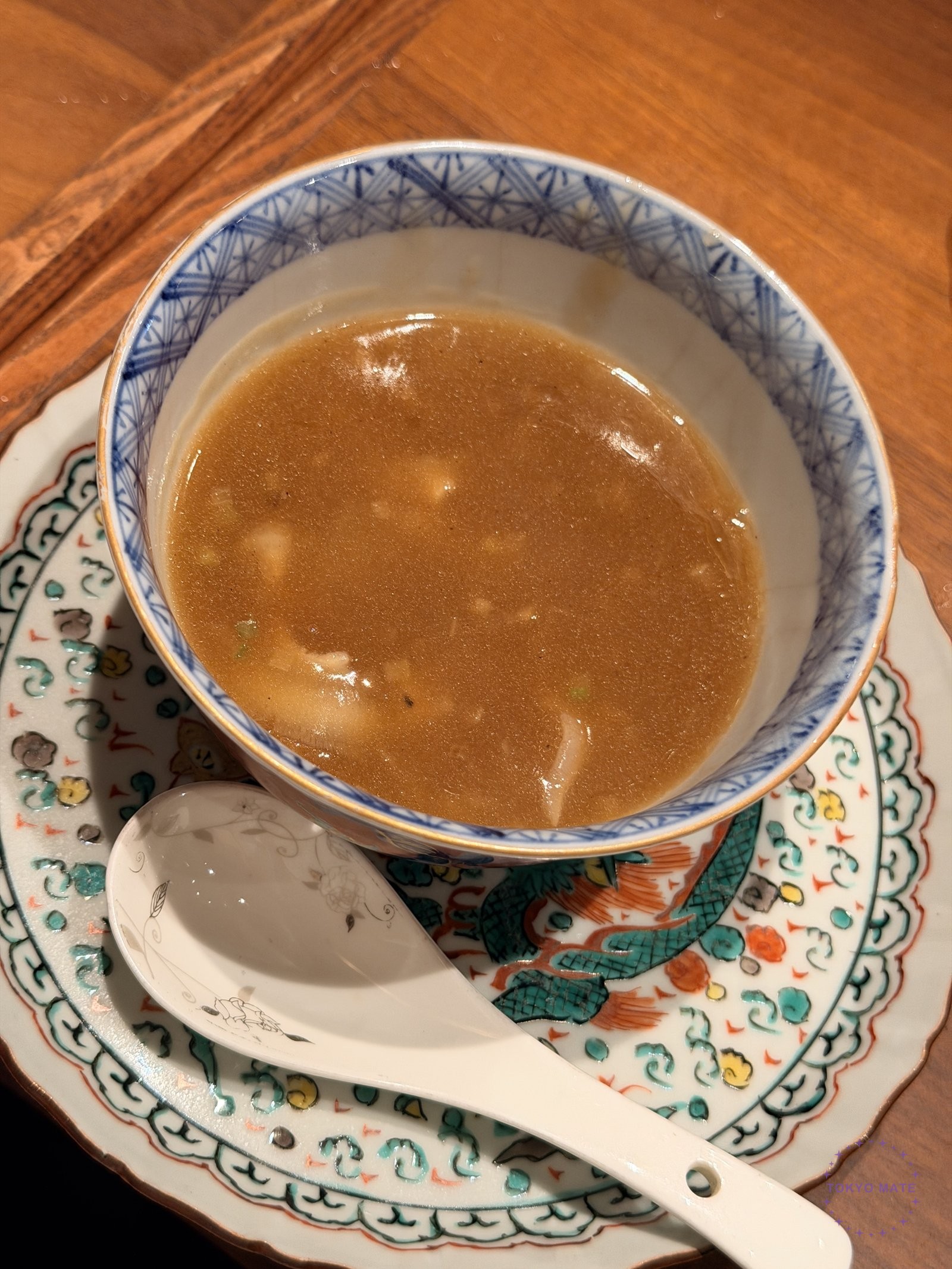
The soup was the premium collagen soup with a whole mini shark fin. Amber-colored and thick, with a small fin in one piece. Pricing is by the number of people: 1,550 yen for one, 2,850 for two, 4,200 for three and 5,500 for four.
Chen mapo tofu made with two-year-aged house doubanjiang
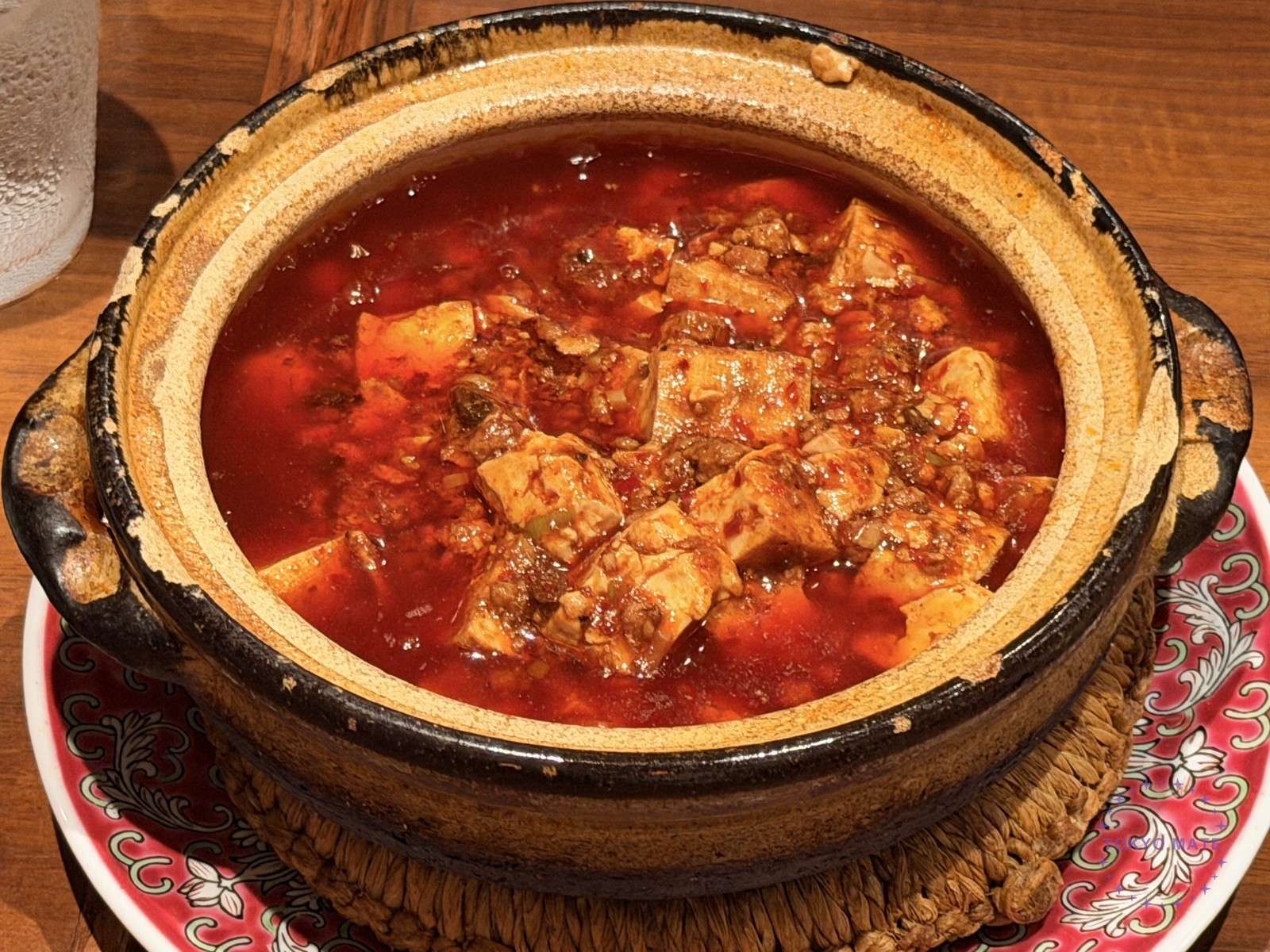
There are four mapo tofus on the menu: a salt-based one made with house green-chili doubanjiang (1,650 yen), the standard mapo tofu (1,650 yen), authentic Sichuan-style Chen mapo tofu (1,950 yen), and the one I had, Chen mapo tofu made with two-year-aged house doubanjiang (2,450 yen).
It arrives in a black clay pot with red oil floating on top. The tofu is cut large and there is plenty of minced meat.
If mapo tofu is your thing, Keitokuchin in Yokohama Chinatown is known for letting you pick the spice level.
👉 Keitokuchin Yokohama Chinatown: Mapo Tofu & Spice Levels
To finish: authentic Sichuan dry dandan noodles
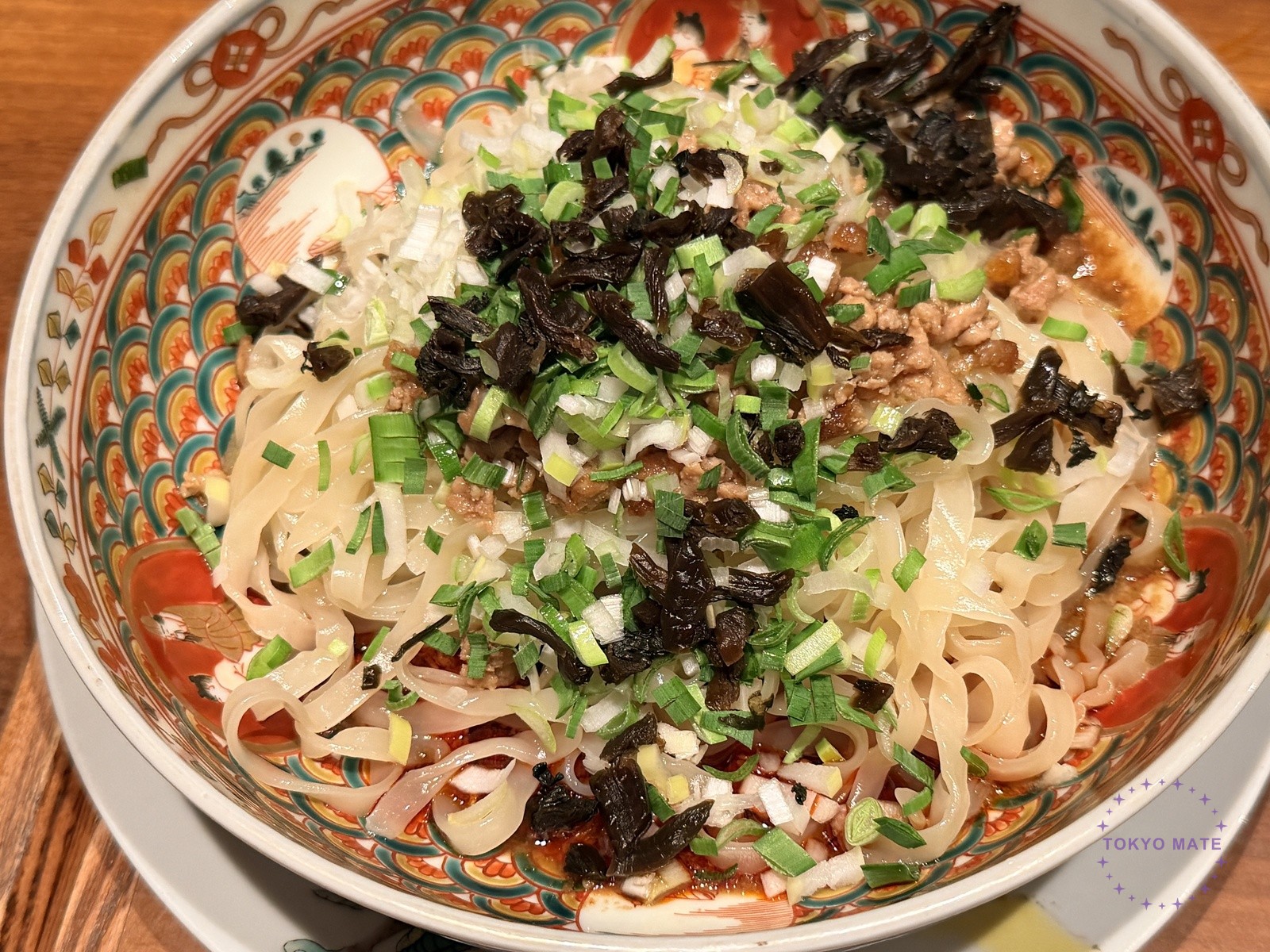
I finished with the authentic Sichuan-style dry dandan noodles (1,550 yen). Flat noodles under a mound of meat miso and chopped scallion, with dark pickled greens scattered over. Red oil pools at the bottom, so you mix before eating. The regular dandan noodles (1,250 yen) and the special soy sauce ramen (1,250 yen) are also on the menu.
House medicinal liquors: maca liquor from Yunnan
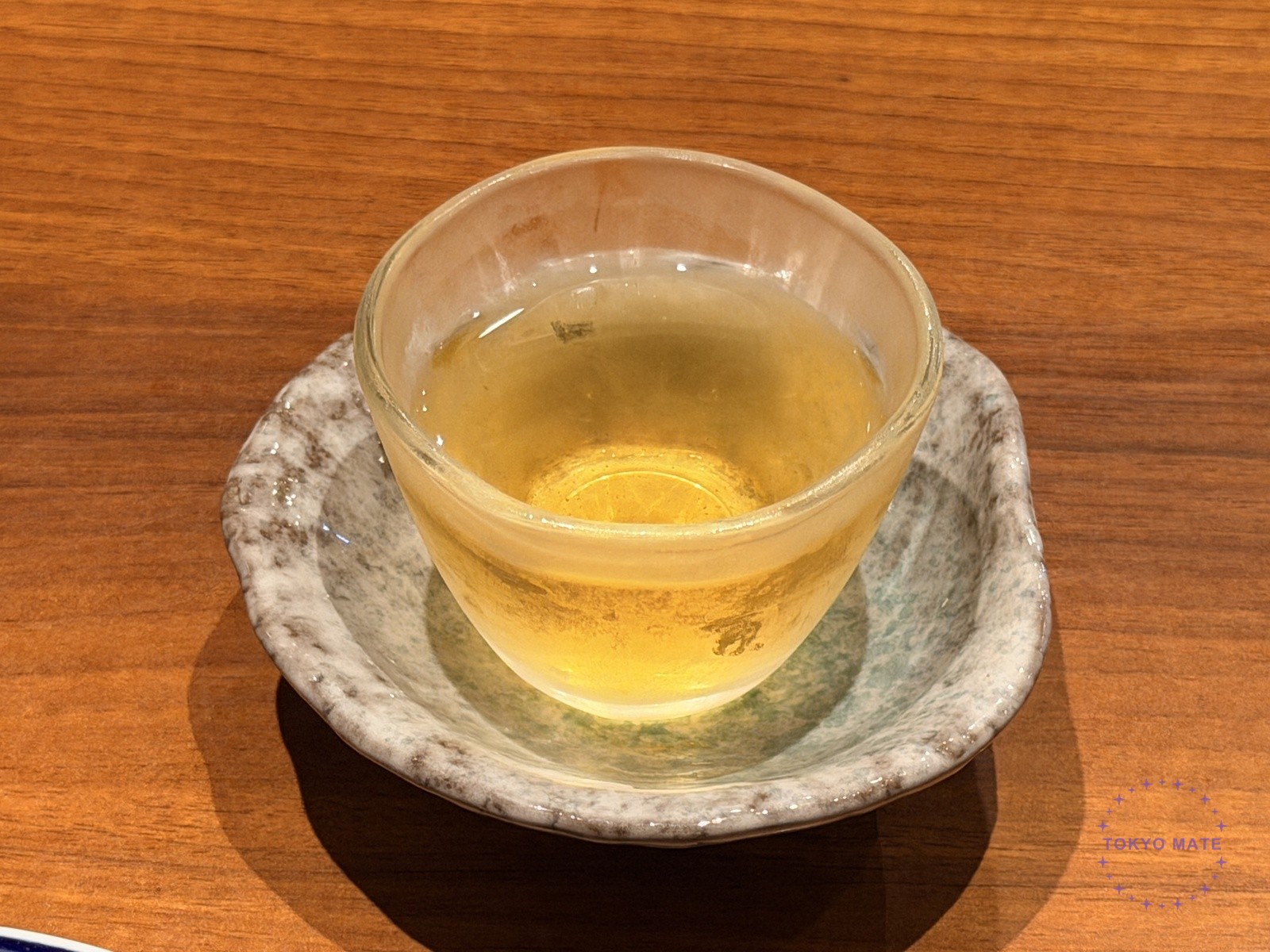
The drinks menu has a line of house-made medicinal liquors. I ordered the natural pesticide-free maca liquor from Yunnan, China (35% ABV, 50ml for 550 yen). The menu says it is natural Yunnan maca steeped for a year in white liquor, and it comes as a pale amber pour in a small glass. Also on the list: a Shaoxing wine steeped with 10 herbal medicines (50ml, 550 yen), Korean ginseng liquor and black goji liquor.
Restaurant details and menu prices
There is a 350 yen per person table charge (otoshi). Courses require one drink order per person. All prices are from the menu posted on the official site and may change.
| Item | Details |
|---|---|
| Name | Sennomago (中国料理 仙ノ孫) |
| Address | 4-4-2 Nishiogikita, Suginami-ku, Tokyo 📍 View on Google Maps |
| Phone | 03-3390-4808 |
| Hours | Lunch from 12:00 / Dinner from 18:00 (per the sign at the door) |
| Closed | Every Monday, Tuesday and Wednesday |
| Courses | Popular dishes course 5,000 yen / Taiwan course 6,500 yen / Chef's choice 8,500 yen Sichuan hot pot 7,500 yen (2 people minimum, reserve 2 days ahead) |
| Website | sennomago.com |
📌 Reservation note
The official site states that if you are more than 30 minutes late for a reservation and cannot be reached, the booking is treated as cancelled.
Nishiogikubo is one stop from Kichijoji. If you want to walk around Kichijoji before or after dinner, this guide covers it.