Tokyo Taxi: Fares, the GO App & Late-Night Surcharge
Tokyo Mate
From how taking a taxi in Tokyo differs from Korea, to the latest 2026 fare system, how to use the taxi app (GO), and the late-night surcharge — it's all here in one place. I've included only the practical information you actually need so you won't be caught off guard on the spot.
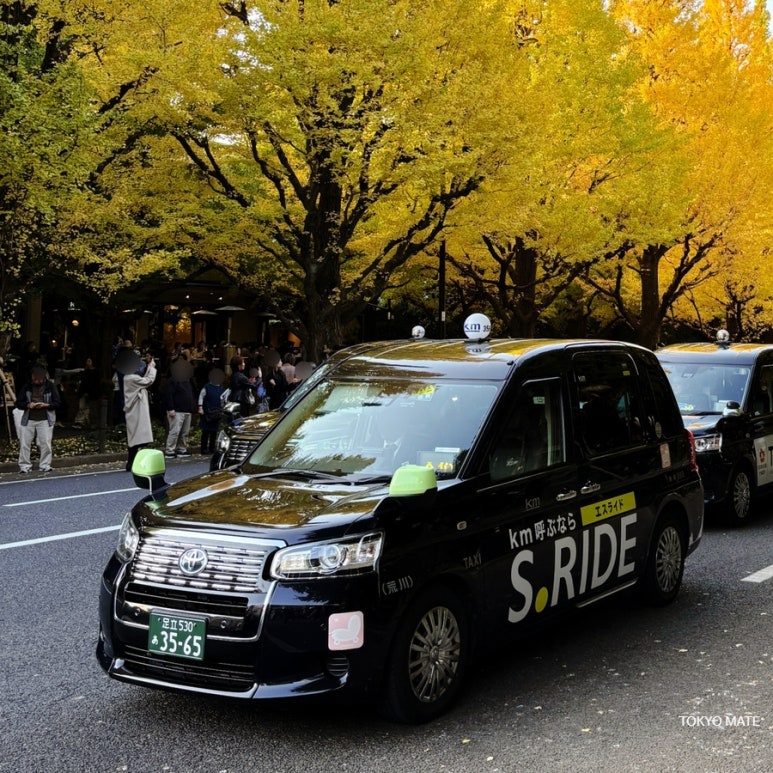
Taking a taxi in Tokyo can be confusing the first time.
If you have to get from the airport to your hotel at midnight and the subway has stopped running, a taxi is often your only option. If you don’t know how much it costs, how to catch one, or whether you can pay by card, it’s easy to be flustered in the moment. But once you understand the basic structure, a Tokyo taxi isn’t difficult at all.
In this article, I’ve organized the essential information you need for your trip based on the latest 2026 standards: the fare system, how to use the taxi app (GO), and the late-night surcharge.
3 Ways to Catch a Taxi in Tokyo
There are broadly three ways to catch a taxi in Tokyo: street hailing, taxi stands, and taxi apps. Since the fastest method depends on the situation, knowing them in advance can cut your travel time significantly.
① How to Catch a Taxi on the Street in Tokyo (Check the “Vacant” Sign)
In Tokyo, you can raise your hand on a major road to catch a taxi. You must always check the vacancy display first.
- 空車 (kūsha): Vacant → you can board ⭕️
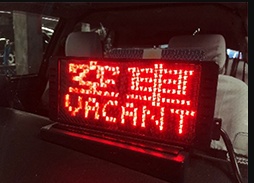
- 賃走 (chinsō): Passenger on board → can't board ❌
- 迎車 (geisha): On the way to an app booking → can't board ❌
- 回送 (kaisō): Returning to the garage → can't board ❌
⚠️ After 10 p.m., catching a taxi gets sharply harder. Especially on Friday and Saturday nights around Roppongi, Shibuya, and Shinjuku, competition for taxis is fierce, so I strongly recommend installing an app in advance.
② Using a Taxi Stand in Tokyo
Major stations such as Tokyo Station, Shinjuku Station, and Shibuya Station have dedicated taxi stands. You line up and board in order — it’s the most reliable of the ways to use a taxi in Tokyo.
At a hotel, you can also ask the front desk to call a taxi for you.
③ Using a Taxi App in Tokyo (Most Recommended)
The most convenient way to use a taxi in Tokyo is app hailing. When you enter your destination, it’s automatically passed to the driver, and you can check the estimated fare in advance — which makes it the method I recommend most for travelers.
📱 Recommended Japan Taxi Apps
| Galaxy (Android) | iPhone | |
|---|---|---|
| GO (all of Japan) | 👉 Google Play | 👉 App Store |
| S.RIDE (central Tokyo) | 👉 Google Play | 👉 App Store |
| DiDi Taxi (all of Japan) | 👉 Google Play | 👉 App Store |
| Tokyo Musen (central Tokyo) | 👉 Google Play | 👉 App Store |
📌 Uber & Kakao T (backup options)
- Uber is useful as a backup when you can't get a GO car. In Japan, it dispatches a regular taxi rather than a private car, and the fare is the same as a taxi.
- Kakao T allows payment in Korean won, but the number of cars is small and advance booking isn't possible.

GO Taxi App: Full Guide (From Install to Hailing & Payment)
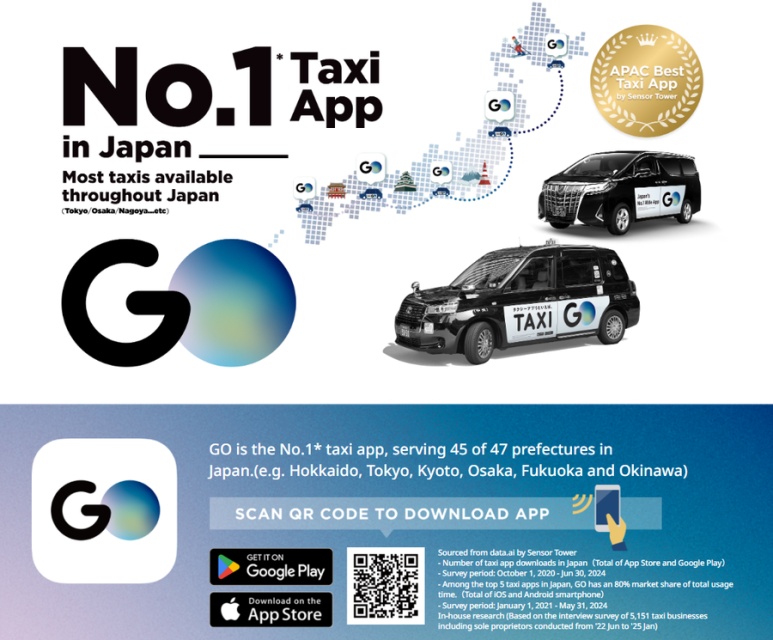
There are several taxi apps you can use in Tokyo, but in the end, installing just the GO app covers most situations. It works all over Japan, and for travelers it’s the app that most reliably hails a taxi.
📱 GO Taxi App Basic Info
➡️ Why it’s the most recommended taxi app in Tokyo = number of cars + dispatch speed
| Item | Details |
|---|---|
| Service area | All 47 prefectures of Japan |
| Fleet size | Over 100,000 cars (largest in Japan) |
| Phone number | ⭕️ Korean numbers can be registered |
| Payment | ⭕️ Korean-issued credit cards can be registered |
| Language | English supported (Korean not supported) |
| Fare | ⭕️ Estimated fare can be checked before hailing |
| Call fee | Varies by area and time of day (check on screen when hailing) |
| Advance booking | Can book from at least 15 minutes ahead up to 7 days in advance |
🚕 How to Hail a Taxi with GO (5 Practical Steps)
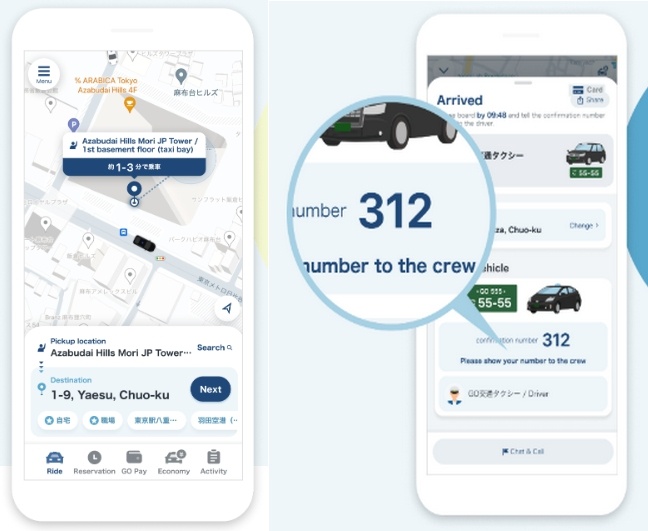
- Open the GO app → confirm your pickup location (adjust the map pin)
- Enter your destination (automatically passed to the driver)
- Select a coupon, then hail
- Check the estimated arrival time + you can message the driver
- Taxi arrives → board → get off
➡️ If you enter your destination in advance, you can travel without speaking any Japanese
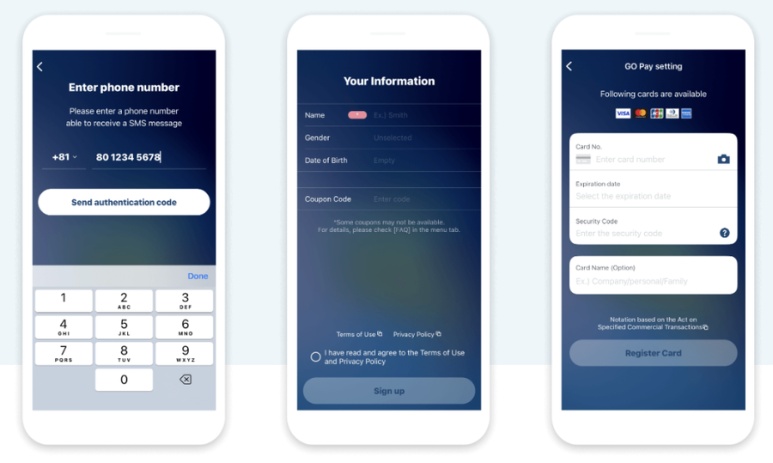
🚕 How to Register a Card with GO Pay & Fix Errors
To finish everything in one go in the GO app — including payment — you need to set up GO Pay (in-app payment).
✅ How to register a card with GO Pay
- Open the GO app → complete sign-up
- Verify your phone number (enter the SMS code)
- Go to the payment menu → enter GO Pay settings
- Enter your card details (card number, expiry date, CVC)
- Registration complete → ready to use right away
⚠️ If a foreign card fails to register, re-register after arriving in Japan, and check whether your card company has blocked overseas payments.
2026 Tokyo Taxi Fares: Base Fare & Late-Night Surcharge
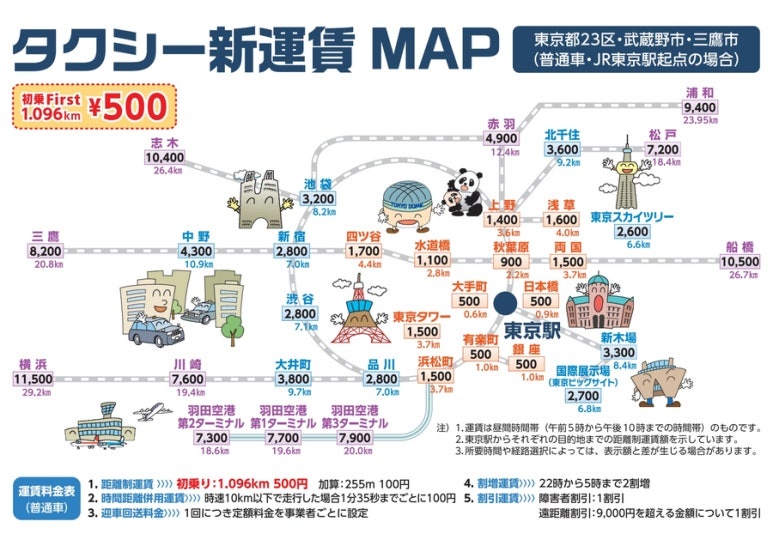
Tokyo taxi fares are calculated as base fare + distance/time add-on + late-night surcharge.
Knowing the rough fare before your trip makes it much easier to plan how you’ll get around.
🚕 Base Fare System (Tokyo’s 23 Wards)
※ Based on the Tokyo Taxi Association’s maximum fares (as of March 2026)
| Item | Current fare (as of March 2026) |
|---|---|
| Base fare | 500 yen (up to about 1.096 km) |
| Add-on fare | 100 yen added every 255 m |
| Slow-driving add-on | When under 10 km/h, 100 yen every 1 minute 35 seconds |
| Late-night surcharge | 22:00–05:00 (20% surcharge) |
📌 Long-distance discount (遠距離割引): 10% off the portion over 9,000 yen
➡️ (Example) Total 12,000 yen = 9,000 yen at the normal rate + 10% off the 3,000 yen (300 yen) → final 11,700 yen
🚕 Estimated Fares for Major Routes (Tokyo Standard)
| Route | Estimated fare (daytime) | Late-night (after 22:00) |
|---|---|---|
| Tokyo Station → Tokyo Tower About 3.7 km | About 1,500 yen | About 1,800 yen |
| Tokyo Station → Asakusa Station About 4.0 km | About 1,600 yen | About 2,000 yen |
| Tokyo Station → Shinjuku Station About 7.0 km | About 2,800 yen | About 3,400 yen |
| Tokyo Station → Haneda Airport About 20 km | About 7,900 yen | About 9,500 yen |
| Narita Airport → Tokyo Station About 70 km | 25,000 yen (fixed fare) | 30,000 yen (fixed fare) |
🚕 How to Check the Estimated Fare in Advance
Possible in the GO app (enter your origin and destination; it can calculate including the late-night surcharge and toll roads)
👉 GO official website fare search (Japanese)
🚕 Late-Night Surcharge (If You Don’t Know This, the Fare Differs a Lot)
A 20% surcharge applies from 22:00 to 05:00.
It’s not simply a 20% add-on — the distance threshold shortens, so the meter climbs faster.
👉 Tokyo Subway Ticket: Where to Exchange, Buy & How to Use
✔️ Before 10 p.m. → the subway is the most economical
✔️ After the last train → check the fare on the GO app, then ride
✔️ Long distances (airports, etc.) → use the fixed fare

Tokyo Airport Taxi Fixed Fares: Haneda vs Narita Fare Comparison
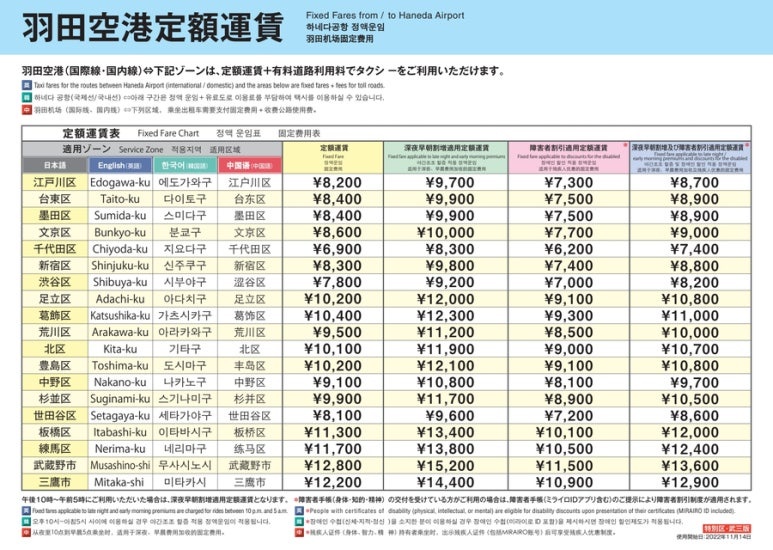
Haneda Airport Taxi Fixed Fares
From Haneda Airport, you can take a fixed-fare taxi to Tokyo’s major areas.
It operates on fares approved by the Ministry of Land, Infrastructure, Transport and Tourism, so you can travel with no fare fluctuation.
- Covers some areas of Tokyo's 23 wards
- Can be used without advance booking
- Expressway tolls are separate
⚠️ Caution! Some parts of Minato, Chūō, and Shinagawa wards are excluded from the fixed fare. The meter fare applies there.
👉 Haneda Airport to Central Tokyo: Access & Transport Comparison
Narita Airport Taxi Fixed Fares
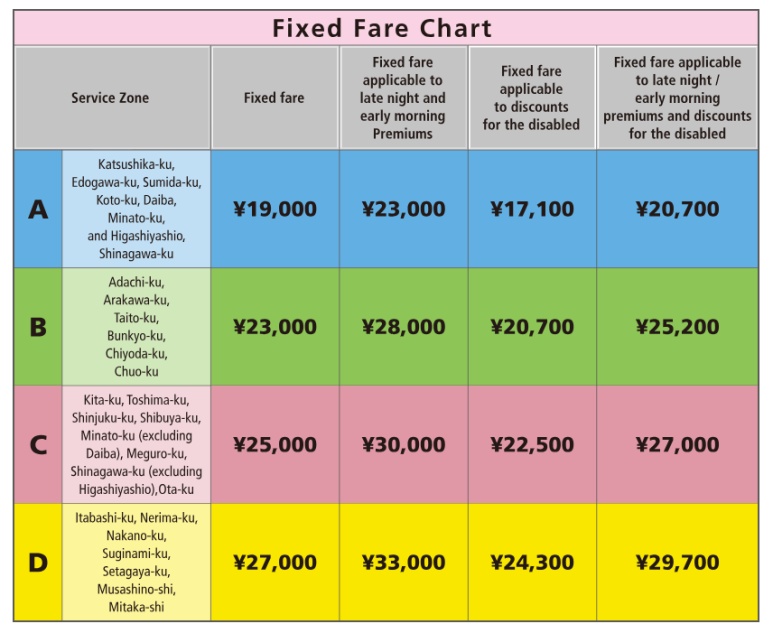
Narita Airport is far from central Tokyo, so taking a fixed-fare taxi is common.
- Covers Tokyo's 23 wards + Musashino and Mitaka
- Advance booking required
- Fixed fare includes expressway tolls
⚠️ Important! If you use it without a booking, the regular meter fare applies (which is more expensive).
👉 Narita Airport to Central Tokyo: Access & Transport Comparison
5 Practical Tips to Know Before Taking a Taxi in Tokyo
① Don’t Open the Door Yourself (Automatic Doors)
The rear door of a Tokyo taxi is an automatic door operated by the driver. You don’t need to open the door yourself, and opening it by hand risks damaging it. When getting in and out, just wait for the door to open automatically.
※ Some cars (including app-hailed cars) may have manual doors.
② Card Payment Is Usually Possible (Keep Cash as Backup)
Most taxis in Tokyo’s 23 wards accept credit card payment. However, private taxis and some cars may be cash-only, so it’s good to be prepared.
Using a taxi app enables automatic card payment, so you don’t need to have cash ready.
③ Up to 4 Passengers (For Lots of Luggage, a Van Is Recommended)
A regular taxi can carry up to 4 passengers. It can usually hold about 2 suitcases, so if you have a lot of luggage or 5 or more people, it’s safer to use a van-type vehicle.
④ A Map Screen Is the Most Accurate Way to Convey Your Destination
If Japanese is difficult, showing the driver the destination displayed in a map app is the most accurate. Especially for hotels or tourist spots, conveying it in Japanese notation reduces errors. When hailing via app, your destination is passed automatically.
⑤ The Receipt Is Key to Recovering Lost Items
The receipt (領収書) you get when you exit is very important for recovering lost items. It includes the taxi company name and vehicle information, so if you leave something behind, you can trace the car through that information.
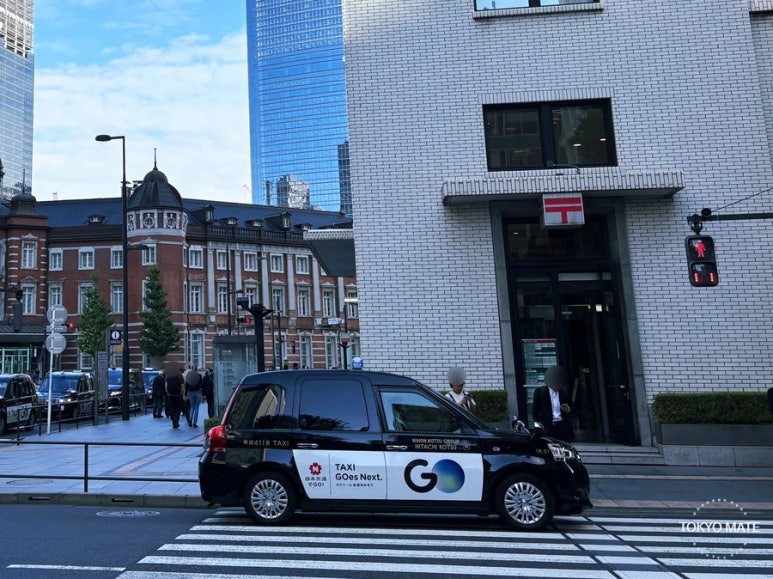
Tokyo taxis have a reputation for being expensive, but depending on the situation, they can be the fastest and most comfortable way to get around.
Especially at late hours or for airport transfers, when public transport is inconvenient, taking a Tokyo taxi is a choice that saves time and energy.
Before your trip, be sure to check Tokyo taxi fares and how to use them in advance, and use the GO app to check the estimated fare — this helps you cut unnecessary spending.
🧡 Tokyo Transport Guides Worth Reading Together
👉 Japan eSIM Complete Guide 2026: Recommended Brands, How to Use & Local Networks
👉 Tokyo Transit Card Guide: iPhone Suica, Welcome Suica & PASMO